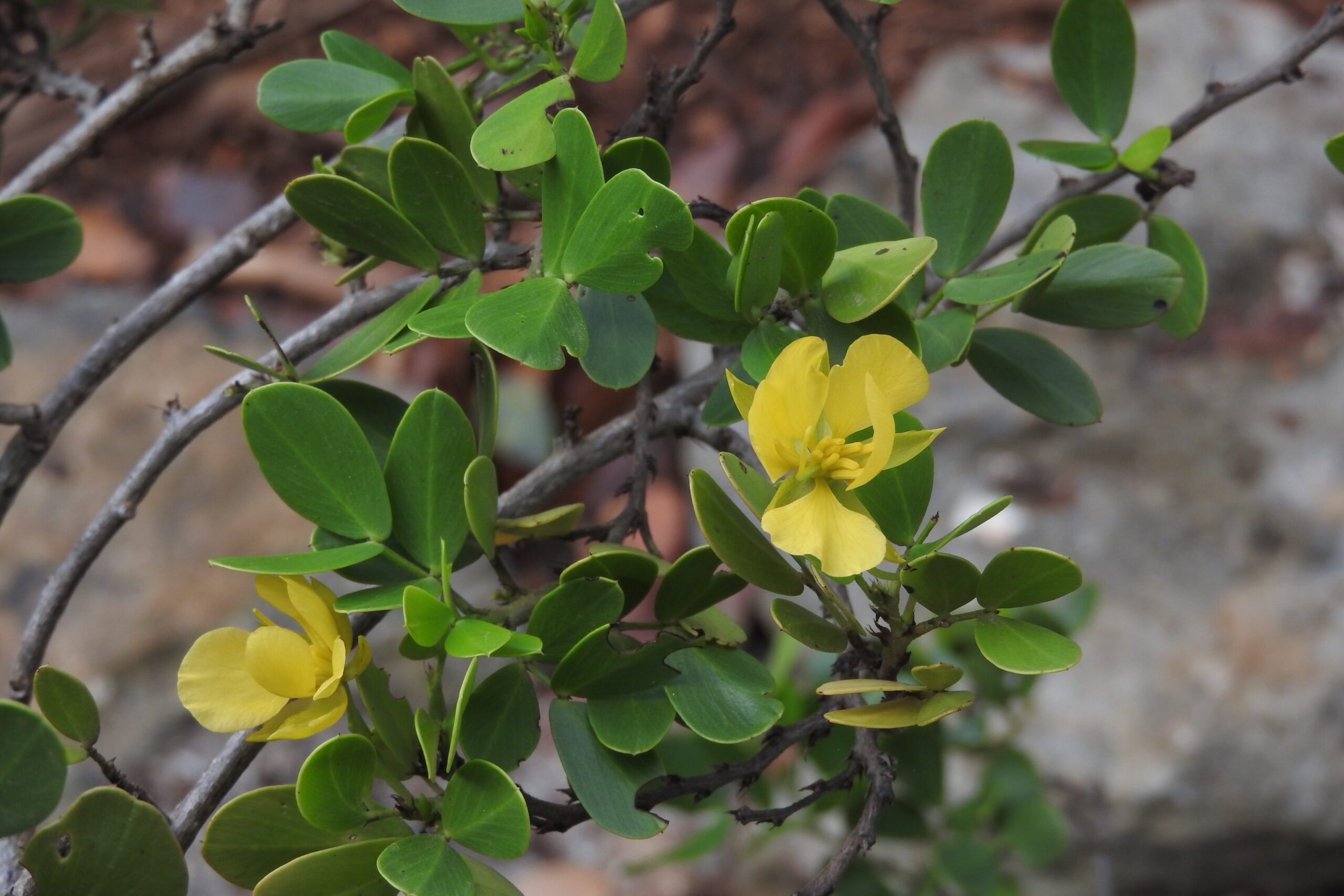
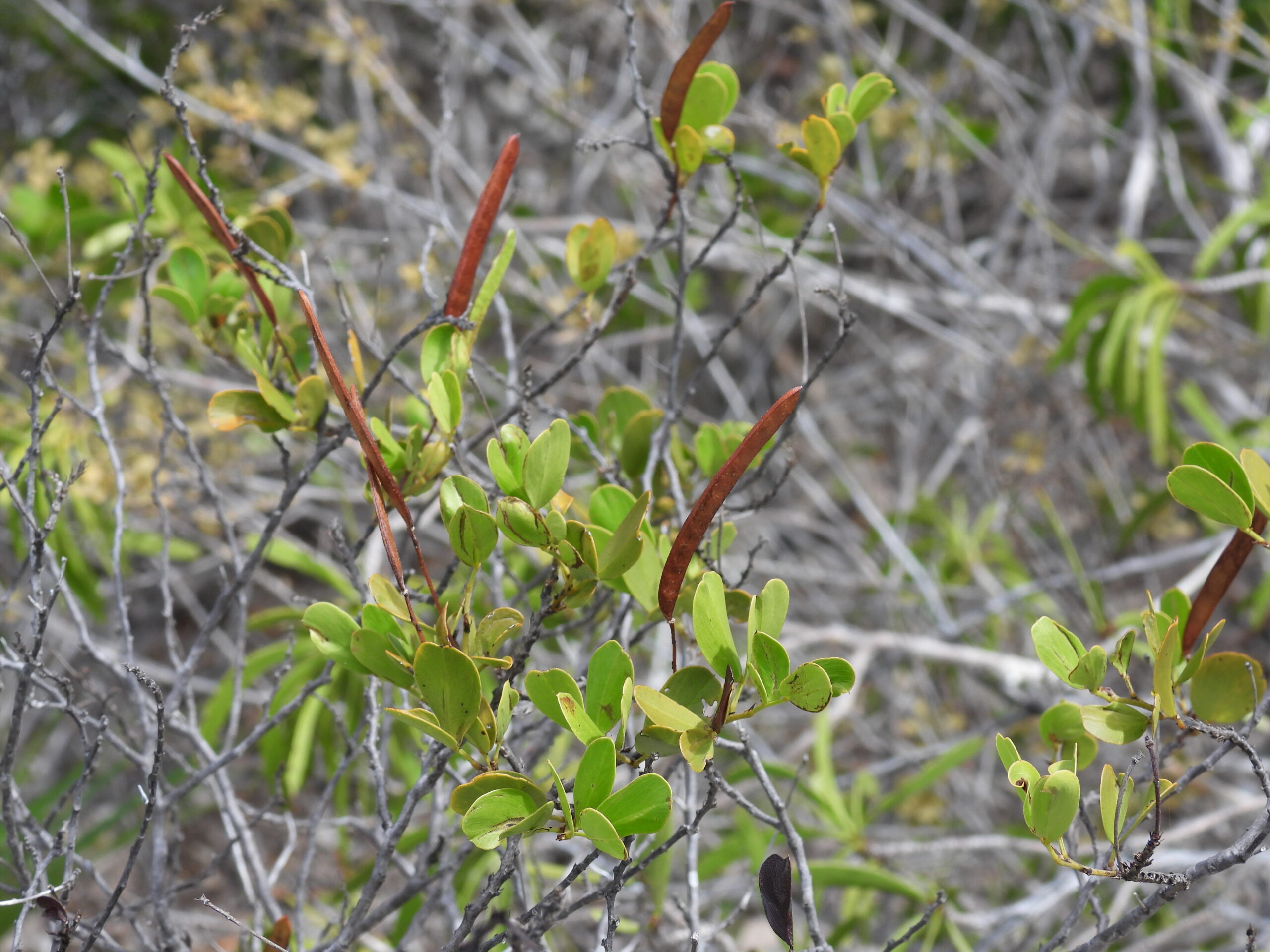
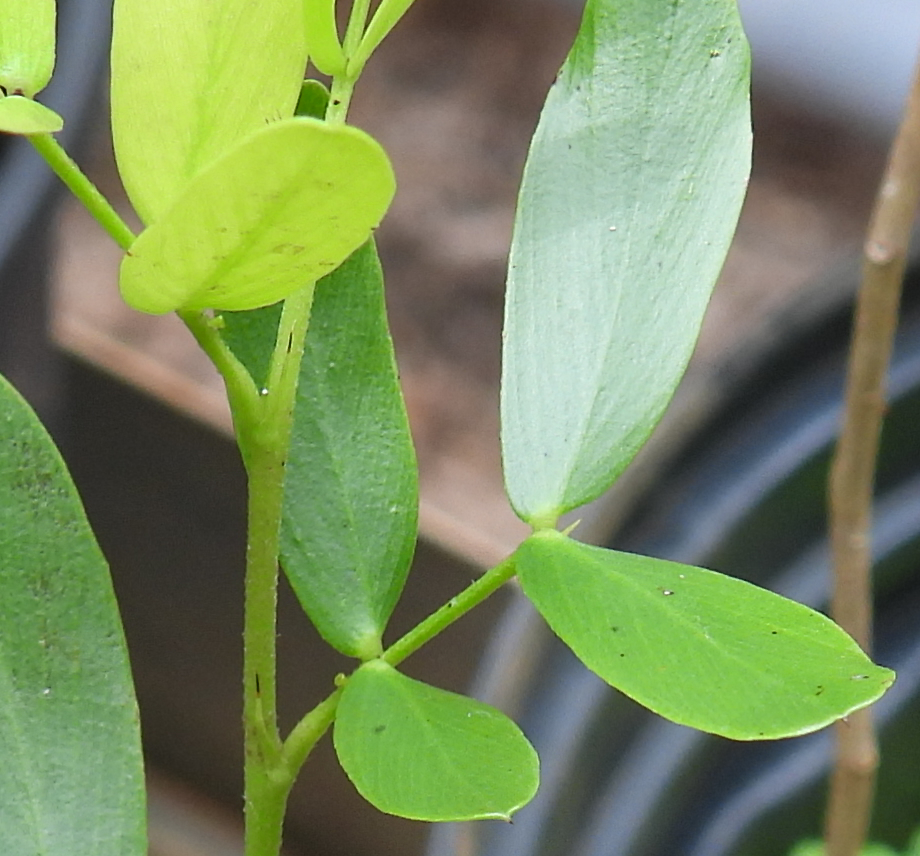
Habit: Chamaecrista caribaea var. inaguensis grows as shrub becoming woody with age to 1.5 m in height (usually shorter) with younger vegetation pubescent. The bipinnately compound leaves are arranged alternately, to 4 cm in length. The petioles have a distinct stipitate gland below the lower pinnae. The leaflets are in 1-3 pairs, rigid/chartaceous, elliptic to obovate, with a rounded leaf apex with a cuspidate/mucronate tip, and an entire margin. There are lanceolate/awl shaped stipules with an acuminate tip to either side of the petiole.
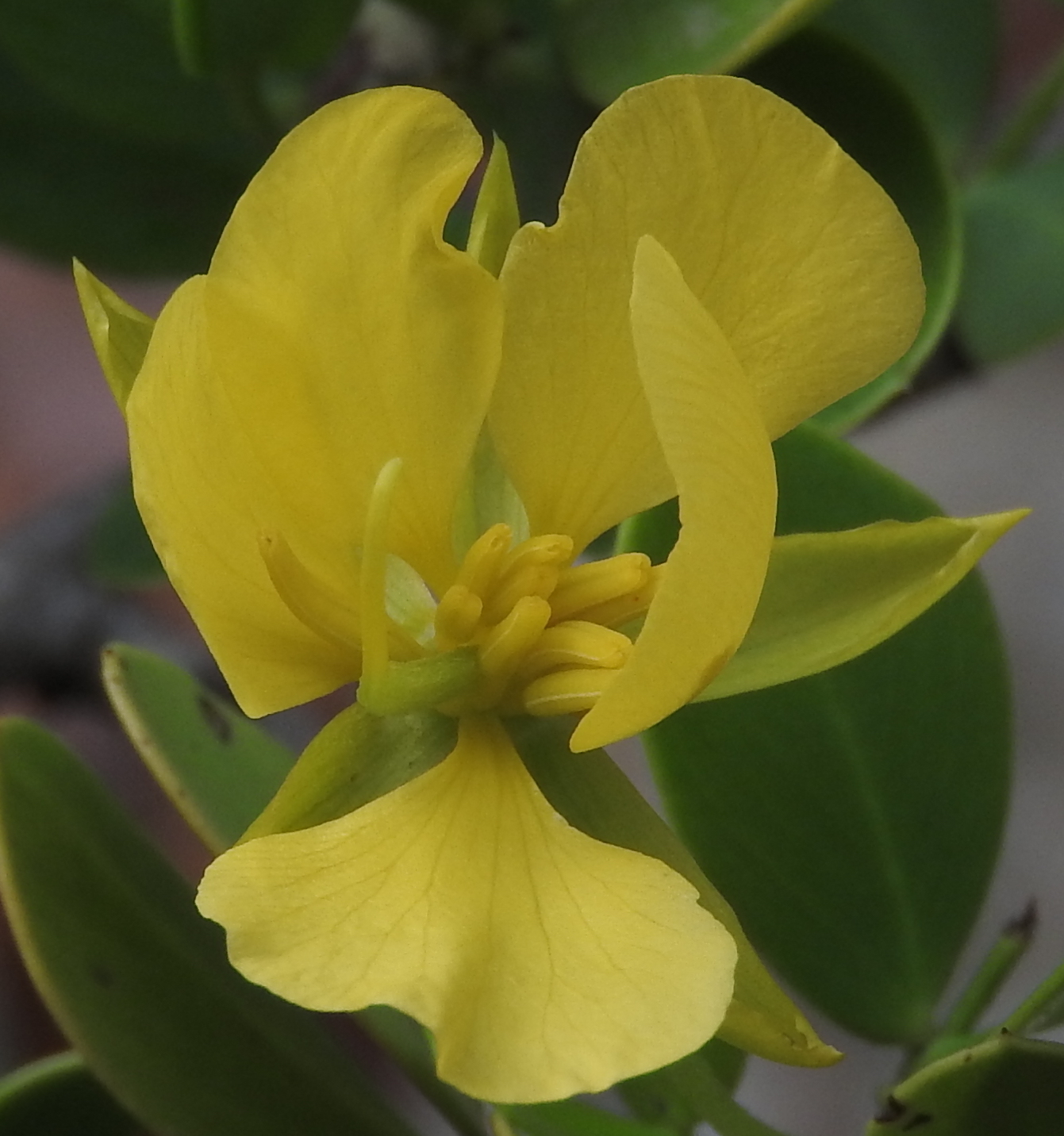
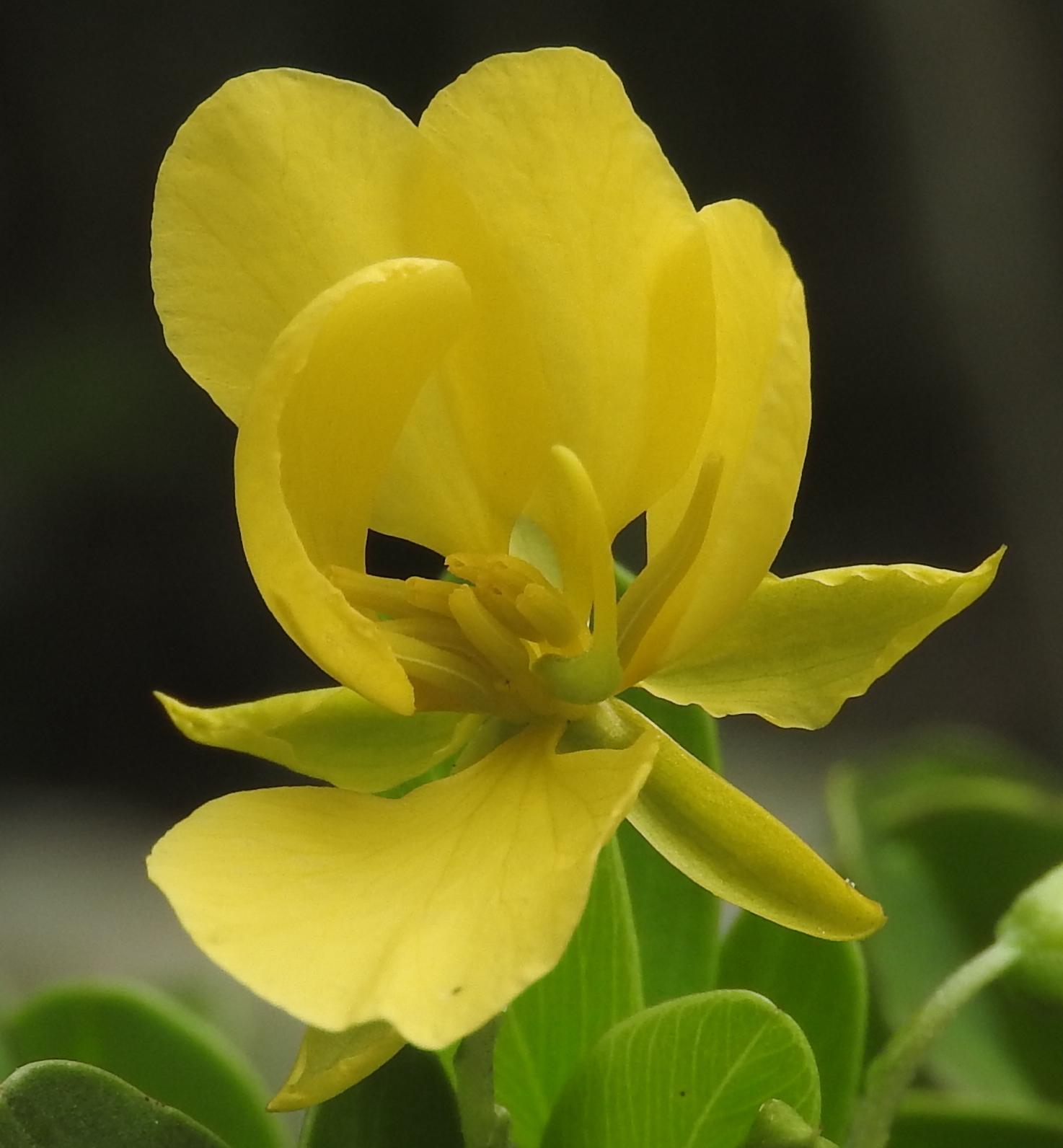
The complete, perfect, zygomorphic flowers are solitary in leaf axils. The calyx has 5 greenish, unfused, oblong sepals that are pubescent at their base. The corolla has 5 yellow unfused petals, none of which form a keel. There are 10 stamens of which only 7 are fertile. The ovary is superior and forming an erect, flat, brown, pubescent legume at maturity.
Habitat: Chamaecrista caribaea var. inaguensis grows in open Dry Broadleaf Evergreen Formation-Shrubland (scrublands) on limestone or sand.
Distribution: Chamaecrista caribaea var. inaguensis is native to the Lucayan Archipelago and Hispaniola.
Medicinal/Cultural/Economic usage: Chamaecrista caribaea var. inaguensis is not known to be used medicinally in the Bahamas.