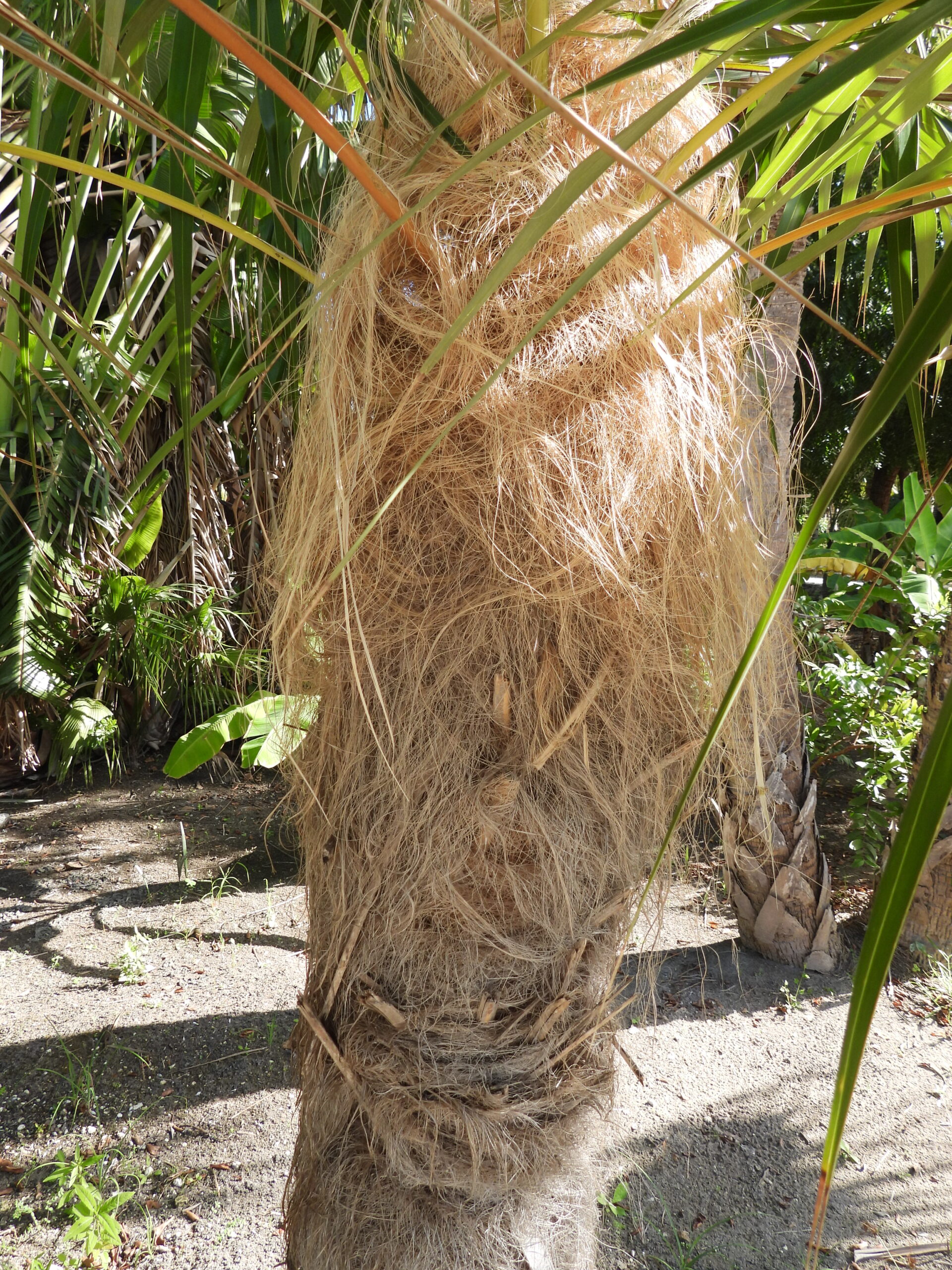
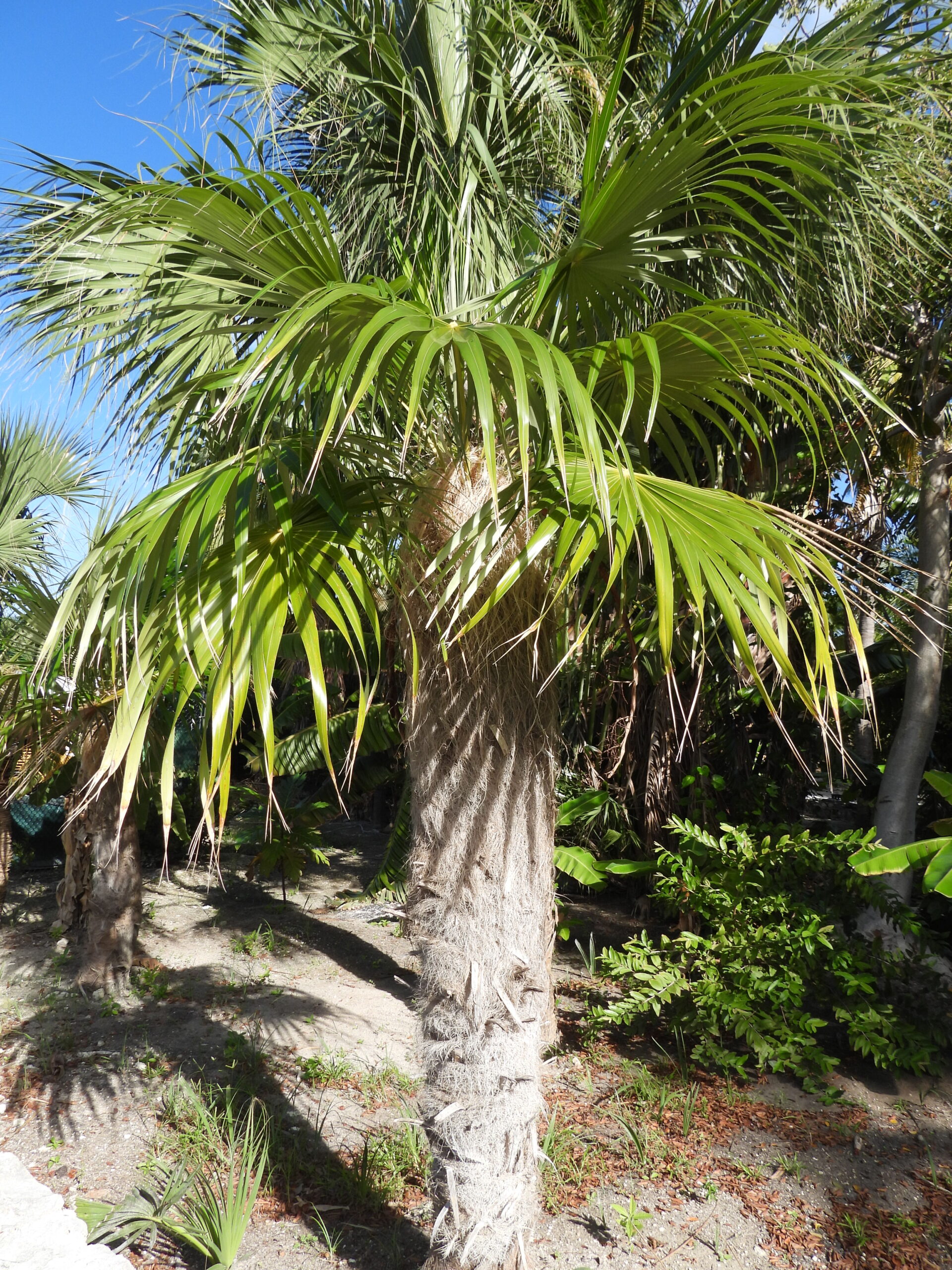
Habit: Coccothrinax crinita grows with a single unbranched trunk (often leaning), up to 10 m in height and 15 cm in diameter although the base gets slightly thicker. The trunk is covered with elongate dense fibers. The palmately lobed leaves are arranged in a spiral fashion grouped at the growing tip of the trunk, with the lamina 1 m in diameter.
Coccothrinax crinita is dioecious. The actinomorphic, imperfect, incomplete flowers are arranged in a large, elongate panicle on separate plants. The calyx has 3 sepals and the corolla has 3 petals. The calyx and corolla are pale yellow and fused together forming a single whorl. There are 8-10 stamens. The ovary is superior with a single locule and seed. The fruit is a drupe that is reddish purple/black at maturity.
Habitat: Coccothrinax crinita grows in the Bahamas in Human Altered environments (yards, gardens). In its native range it grows in wet savannahs, Forests and Shrublands and open rocky areas often on serpentine soils.
Distribution: Coccothrinax crinita is native to the Cuba. It is now widely planted globally but is considered Endangered (B1ab(iii,v)+2ab(iii,v); C2a(i)) in its native range by the IUCN due to habitat loss and over harvesting.
Medicinal/Cultural/Economic usage: Coccothrinax crinita is not used medicinally in the Bahamas.
It is grown and used in the horticultural trade globally due to its trunk’s distinct fibrous covering.