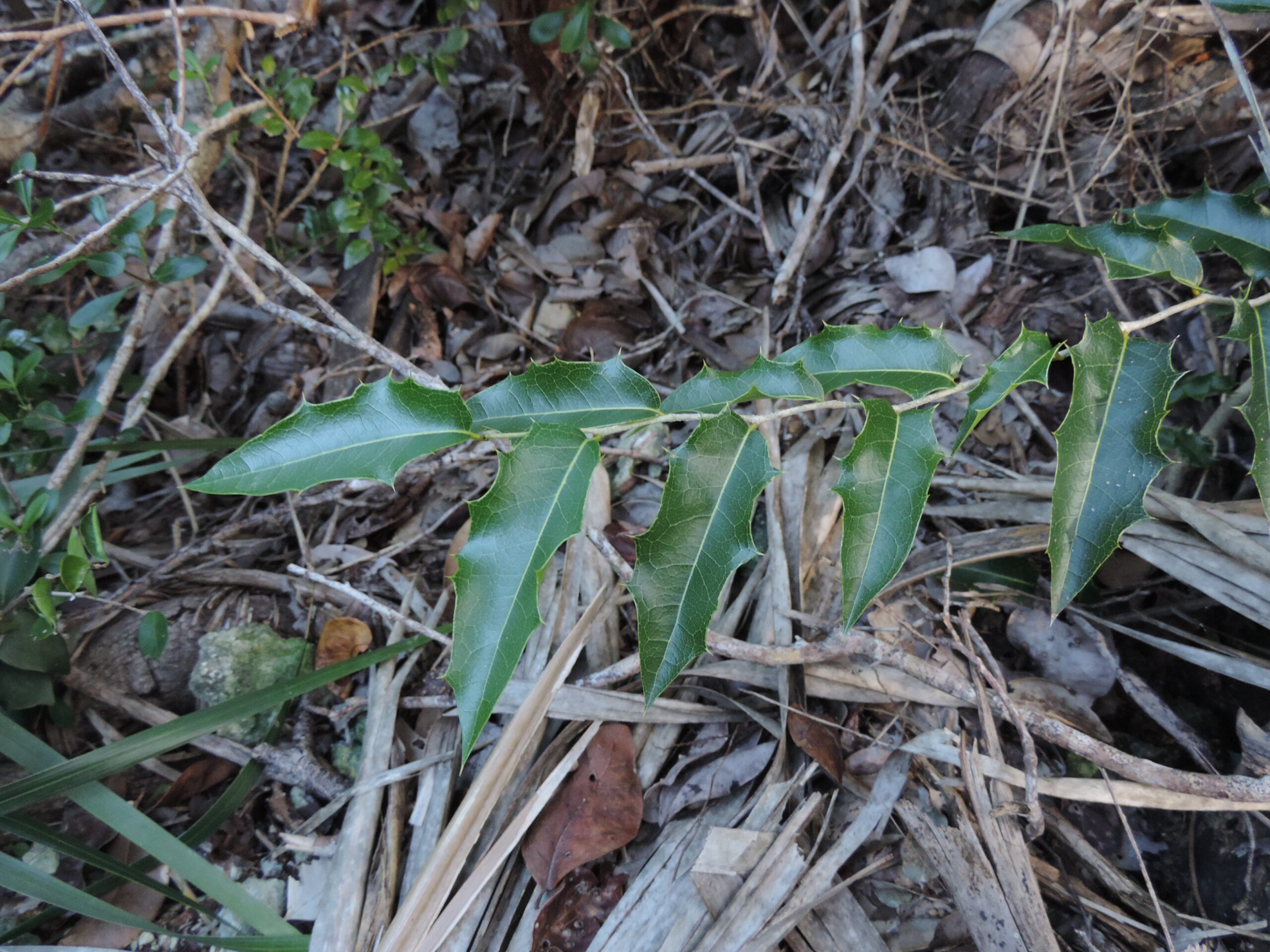
Habit: Drypetes mucronata grows as a large shrub to small tree up to 5 m in height. The stiff, papery leaves are arranged alternately, lanceolate, to 10 cm (usually smaller), with an entire to spinescent/spiny margins with an acuminate leaf apex. There are 2 deciduous stipules at the base of the petiole.
Drypetes mucronata is dioecious. The incomplete, imperfect, actinomorphic flowers are groups in the axils of leaves. Staminate flowers with 4 tepals and 8 stamens and no carpel. In carpellate flowers there are 4-5 tepals and no stamens. The ovary is superior with 1 locule. The fruit is a round drupe.
Habitat: Drypetes mucronata grows in Dry Broadleaf Evergreen Formation – Forest/Shrublands (coppice).
Distribution: Drypetes mucronata is native to the Lucayan Archipelago and Cuba.
Medicinal/Cultural/Economic usage: Drypetes mucronata is not known to be used medicinally in the Bahamas.