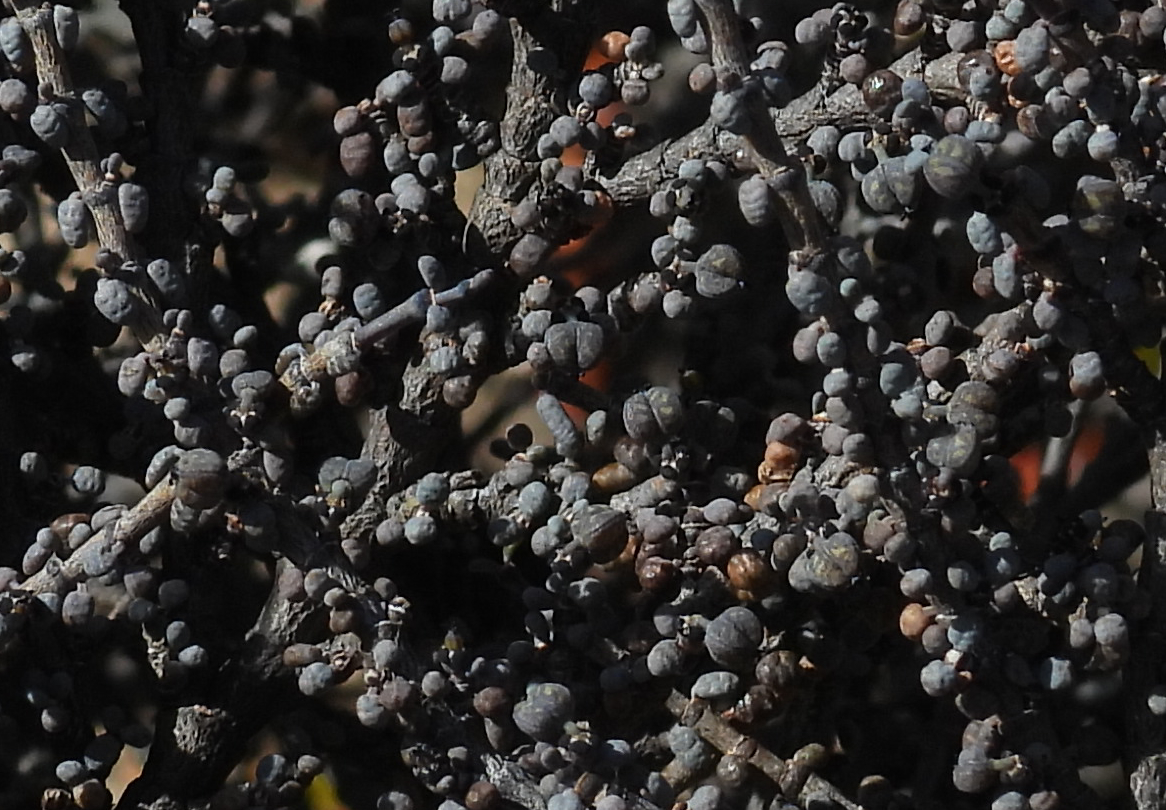
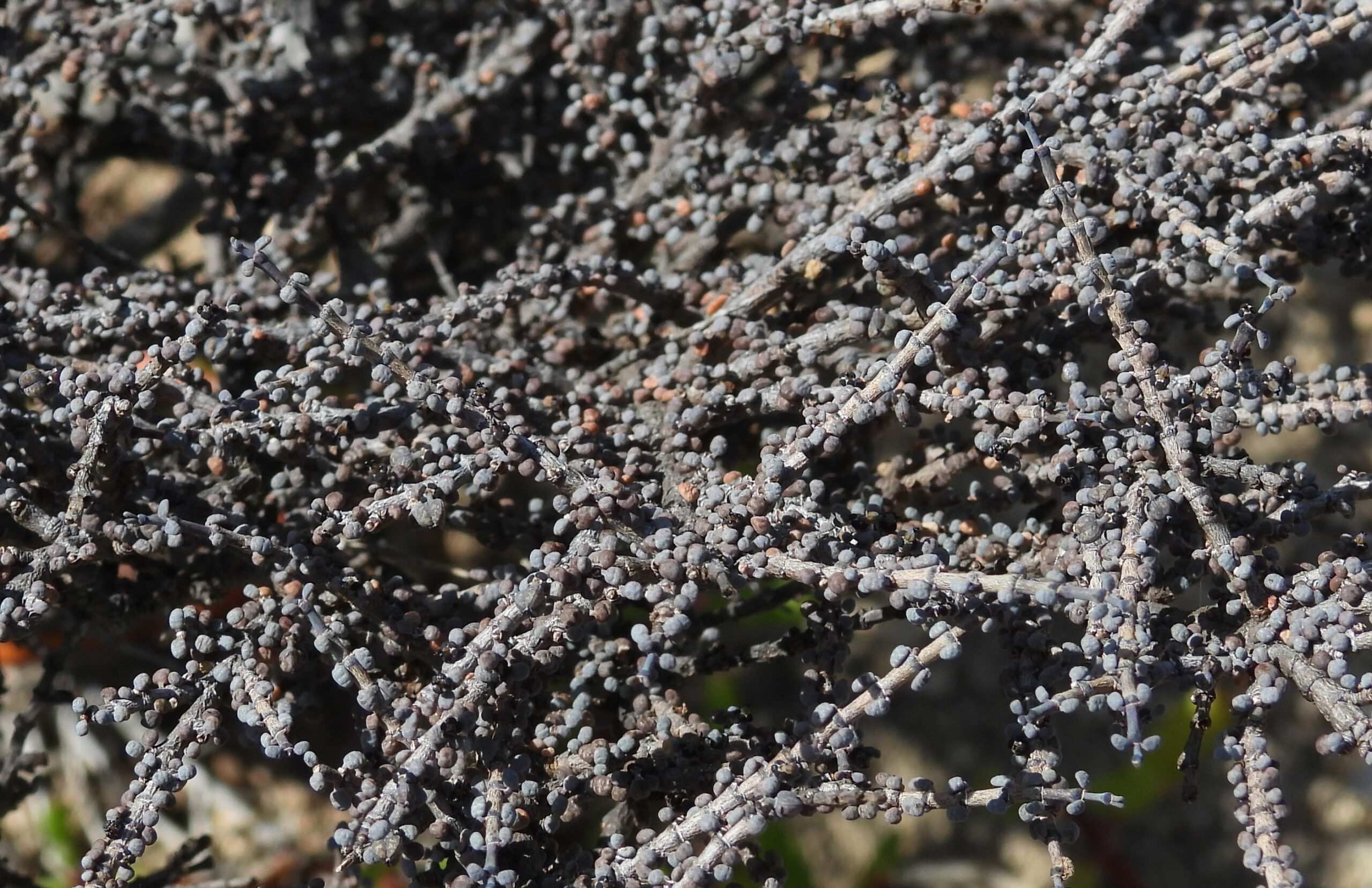
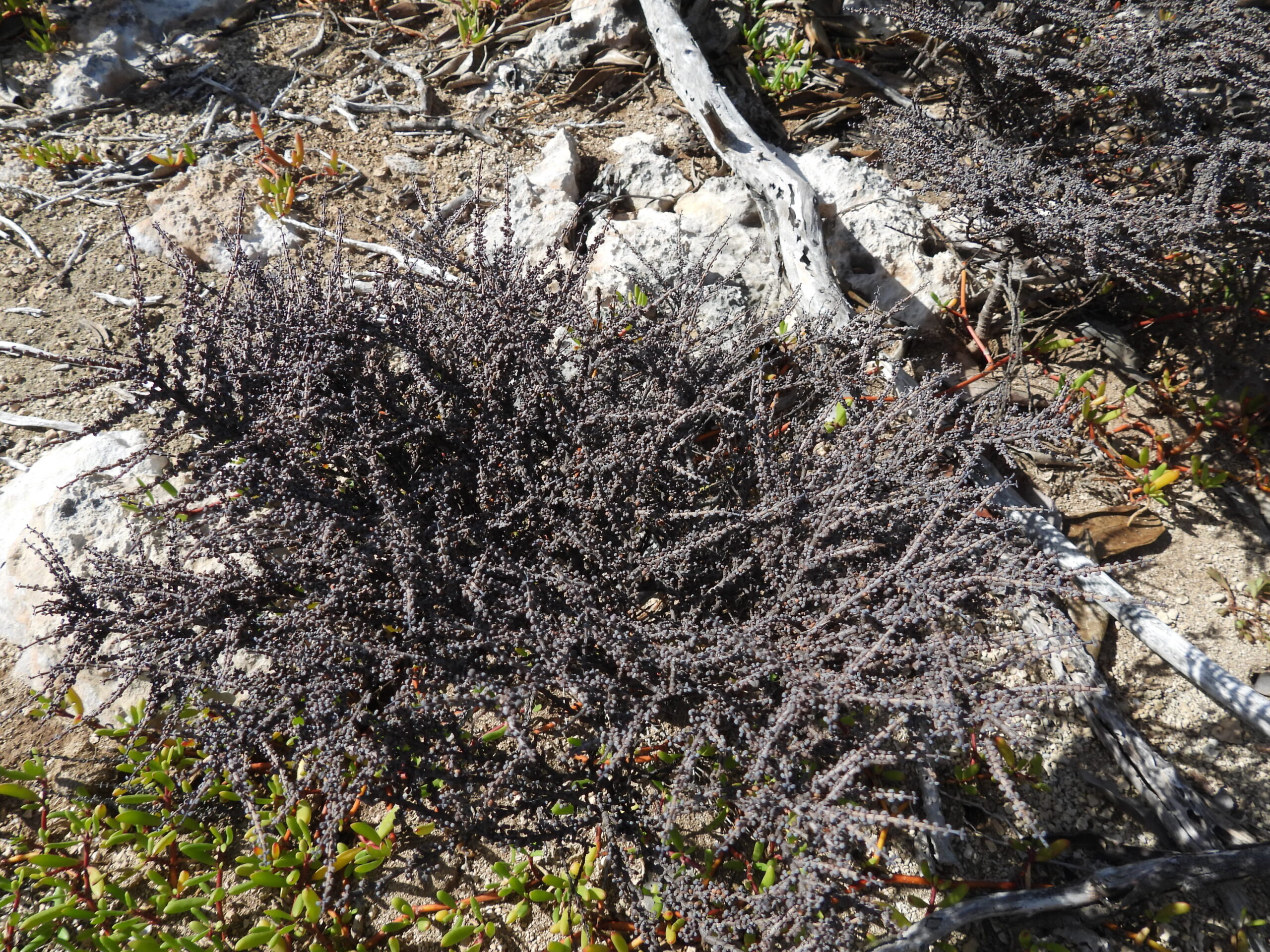
Habit: Euphorbia inaguaensis grows as a low, densely branched, small shrub to 50 cm in height. The succulent, purple-copper-green leaves are arranged oppositely, globose/orbicular, less than 3 mm in length and a rounded leaf apex. Leaves appearing clustered on stems with short internodes. At the base of the petiole are ciliate stipules. The vegetation produces a thick, milky sap.
The incomplete, imperfect, monoecious, actinomorphic, flowers are arranged in cyathia and are solitary in the axils of leaves. There are 5, dark red to black, large and prominent glands on the edge of the cyathia. There is no calyx or corolla. Staminate flowers are reduced to a single stamen. Carpellate flowers are reduced to a single superior carpel, each with 3 locules and numerous seeds. The fruit is a dark brown, glabrous capsule at maturity that splits along 3 suture lines.
Habitat: Euphorbia inaguaensis grows open/thin Dry Broadleaf Evergreen Formation – Shrubland (coppice) on both limestone and in sandy soils.
Distribution: Euphorbia inaguaensis is endemic to the Lucayan Archipelago occurring in the southern island groupings (Great and Little Inagua and the Turks and Caicos Islands).
Medicinal/Cultural/Economic usage: Euphorbia inaguaensis is not known to be used medicinally in the Bahamas.
All parts of the species are extremely toxic and should not be ingested!!