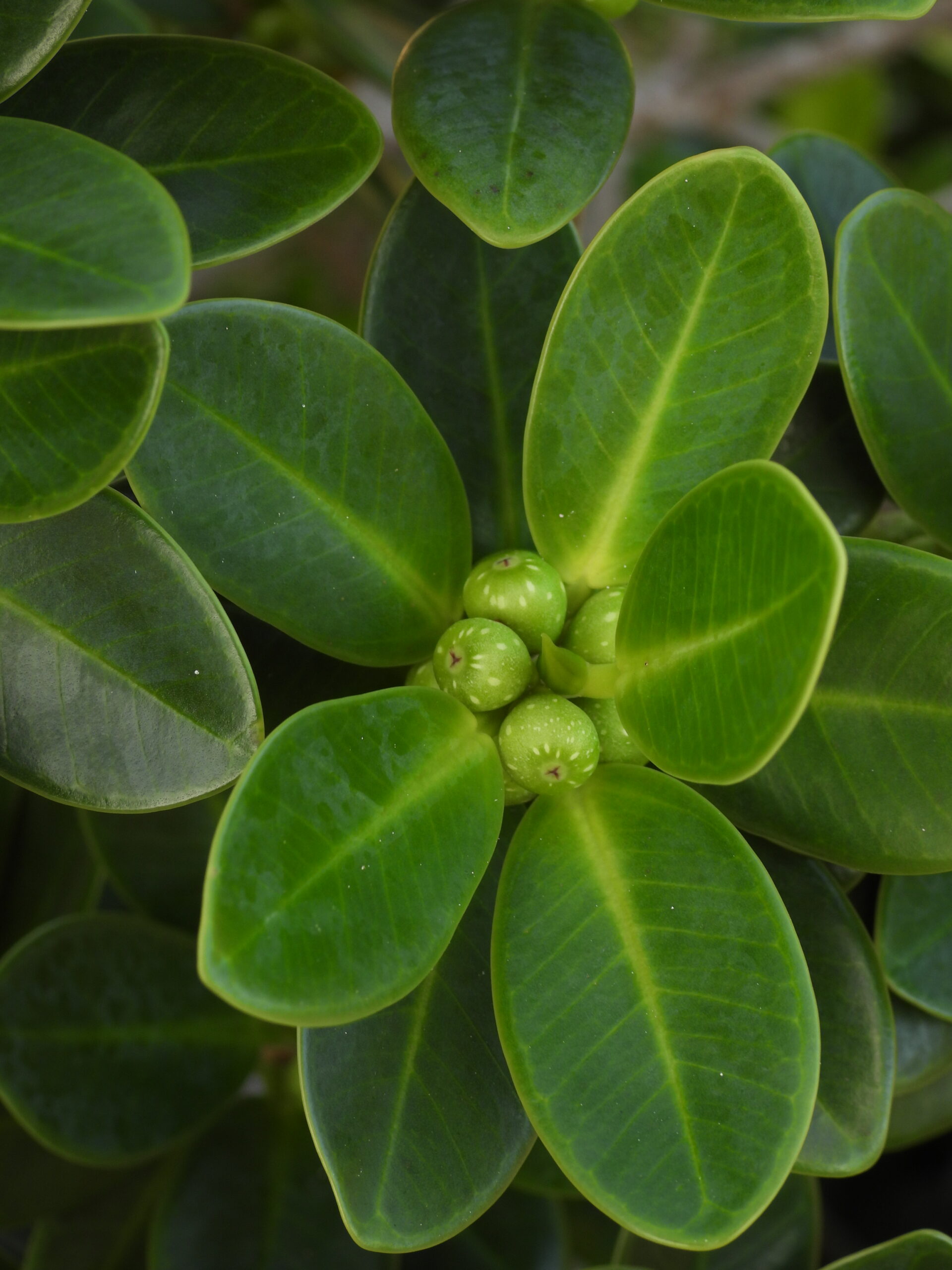
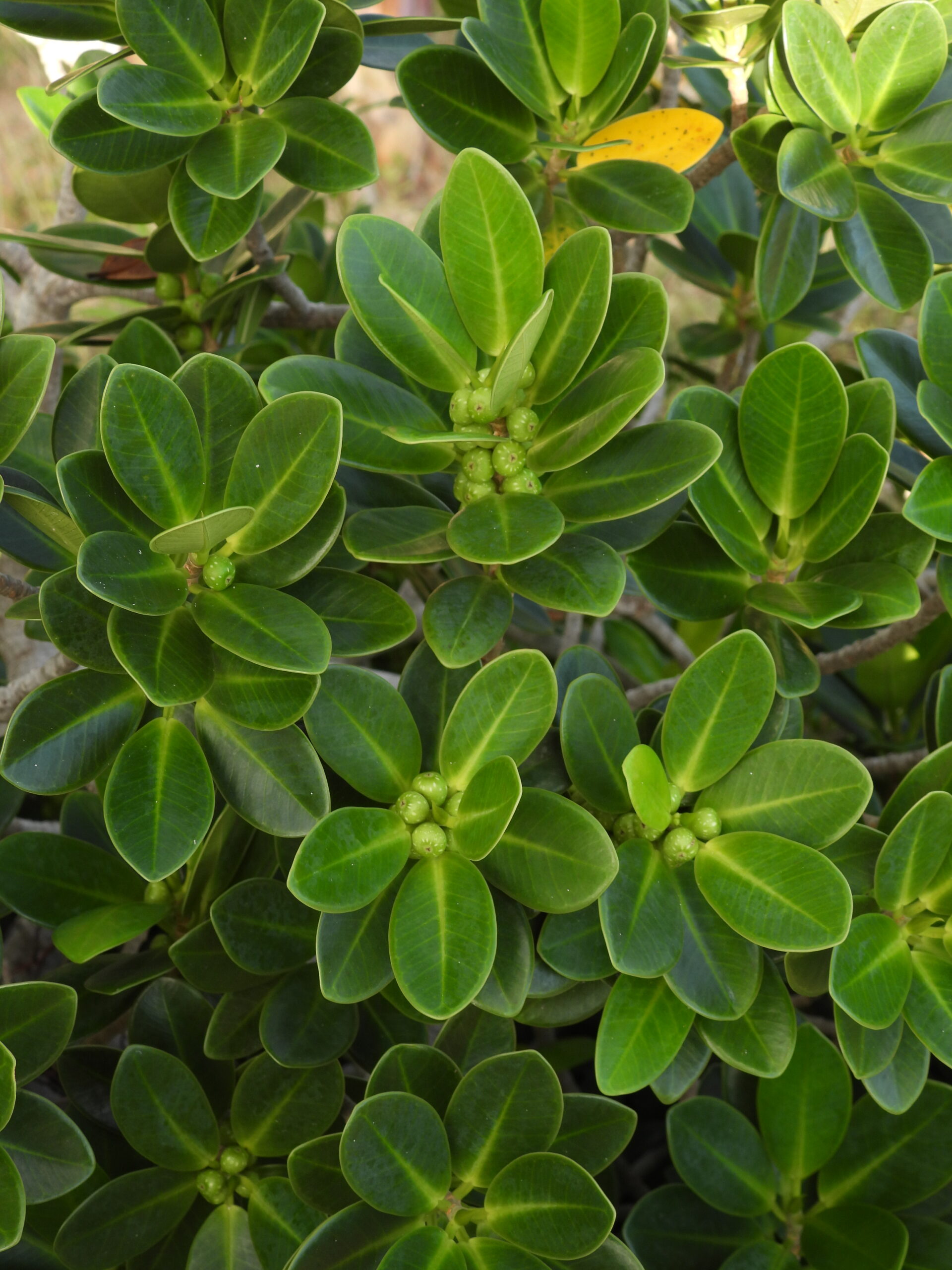
Habit: Ficus microcarpa grows as an evergreen large tree to 30 m in height and up to 1 m in diameter and produces aerial roots/prop/pillar roots. The glabrous leaves are arranged alternately, 12 cm in length, elliptic to oblong, with an entire margin, an acute leaf apex and a single midvein.
Where the petiole attaches to the stem there is a prominent ring on the stem formed from the dehiscent apical sheath. The apical sheath/stipules have a slight hook at the tip known as a “cats claw” and extends to up 2 cm. Vegetative material produces a milky latex when broken.
The highly reduced incomplete, imperfect, actinomorphic, flowers are borne entirely within a structure known as a synconium (fig) and are fertilized by wasps. It is monoecious. Staminate flowers have a perianth of 2-6 parts and 2 anthers. The carpellate flowers have no perianth or stamens and a single carpel. The berry-like, elliptical “fruits” are sessile on the stem at the base of the petioles often in pairs, subtended by 2-3 bracts, and turning purple black at maturity.
Habitat: Ficus microcarpa grows in the Bahamas in Human Altered environments (yards, gardens, inside homes).
Distribution: Ficus microcarpa is not native to the Lucayan Archipelago. It is native to the southern China, the Indian subcontinent, southeast Asia and north eastern Australia. It is grown globally in the tropics and subtropics.
Medicinal/Cultural/Economic usage: Ficus microcarpa is not known to be used medicinally in the Bahamas.
Ficus microcarpa is used as an ornamental tree or shrub.