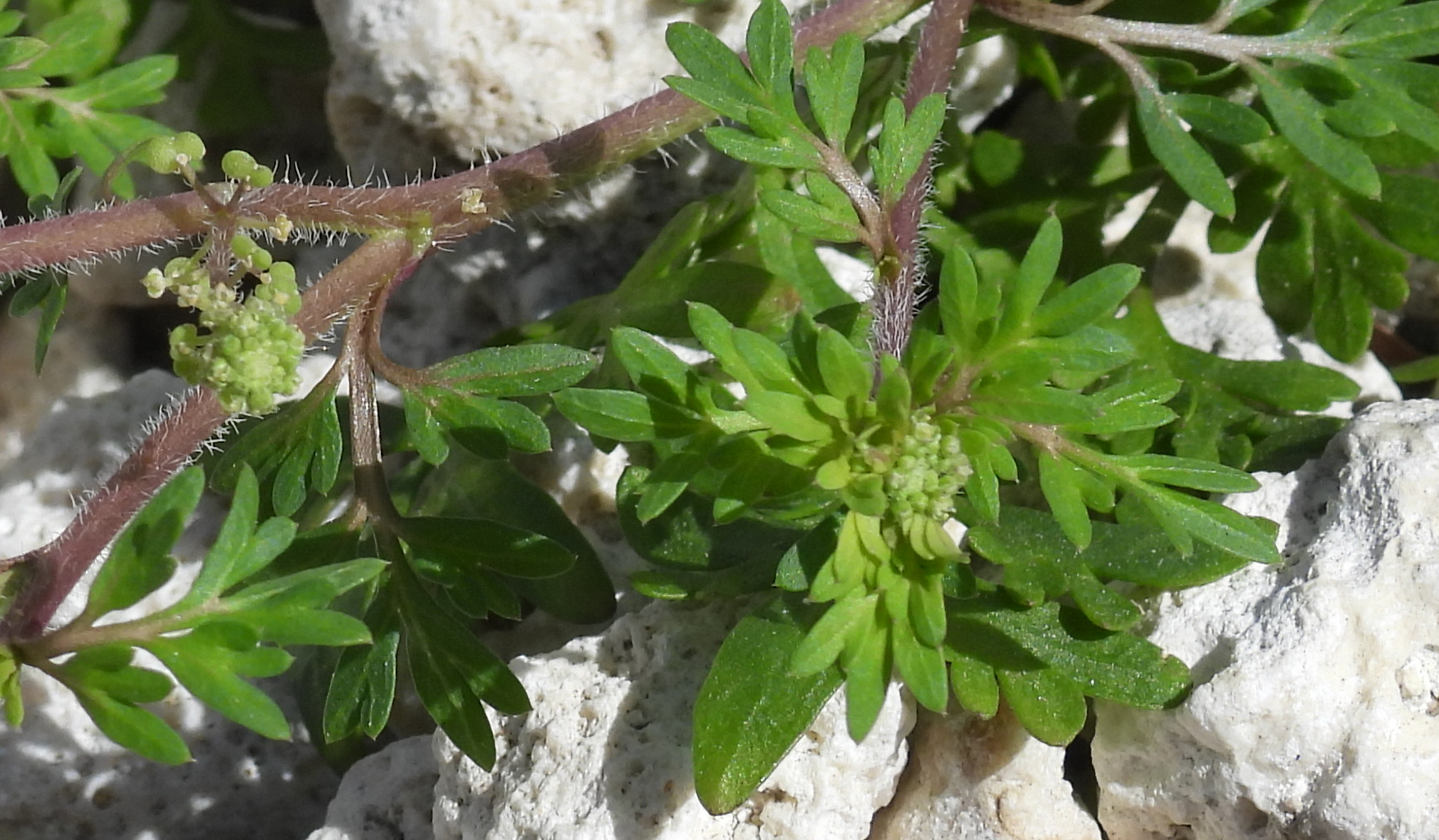
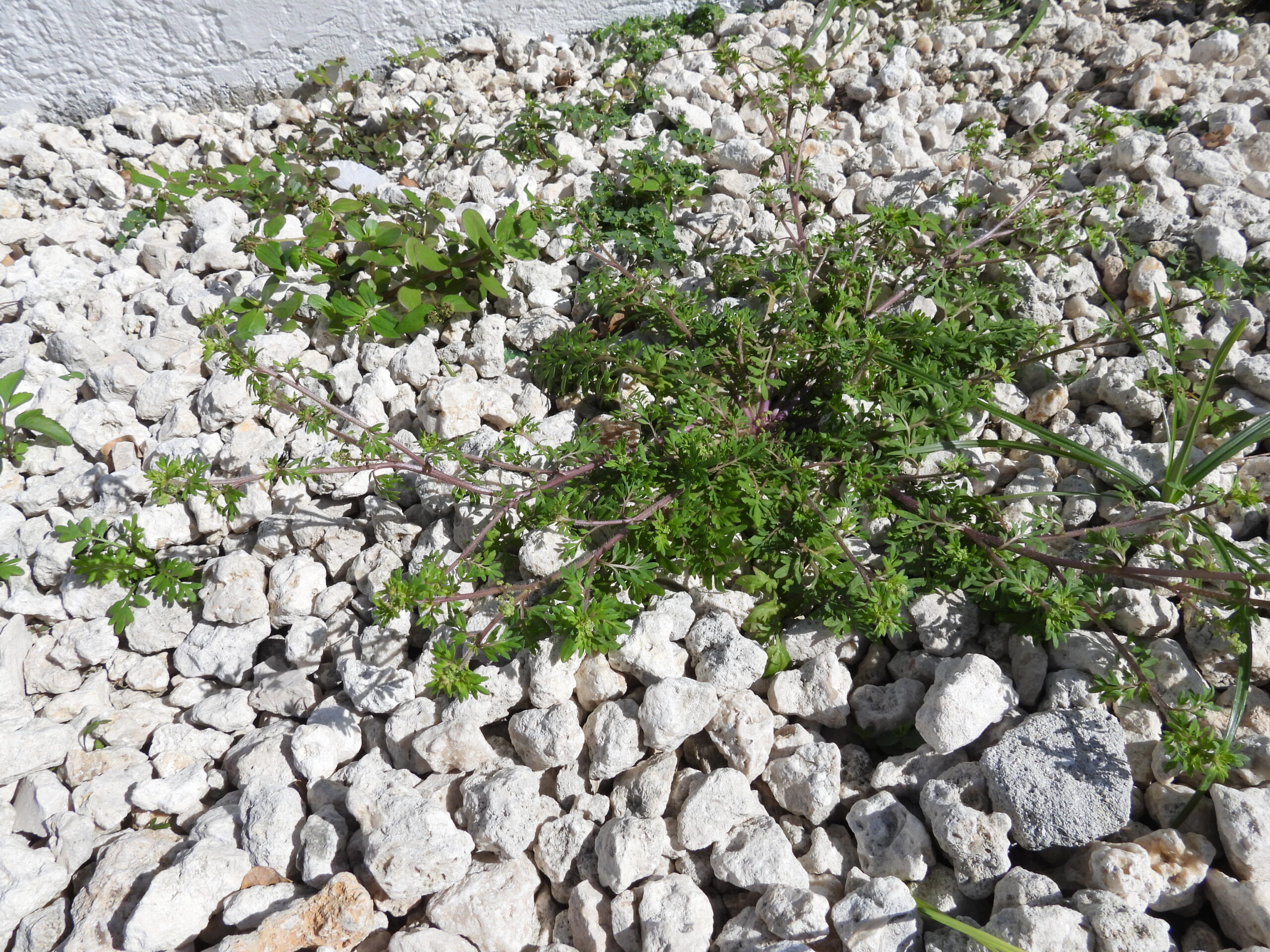
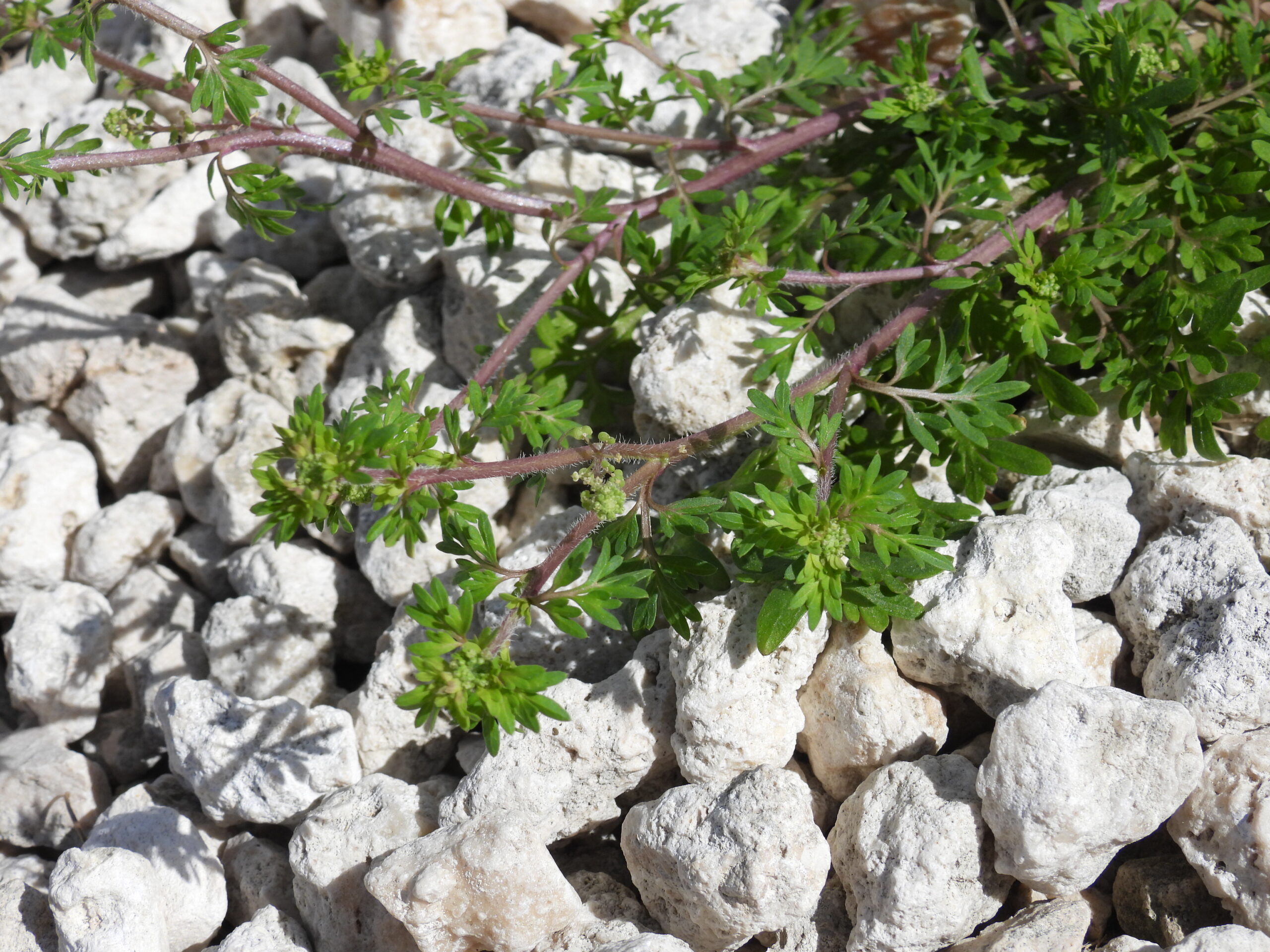
Habit: Lepidium didymum grows as a branched annual to perennial mostly prostrate herb, spreading to 50 cm in diameter and up to 30 cm in height. The leaves are arranged alternately, deeply pinnatifid with 3-5 pairs of oblanceolate lobes that have dentate margins. Vegetation is sparsely hirsute.
The complete, perfect, actinomorphic flowers are in terminal and axillary racemes up to 4 centimeters in length. The calyx has 4 unfused, green, caducous sepals. The corolla has 4 unfused, white petals. There are 2 stamens. The superior ovary has 2 locules separated by a narrow replum. The fruit is a 2 seeded silicle with expanded/rounded/ovoid sections and a notched sinus at the apex
Habitat: Lepidium didymum grows in the Bahamas in Human Altered environments (yards, waste areas).
Distribution: Lepidium didymum is not native to the Lucayan Archipelago. Its native range is unclear but South America is the most likely. It has spread to tropical and subtropical areas of the world as an invasive plant.
Medicinal/Cultural/Economic Usage: Lepidium didymum is not known to be used medicinally in the Bahamas.