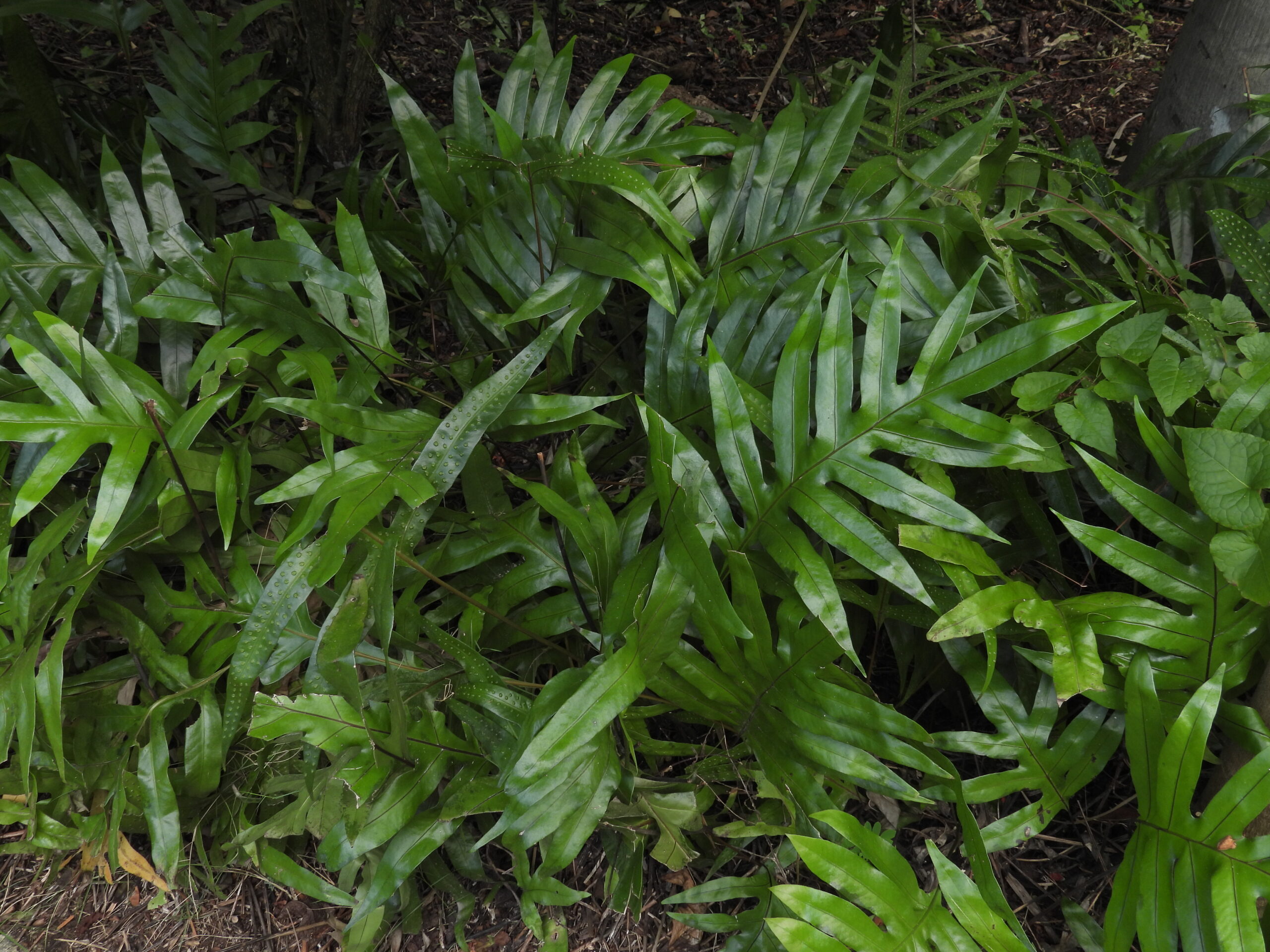
Habit: Microsorum scolopendria grows terrestrially with a creeping rhizome forming mats with new fronds emerging every 1-2 cm. The rhizome is covered with dense, dark brown to black, fringed scales/trichomes. Fronds arise alternately along the rhizome each lasting a single year. The fronds slightly deltoid to oblong in shape with 4 – 8 pinnate lobes, to 1 meter in length (typically shorter), and a winged rachis. Pinnae lobes are linear-lanceolate (terminal lobe largest), to 20 cm in length, entire with an acute apex.
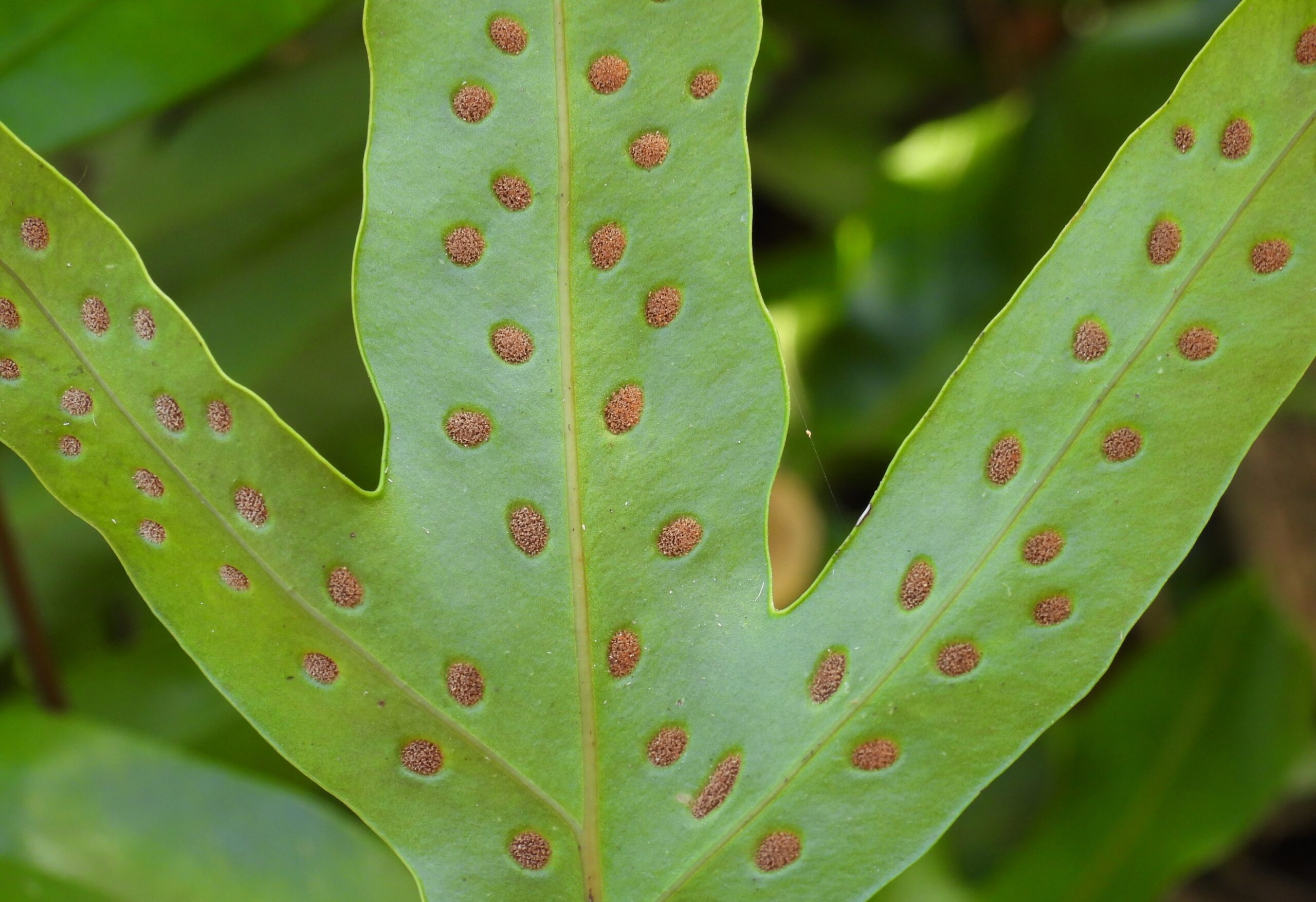
The sori are yellow, round, and produced in 2 irregular, non-linear rows on the abaxial surface and are evident adaxially as raised bumps.
Habitat: Microsorum scolopendria grows in Human Altered environments in the Bahamas (yards, gardens).
Distribution: Microsorum scolopendria is not native to the Lucayan Archipelago. It is native to Africa, Asia and the South Pacific and Australia.
Medicinal/Cultural/Economic usage: Microsorum scolopendria is not used medicinally in the Bahamas.
It is used in the horticultural trade as a ground cover and to fill large beds.