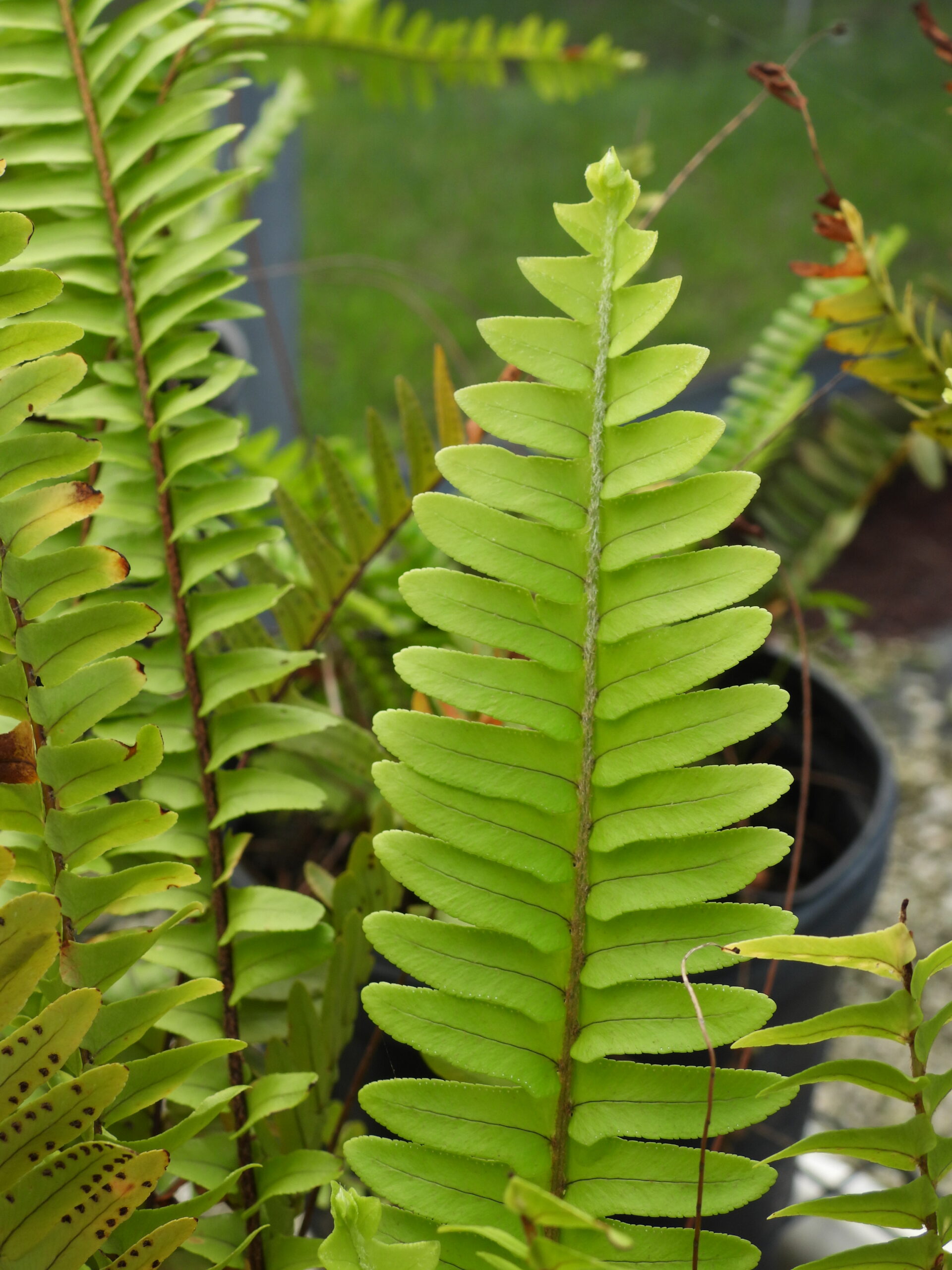
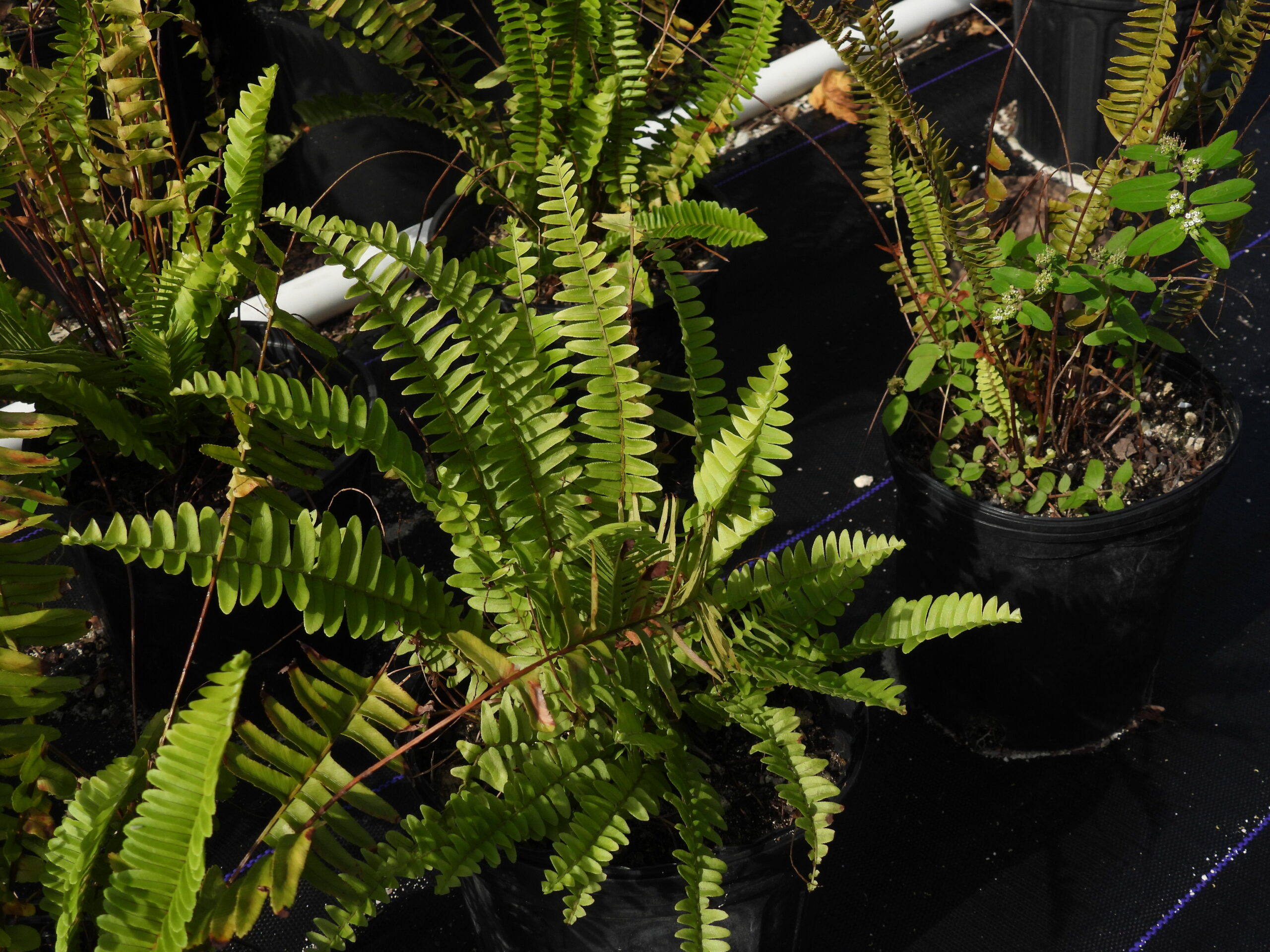
Habit: Nephrolepis exaltata grows from a rhizome that is up to 1 cm thick forming clumps with rhizomes spreading outward. It is terrestrial but can be epiphytic. The rhizome is covered with brown/black scales. The fronds are up to 1-2 meter in length (usually shorter) and are pinnately compound. The stipe is glabrous. There are 10-20 pinnae alternately arranged, oblong with an acute apex and a crenate/dentate pinnae margin. In many cultivated varieties the pinnae apices are divided or fimbriate.
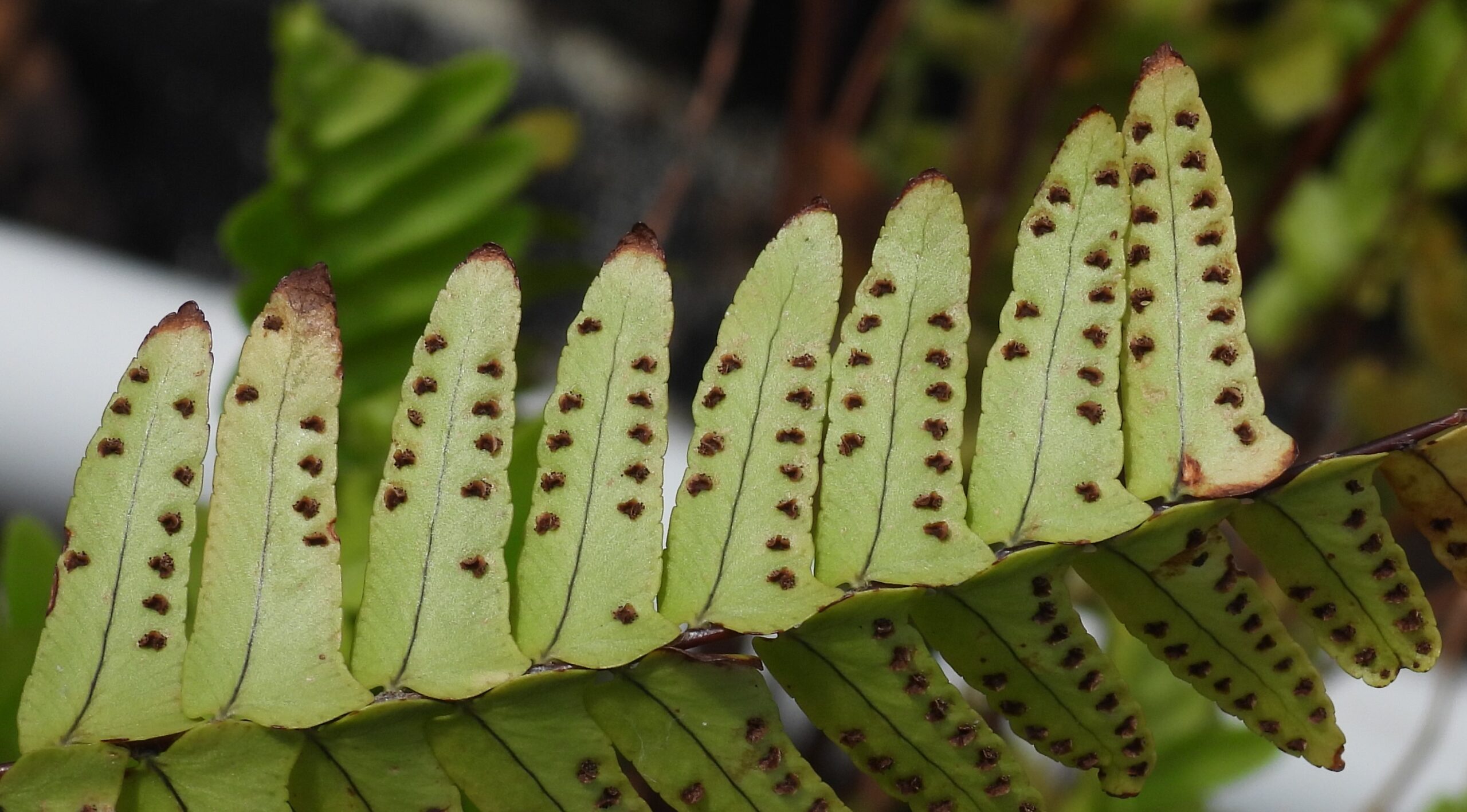
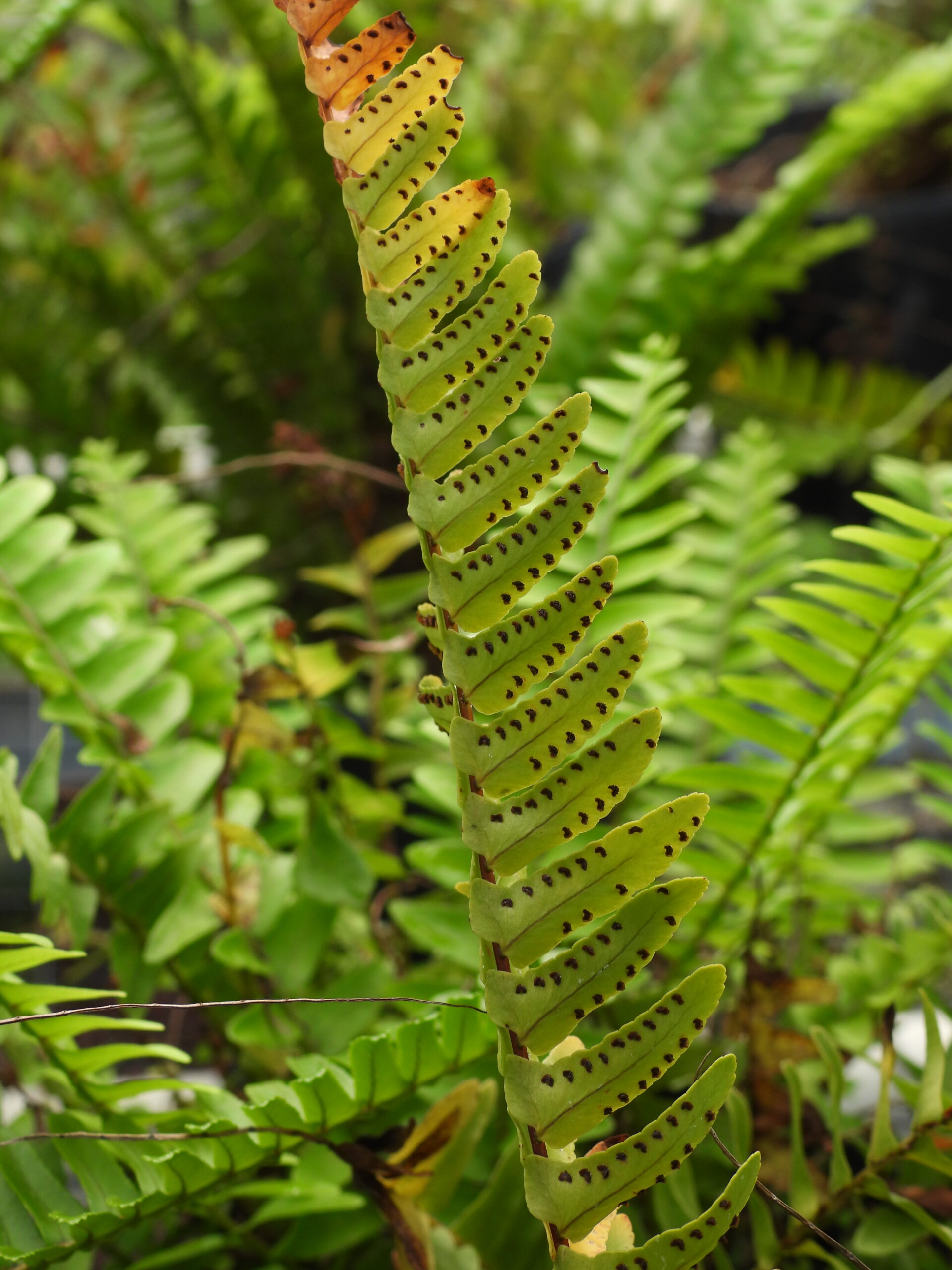
The sporangia occur in round to reniform sori toward the edge of pinnae on the mid vein from the pinnae apex to the rachis. There is a round to reniform indusium.
Habitat: Nephrolepis exaltata grows in in the Bahamas in Human Altered environments (yards, gardens) and escapes into Dry Broadleaf Evergreen Formations that have caves and sink holes.
Distribution: Nephrolepis exaltata is not considered native to the Lucayan Archipelago but occurs throughout the islands. It is native to Central and south America but has become wide spread in tropical and subtropical areas globally. It has been considered native to Florida.
Medicinal/Cultural/Economic usage: Nephrolepis exaltata is not used medicinally in the Bahamas.
It is in the horticultural trade and frequently escapes cultivation.