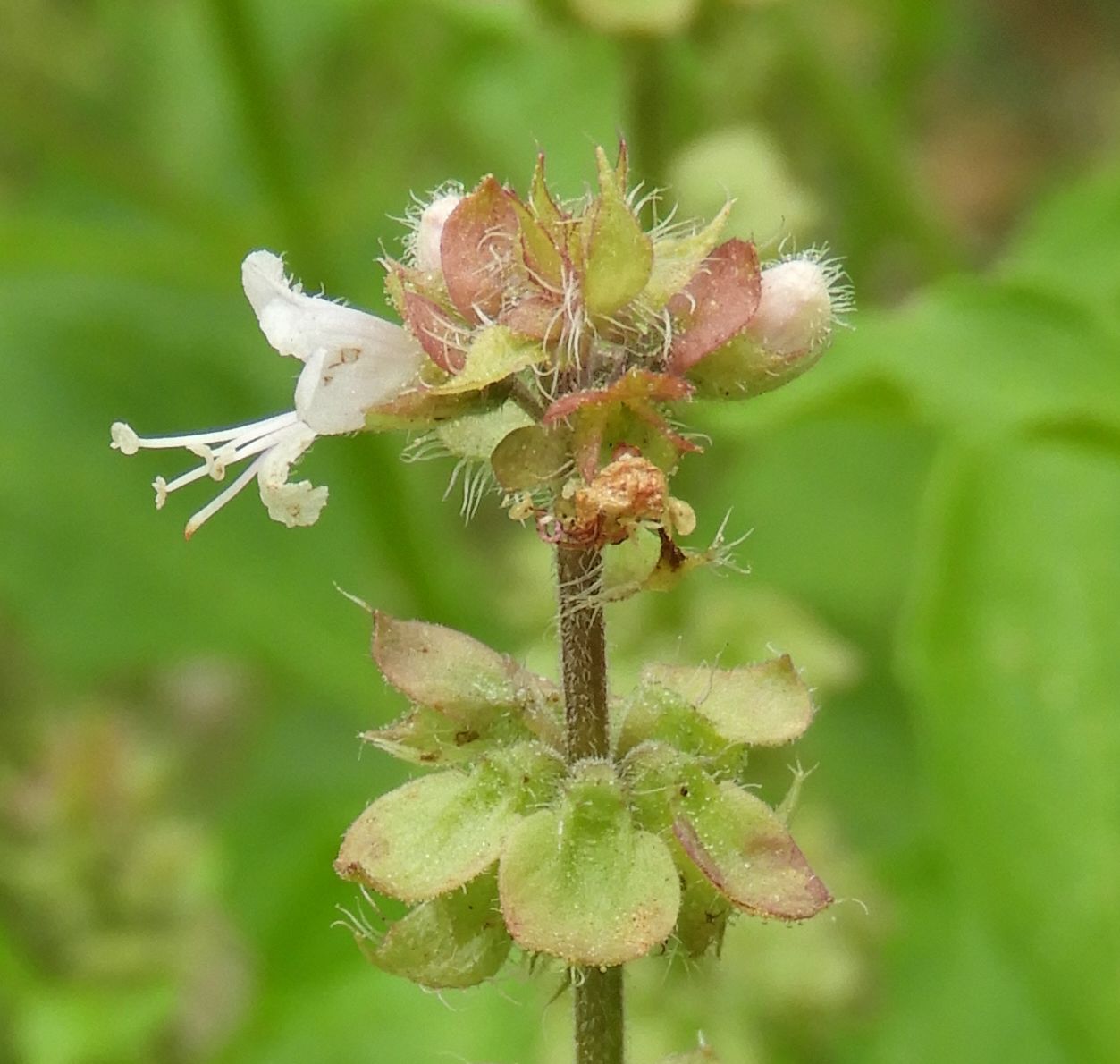
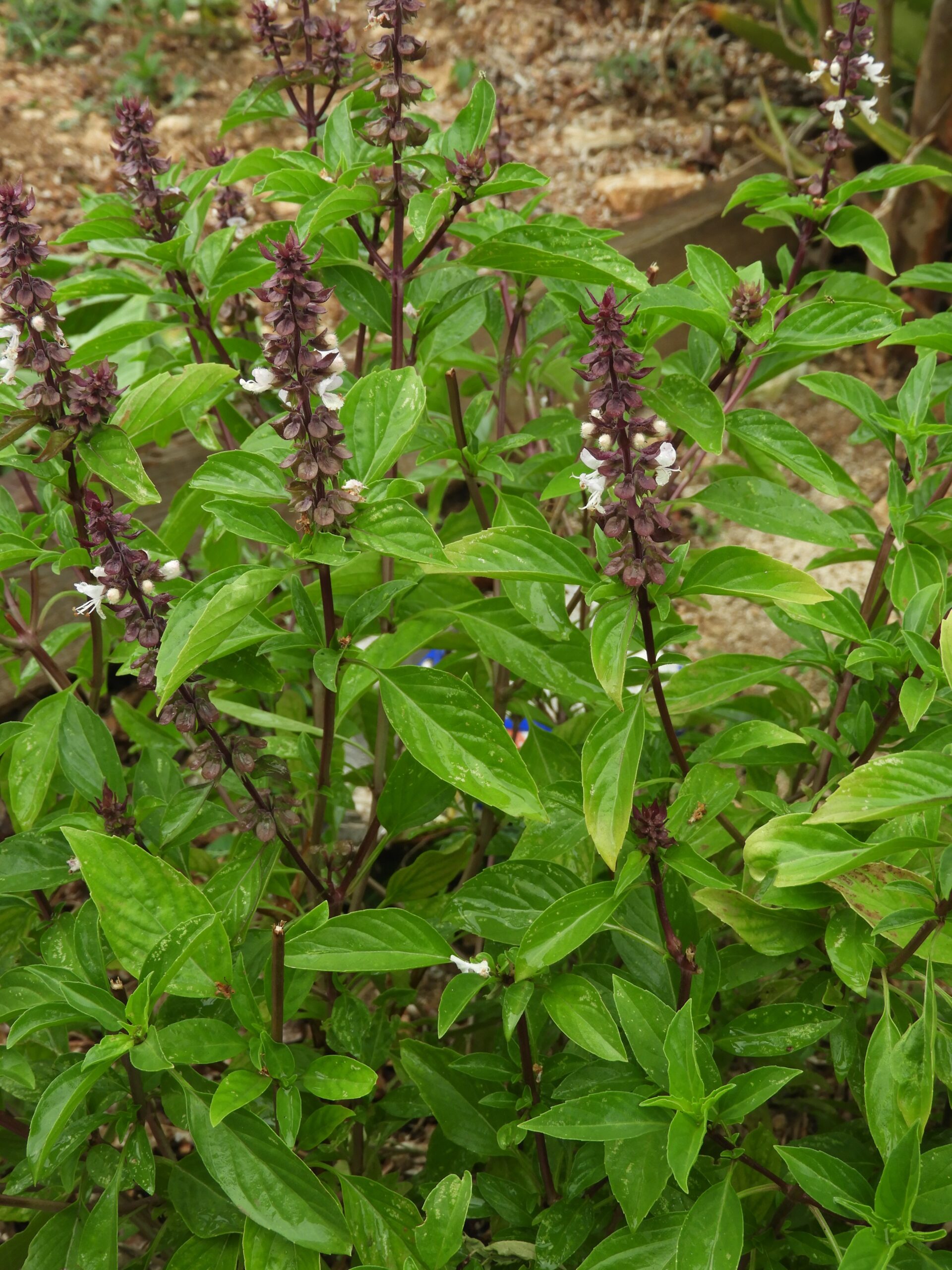
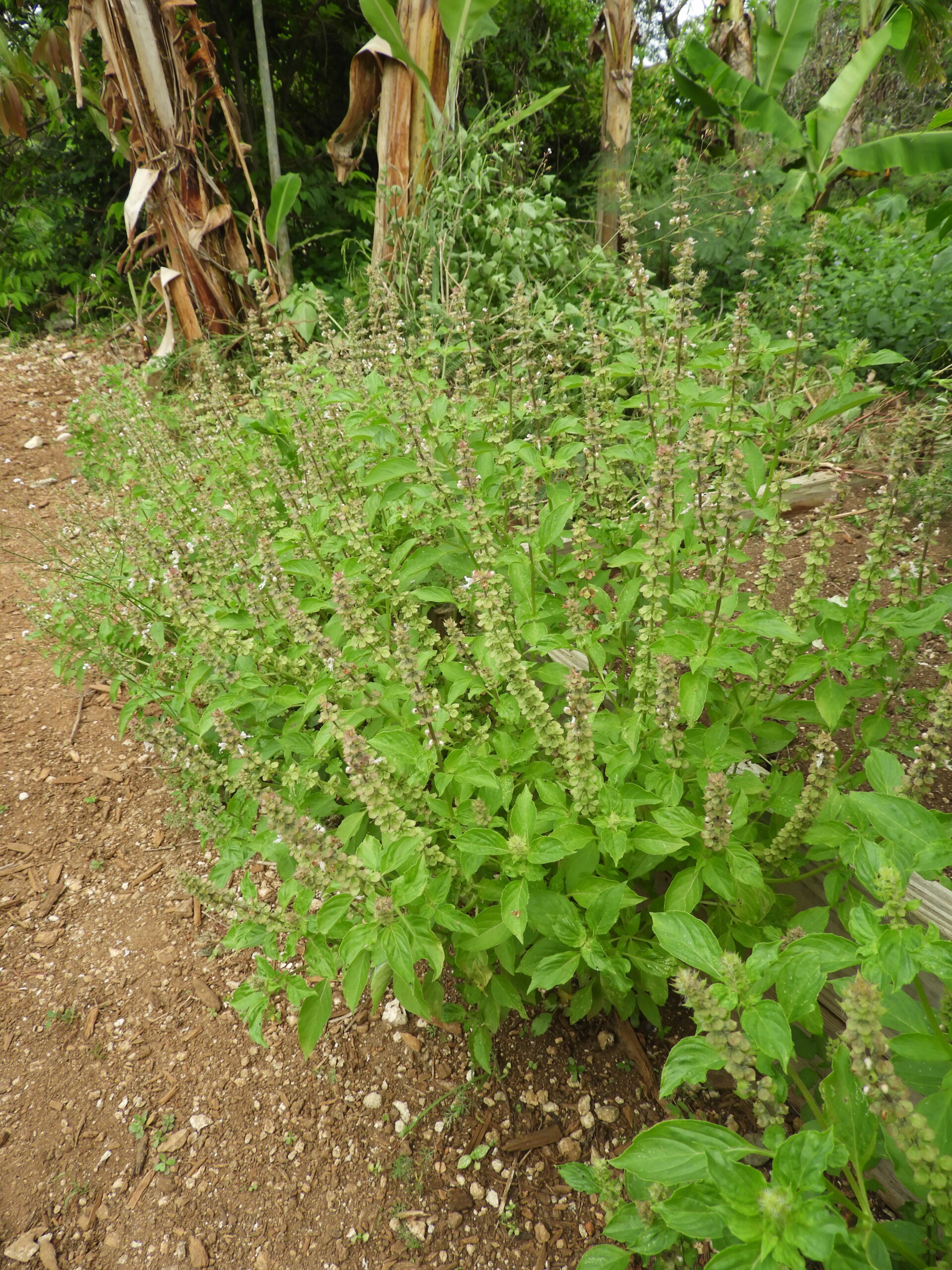
Habit: Ocimum basilicum grows as an annual (sometimes a perennial) herbaceous subshrub to up to 1 m in height. The leaves are arranged oppositely to 5 cm in length, elliptic to ovate to lanceolate with an entire to serrate/dentate margin and an apiculate leaf apex. Leaves often pubescent abaxially. All vegetative material is glandular pubescent. Vegetation is aromatic.
The complete, perfect, zygomorphic flowers are arranged in racemes. The calyx has 5 fused, greenish sepals forming a tube that is covered with glandular pubescence. The corolla has 5, fused, white to lavender petals with 3 lobes below and 2 lobes above. There are 4 stamens. The ovary is superior with 4 locules each with a single seed. The fruit is an aggregate of nutlets.
Habitat: Ocimum basilicum grows in the Bahamas in Human Altered environments (yards, gardens).
Distribution: Ocimum basilicum is not native to the Lucayan Archipelago but is grown throughout the island groupings. It is native to Asia and the Indian subcontinent. It is now grown globally.
Medicinal/Cultural/Economic usage: Ocimum basilicum has been used in the Bahamas to treat eye problems, gastrointestinal issues and to ward off evil spirits from ones yard.
It is used in cooking as a spice.