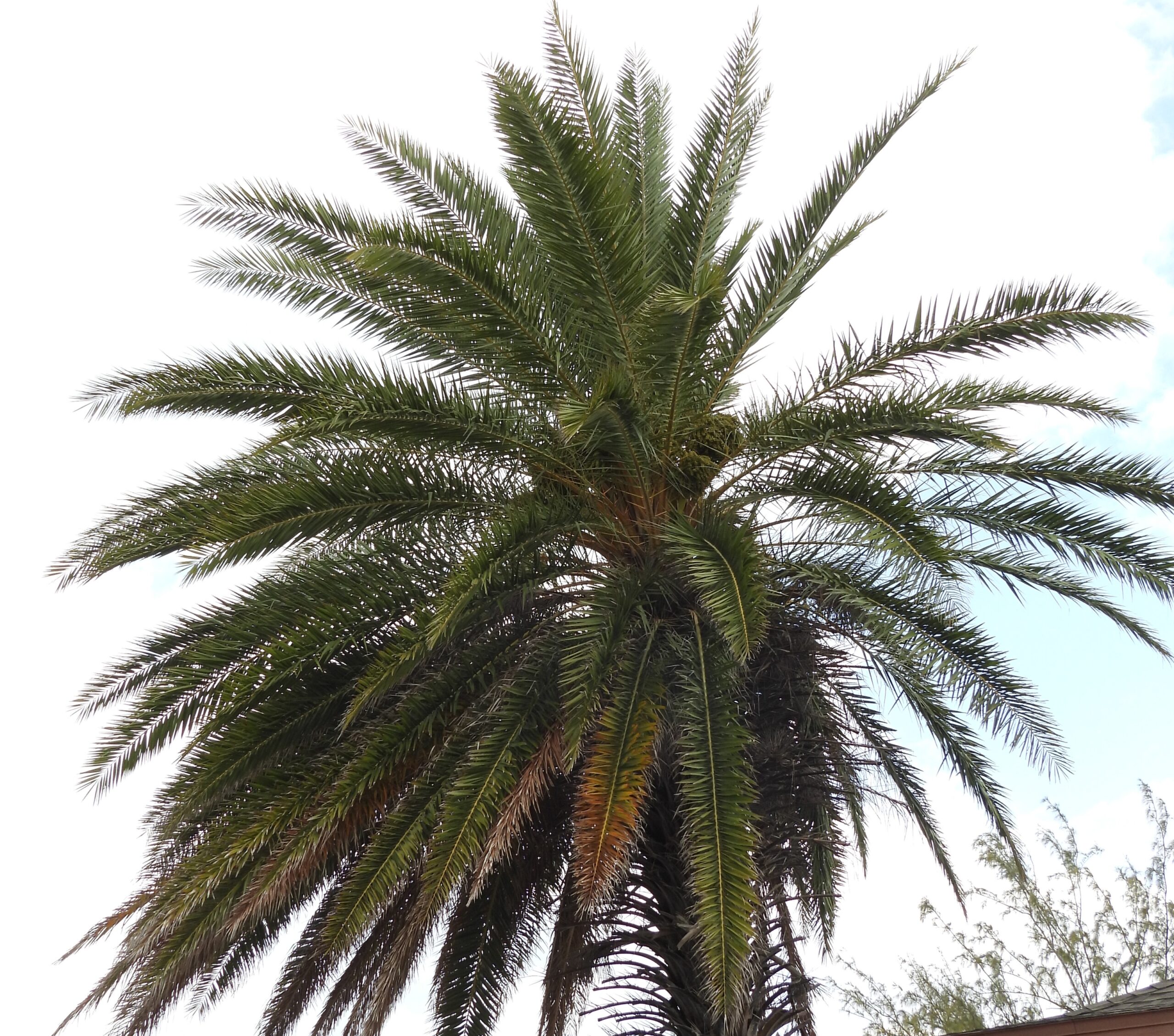
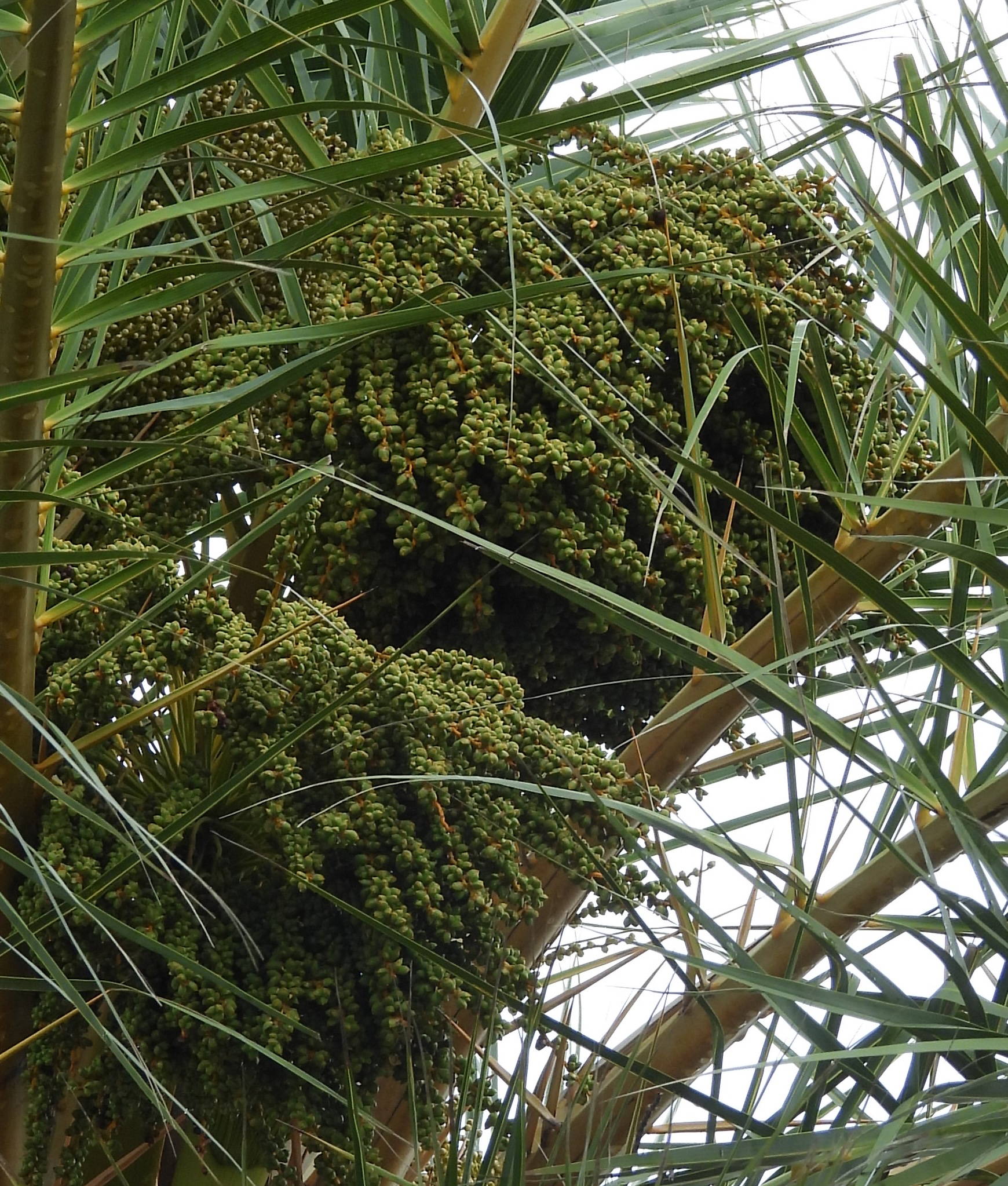
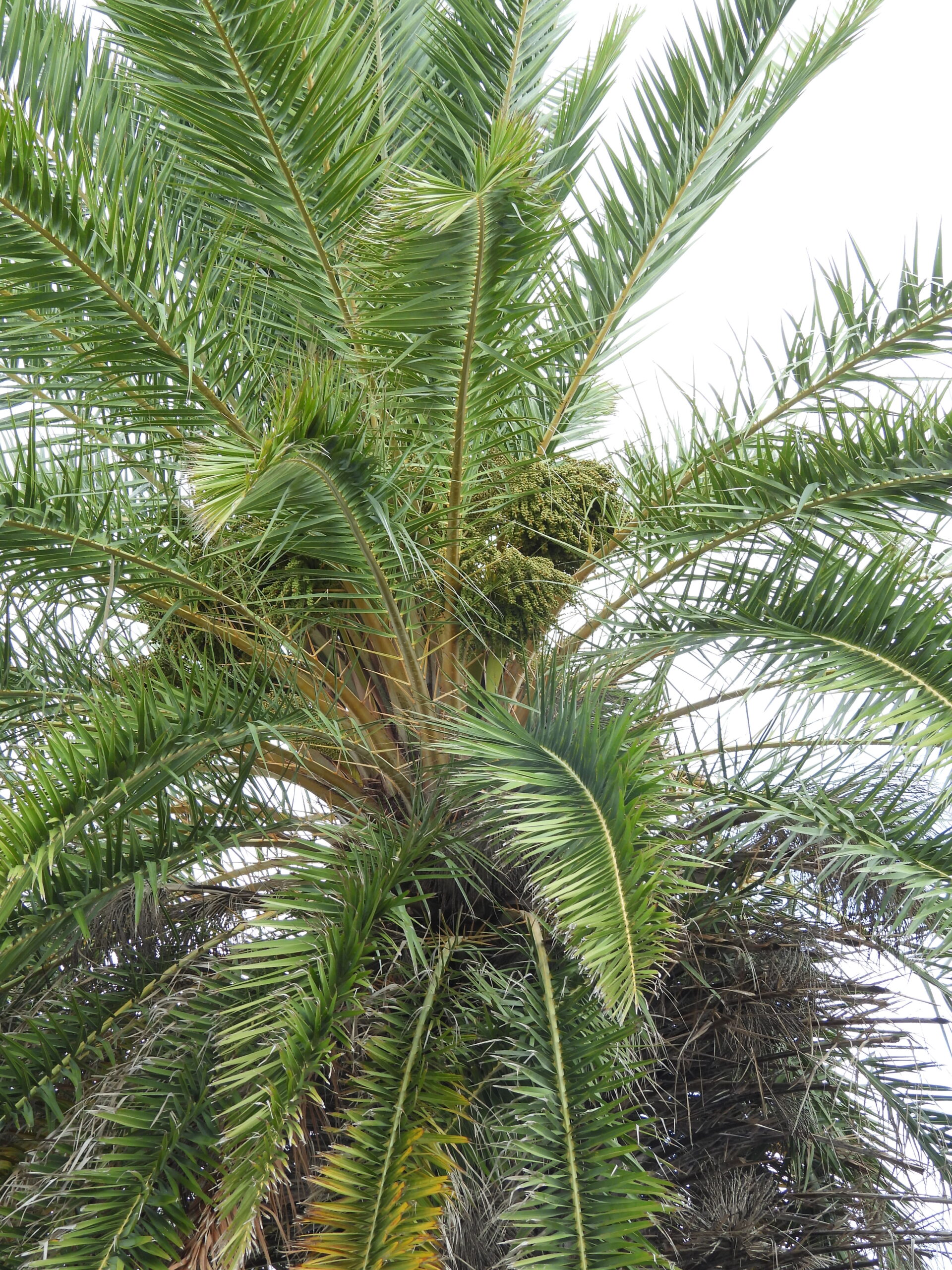
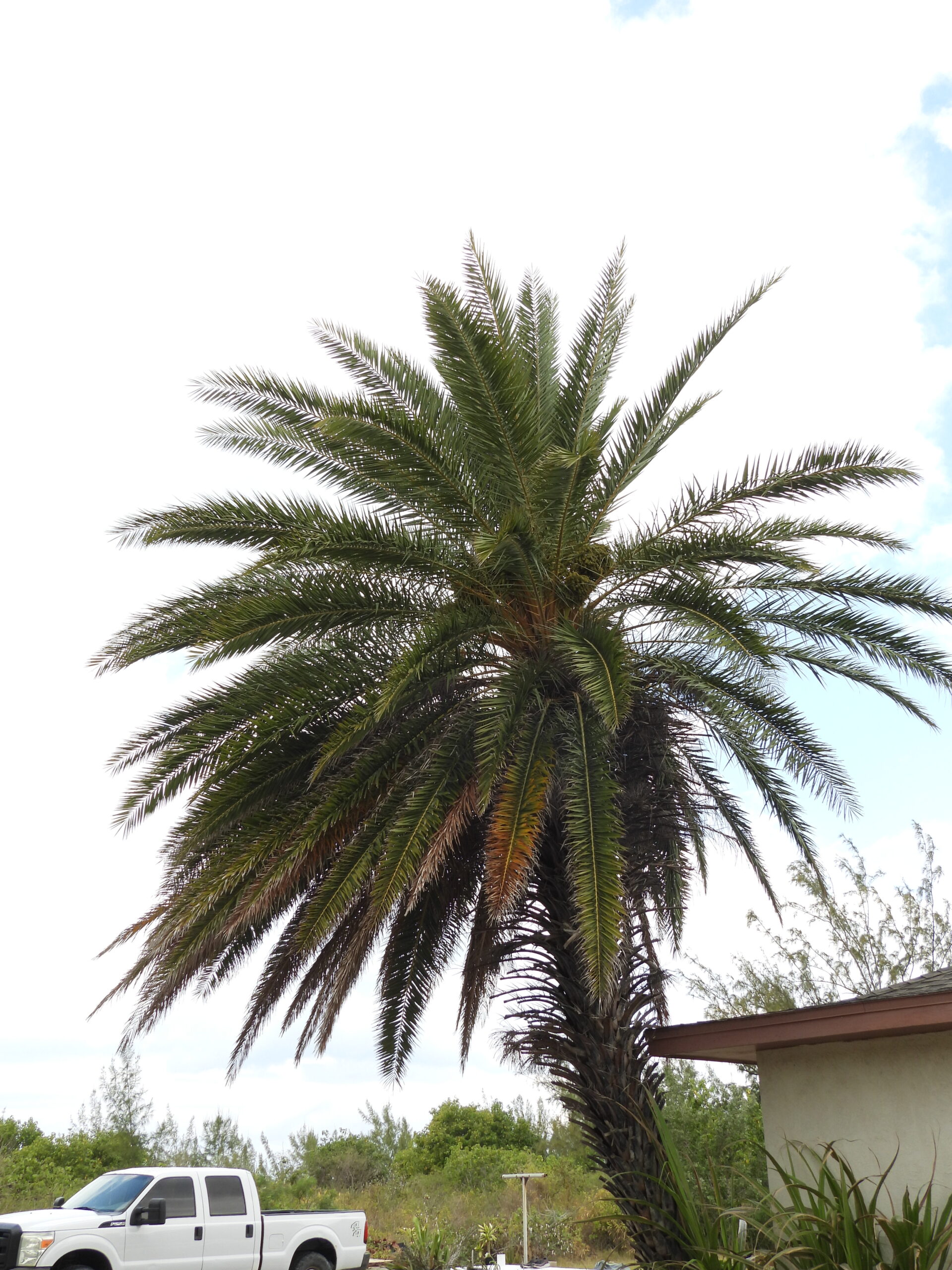
Habit: Phoenix dactylifera grows as a tree up to 30 m in height (typically shorter) and to 75 cm in diameter. The trunk is rough with petiole bases remaining attached for years. The dark green leaves are arranged spirally at the top of the trunk. The leaves are pinnately compound, to 5 m in length and 75 cm wide and covered with spines. There are up to 80 leaflets that are 2-4 ranked.
Phoenix dactylifera is dioecious. The incomplete, imperfect, actinomorphic flowers are arranged in a large panicle (to 120 cm in length) that arises below the lowest leaf and is subtended by a bract. The calyx has 3 sepals and the corolla has 3 petals. The calyx and corolla are greenish white with the petals longer than the sepals. Staminate flowers have 6 stamens and no carpel. The carpellate flowers have 6 staminodes and a single ovary and ovule. The ovary is superior with a single locule and seed. The fruit is a drupe that is red to light brown to yellow, up to 7 cm in length at maturity.
Habitat: Phoenix dactylifera grows in the Bahamas in Human Altered environments (yards and gardens).
Distribution: Phoenix dactylifera is not native to the Lucayan Archipelago. Its native range is to the Middle East but has been grown globally as a cultivated species.
Medicinal/Cultural/Economic usage: Phoenix dactylifera is not known to be used medicinally in the Lucayan Archipelago.
It is in the horticultural trade and agricultural trade. It is grown for its large, fleshy, sweet, edible fruits.