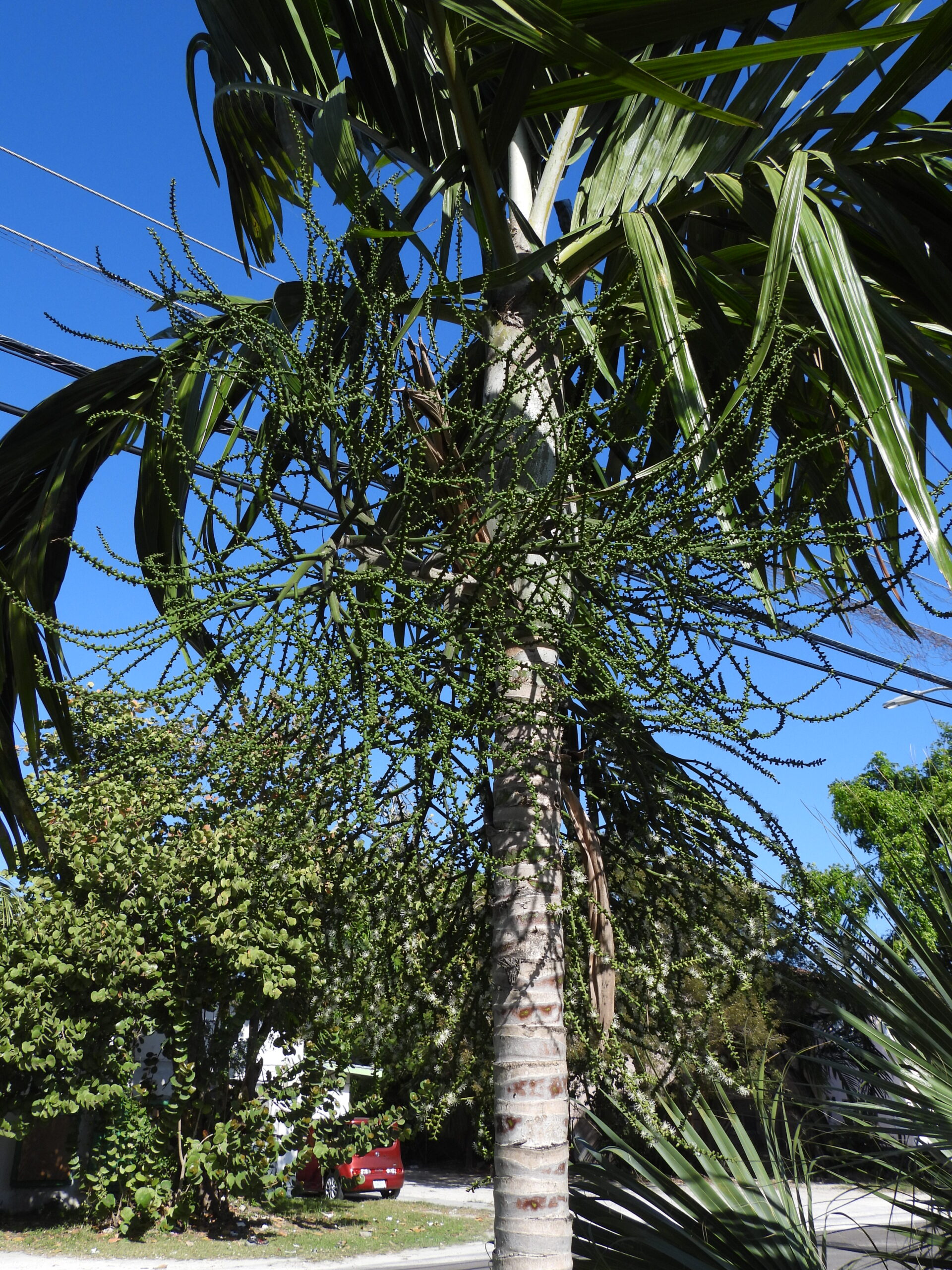
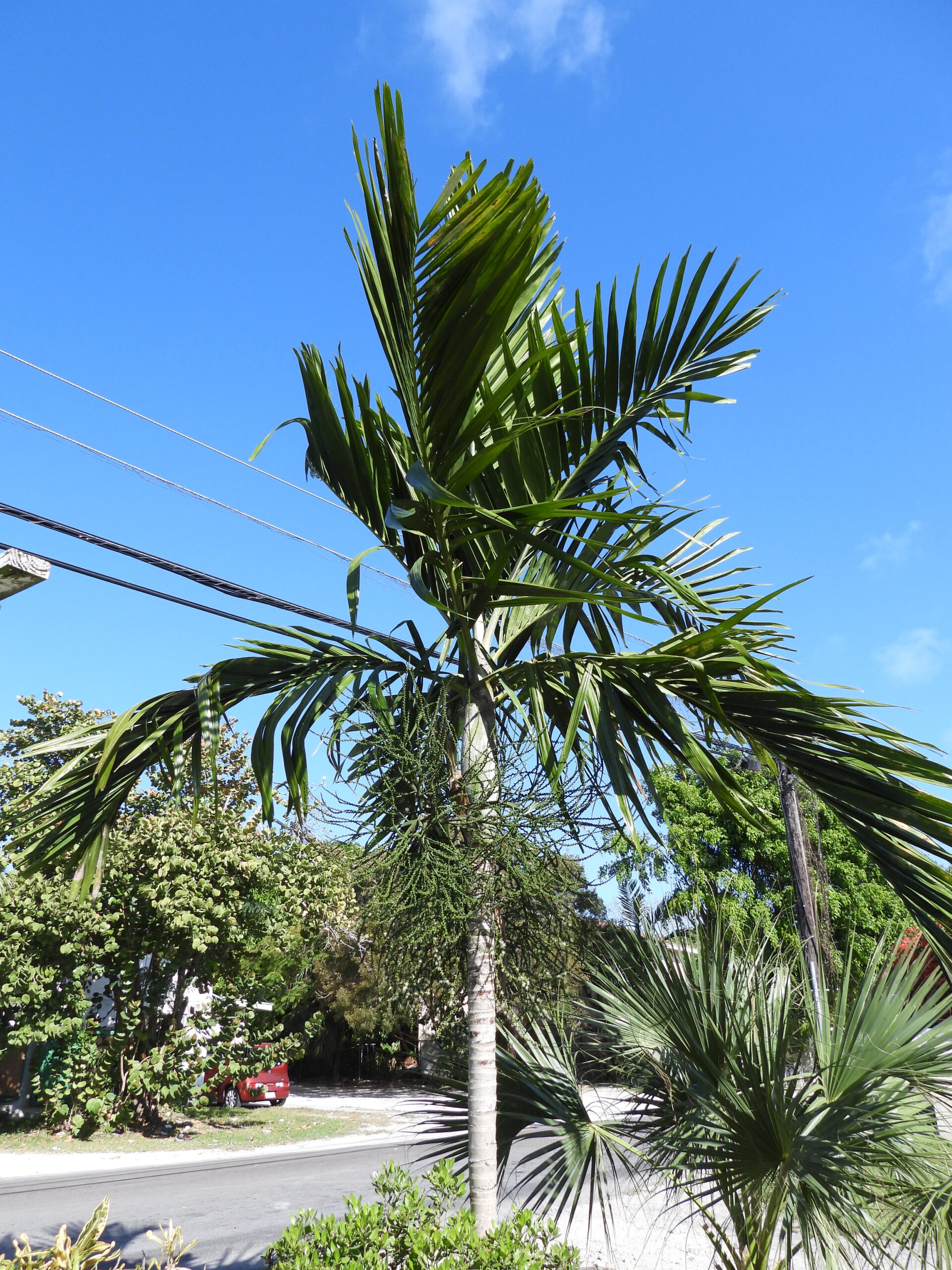
Habit: Ptychosperma elegans grows as an unbranched tree to 12 meters with a trunk to 10 cm wide. Each trunk has distinctive circular leaf scars. The pinnately compound leaves are arranged spirally. The leaf blade is up to 3 m in length, with 30-60 pairs of 2-ranked leaflets, each oblong/oblanceolate. Both the petiole and lamina are dark green. The petiole base extends as an extended sheath surrounding the trunk creating a light green/olive crownshaft.
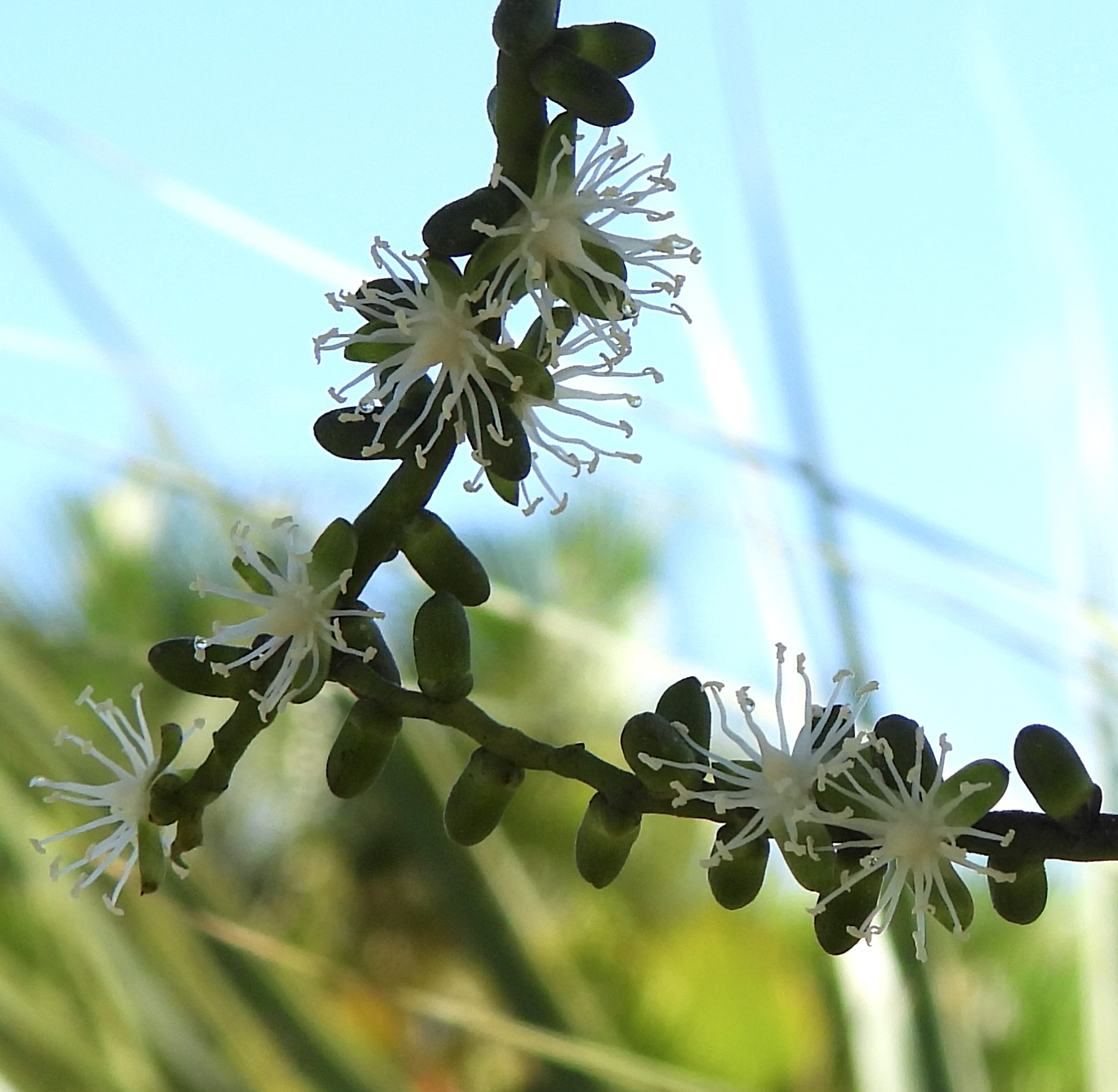
Ptychosperma elegans is monecious. The incomplete, imperfect, actinomorphic flowers are arranged in an open panicle up to 75 cm in length that emerges below the crownshaft. Flowers occur in groups of three each with 2 staminate and 1 carpellate flower. The calyx has 3 sepals that are fused at the base forming a shallow cup. The corolla has 3 unfused petals. Staminate flowers have numerous stamens, are slightly larger than carpellate flowers and have no carpels. Carpellate flowers have 6 staminodes and has 3 locules. The fruit is a red drupe at maturity.
Habitat: Ptychosperma elegans grows in the Bahamas in Human Altered environments (yards, gardens). It is native range it grows in coastal wet forests.
Distribution: Ptychosperma elegans is not native to the Lucayan Archipelago. Its native range is Queensland, Australia.
Economic/Medicinal/Cultural usage: Ptychosperma elegans is not known to be used medicinally in the Bahamas.
Ptychosperma elegans is grown as an ornamental.