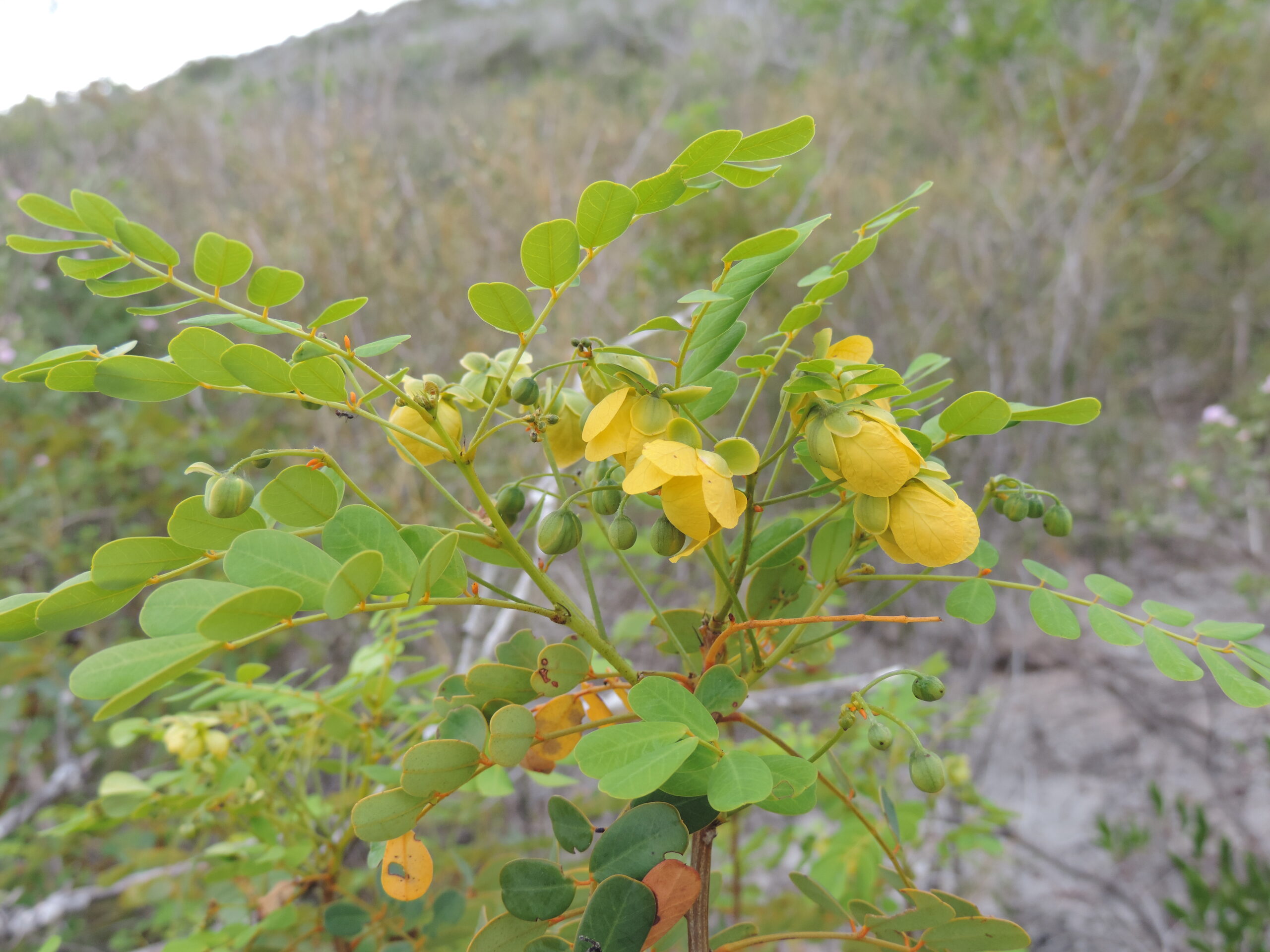
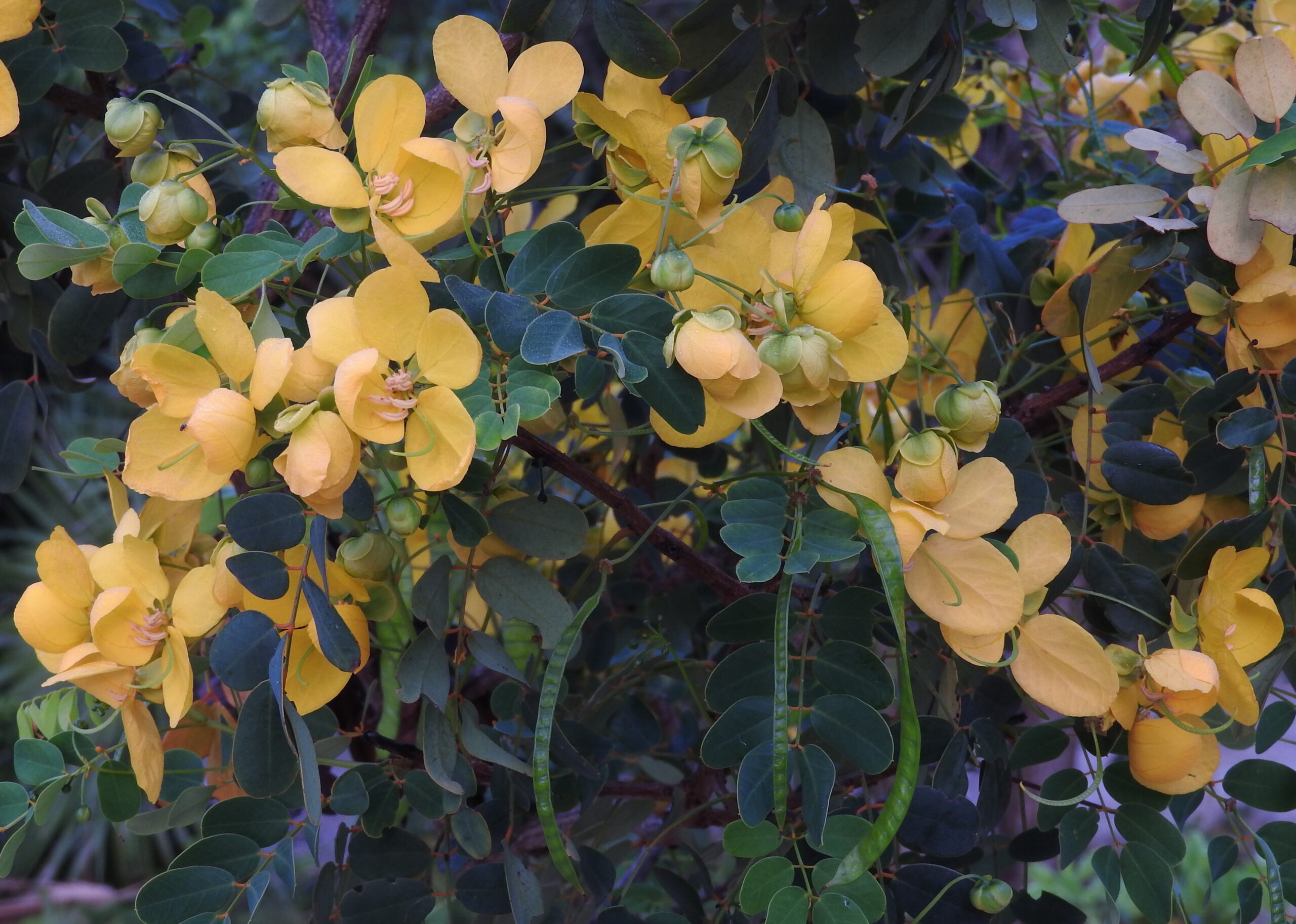
Habit Senna pallida is a glabrous to pubescent, shrub to small tree sometimes up to 5 meters in height, usually much smaller. The bipinnately compound leaves are alternately arranged. The leaflets are in 4-11 pairs, oblong to elliptic to obovate, rounded to mucronate at the leaflet apex, with an entire margin and a cylindrica stalked/stipitate, orange gland between the lowest pair of leaflets above the petiole. Glands may occur between other pairs of leaflets.
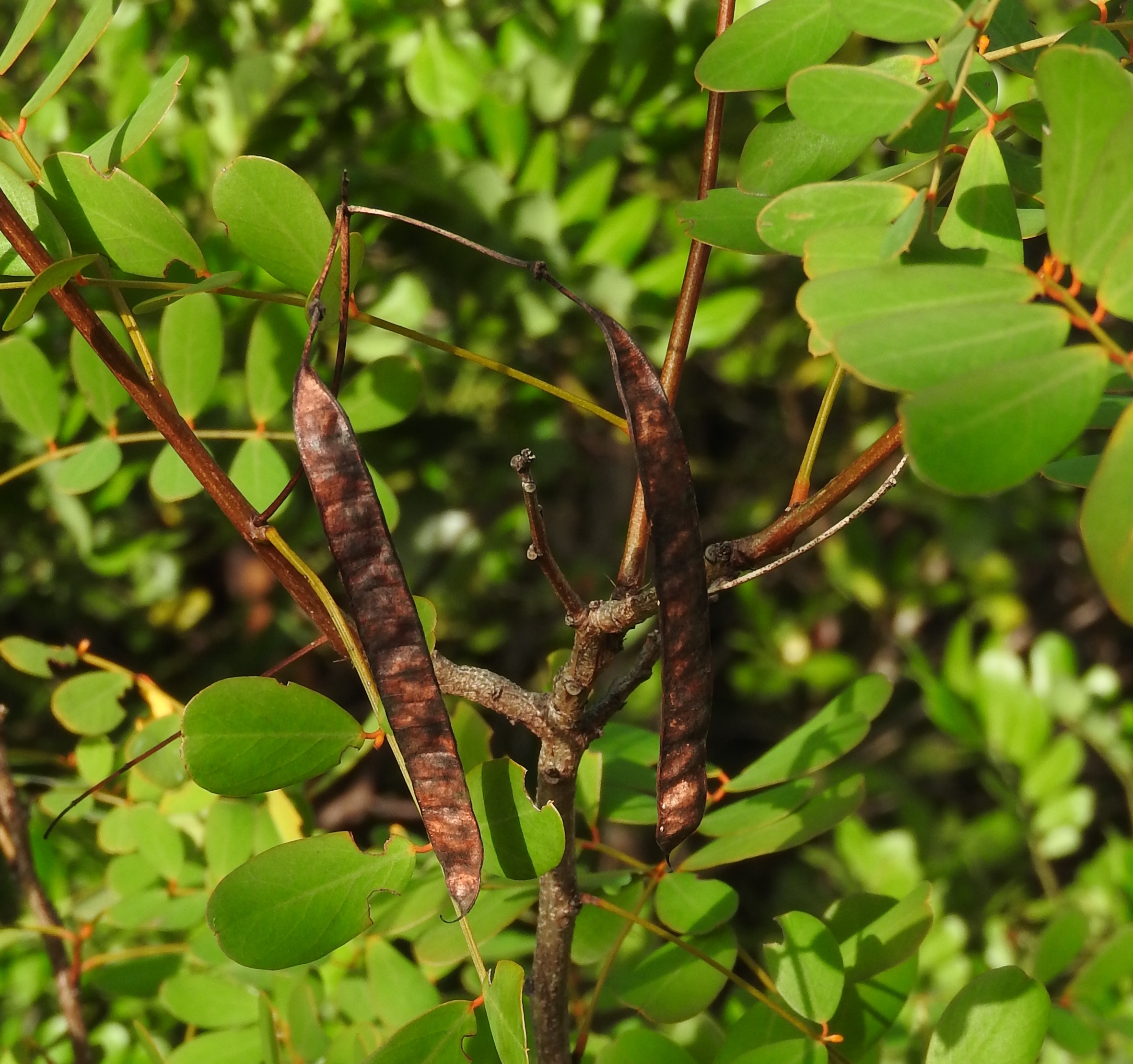
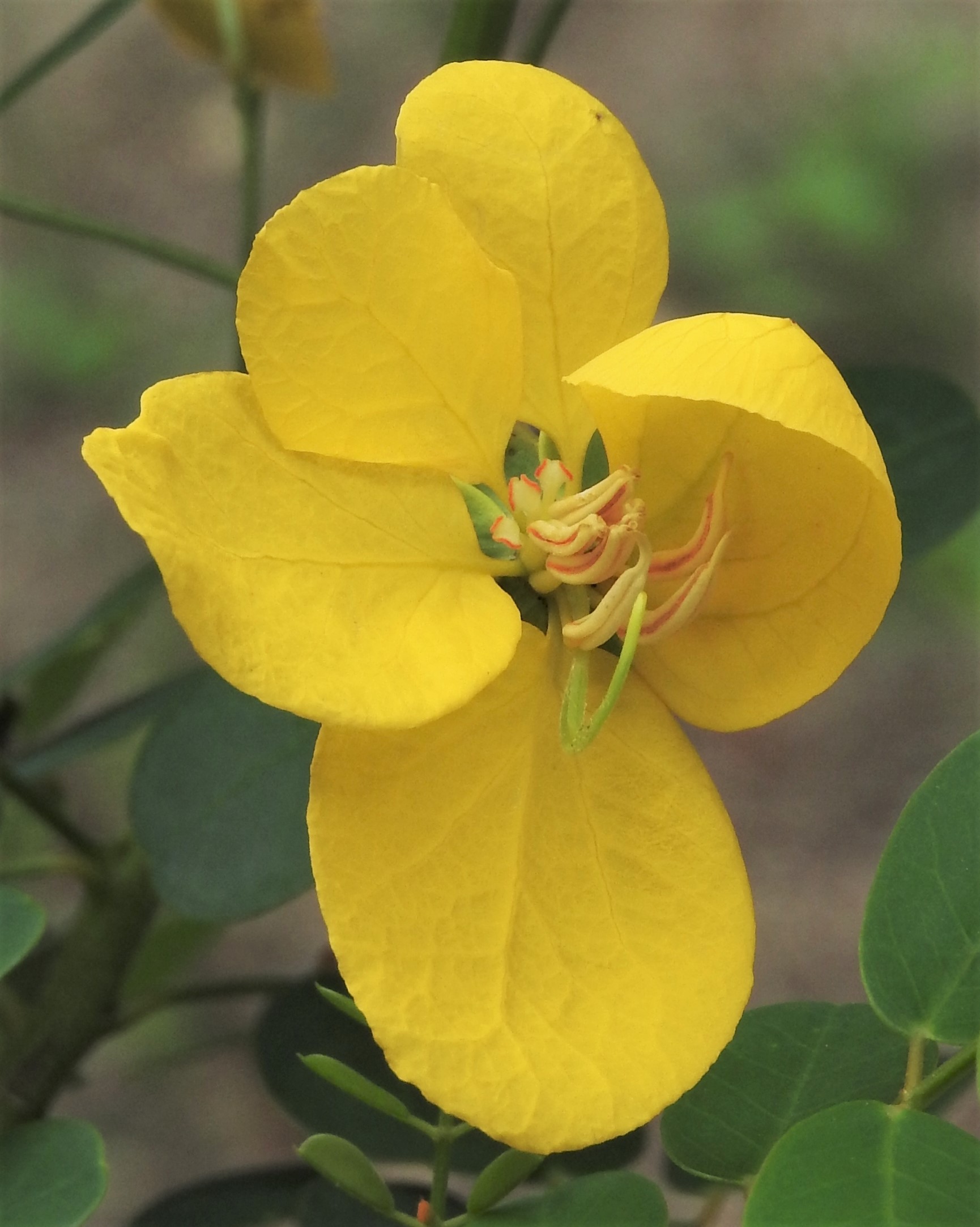
The zygomorphic flowers are arranged in axillary racemes in pairs. The calyx has 5 greenish, unfused, sepals. The corolla has 5 yellow, unfused petals, none of which form a keel. There are 9 stamens of which only 7 are fertile. The ovary is superior and forms a flattened/compressed brown legume at maturity. The legume is constricted transversely between seeds giving a distinct ladder like appearance to the fruit.
Habitat: Senna pallida grows in Dry Broadleaf Evergreen Woodlands/Shrublands (scrublands).
Distribution: Senna pallida is native to the Lucayan Archipelago occurring in the southern island groupings. It also occurs in general Caribbean region, Mexico, Central and South America.
Medicinal/Cultural/Economic usage: Senna pallida is not known to be used medicinally in the Bahamas.