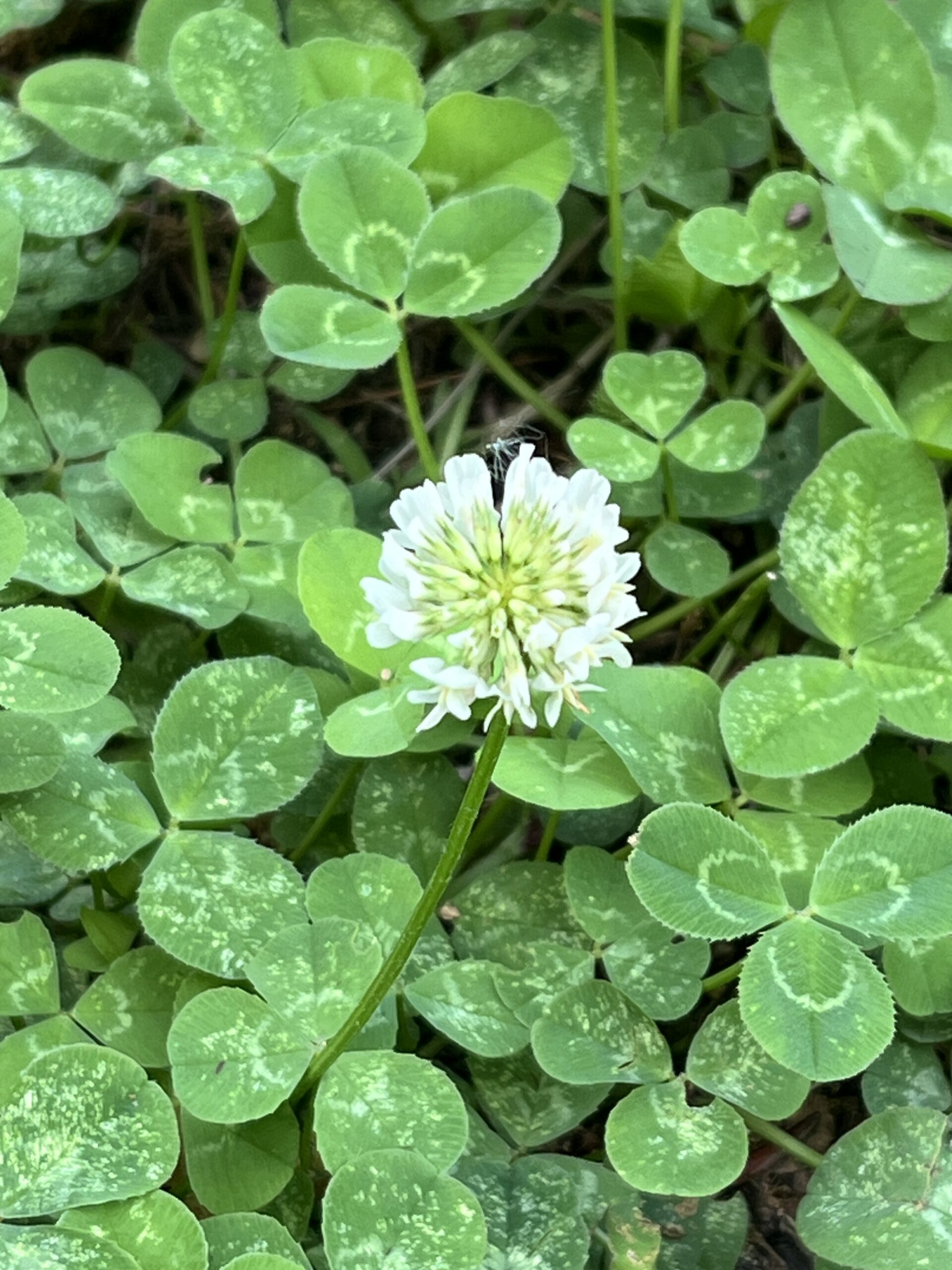
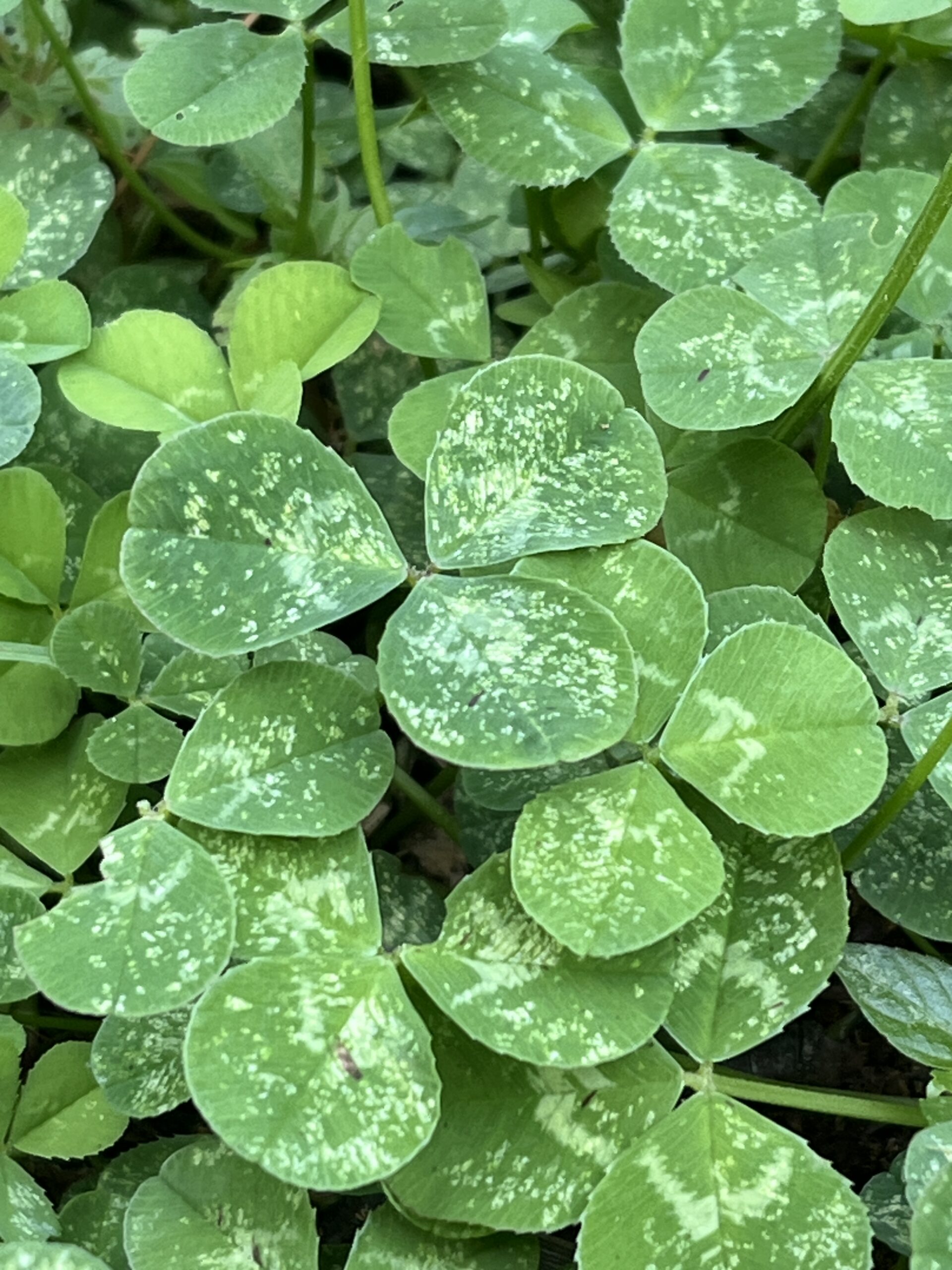
Habit: Trifolium repens grows as a creeping, perennial, rooting at the nodes. New vegetation is primarily glabrous. The trifoliate leaves are arranged alternately. The sessile leaflets are to 3 cm in length, oblong with an oblong to retuse leaf apex, with a toothed margin, are ab- and adaxially pubescent. There are oblong, connate (below attachment to the petiole) stipules. The leaf surface often white spotted/variegated.
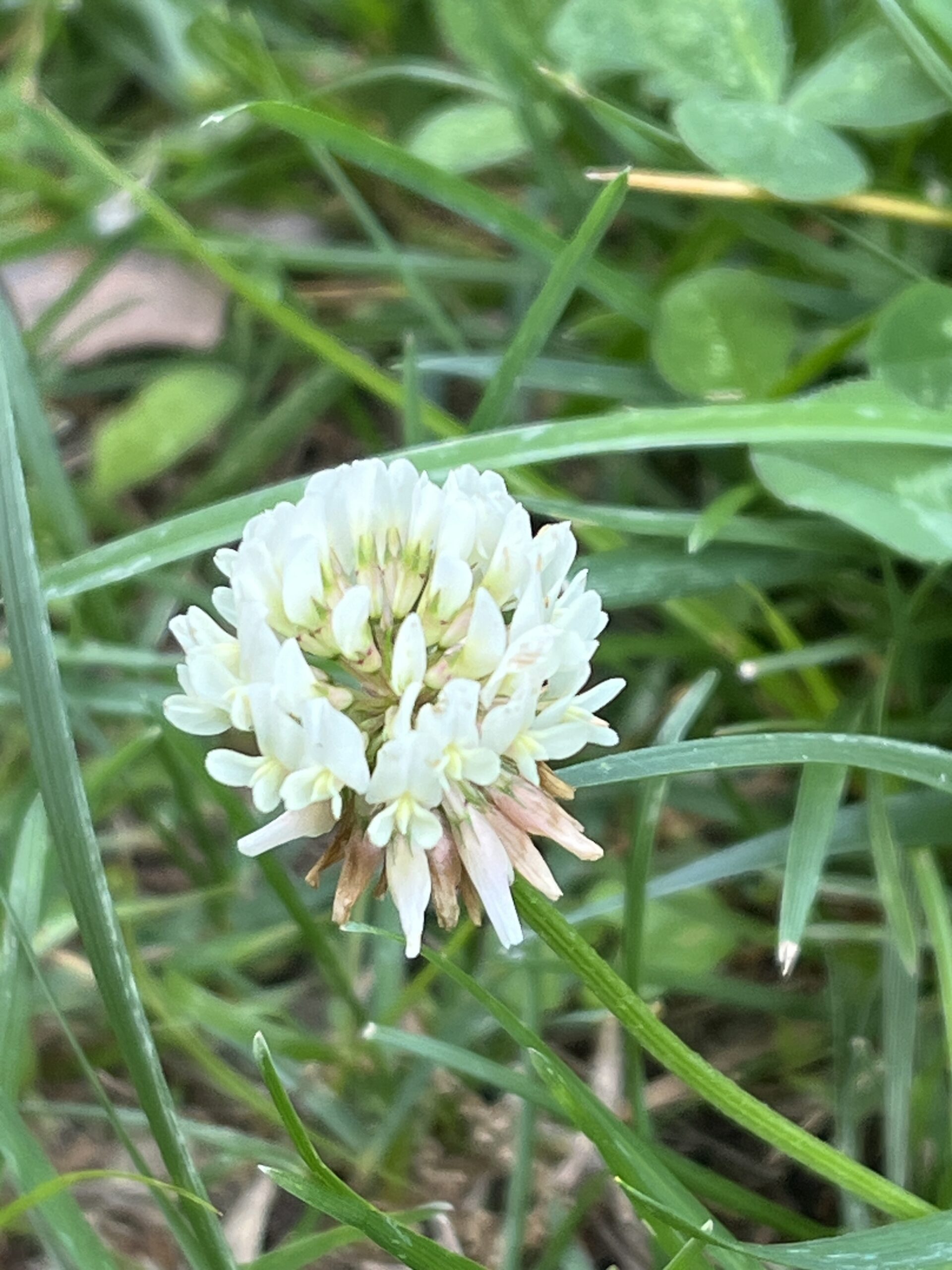
The complete, perfect, zygomorphic flowers are in terminal heads with peduncles longer than the petioles. The calyx has 5 partially fused, pubescent green sepals forming a tube with the sepal lobes the same length as the tube. The corolla has 5 white petals, the upper enlarged to form the banner and the lower 2 fused to form the keel. There are 10 diadelphous stamens. The ovary is superior and has a single locule with numerous seeds. The fruit is a brown legume.
Habitat: Trifolium repens grows in Human Altered environments (lawns and fields) in the Lucayan Archipelago.
Distribution: Trifolium repens is NOT native to the Lucayan Archipelago but occurs irregularly in the northern islands. It is native to Europe and central Asia and parts of north Africa and now occurs throughout most of North America and Asia.
Medicinal/Cultural/Economic usage: Trifolium repens is not known to be used medicinally in the Bahamas.
It has been used throughout the world as a feed crop as well as to assist in nitrogen fixation to increase soil fertility.
It has been planted as an ornamental.