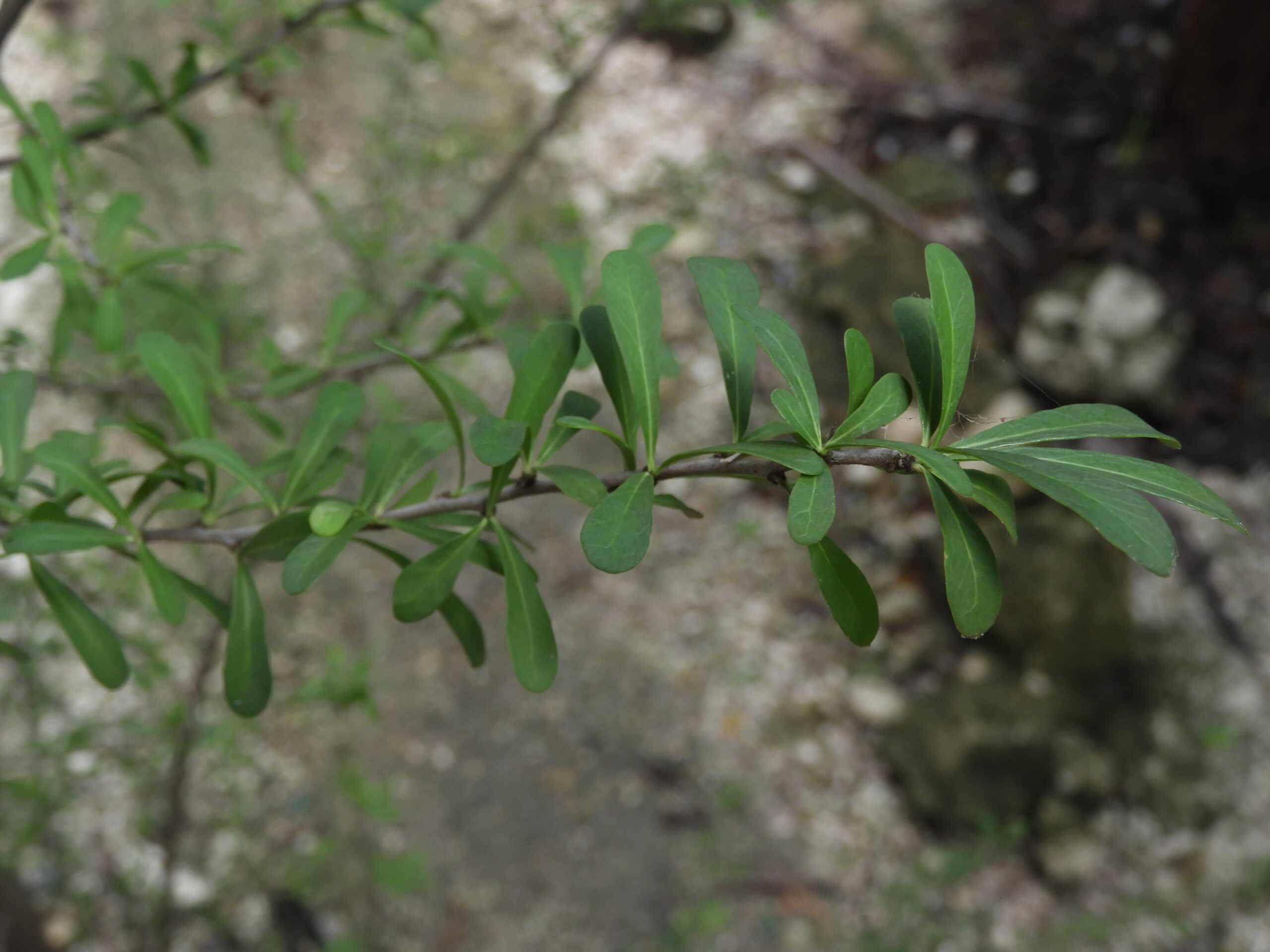
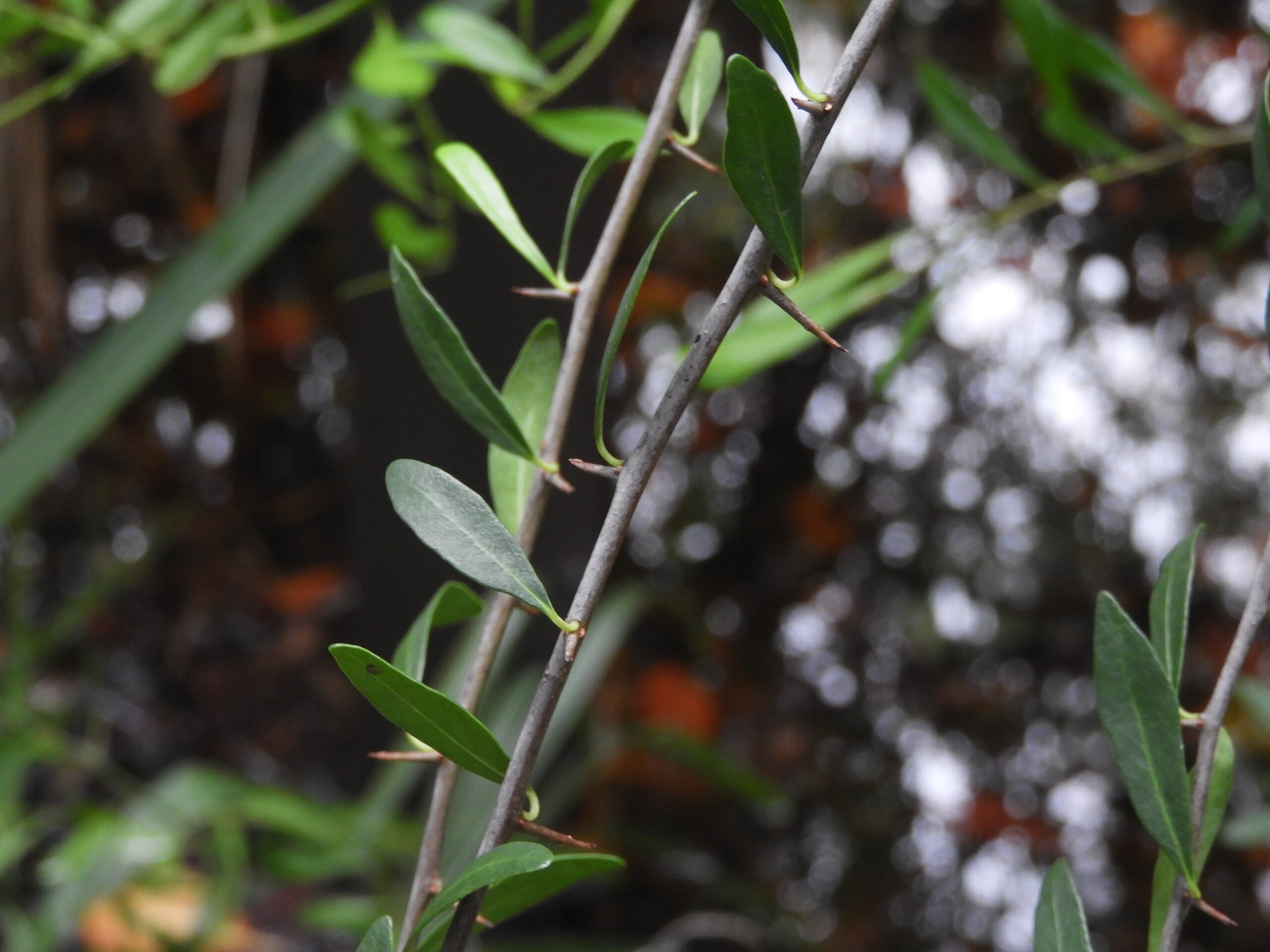
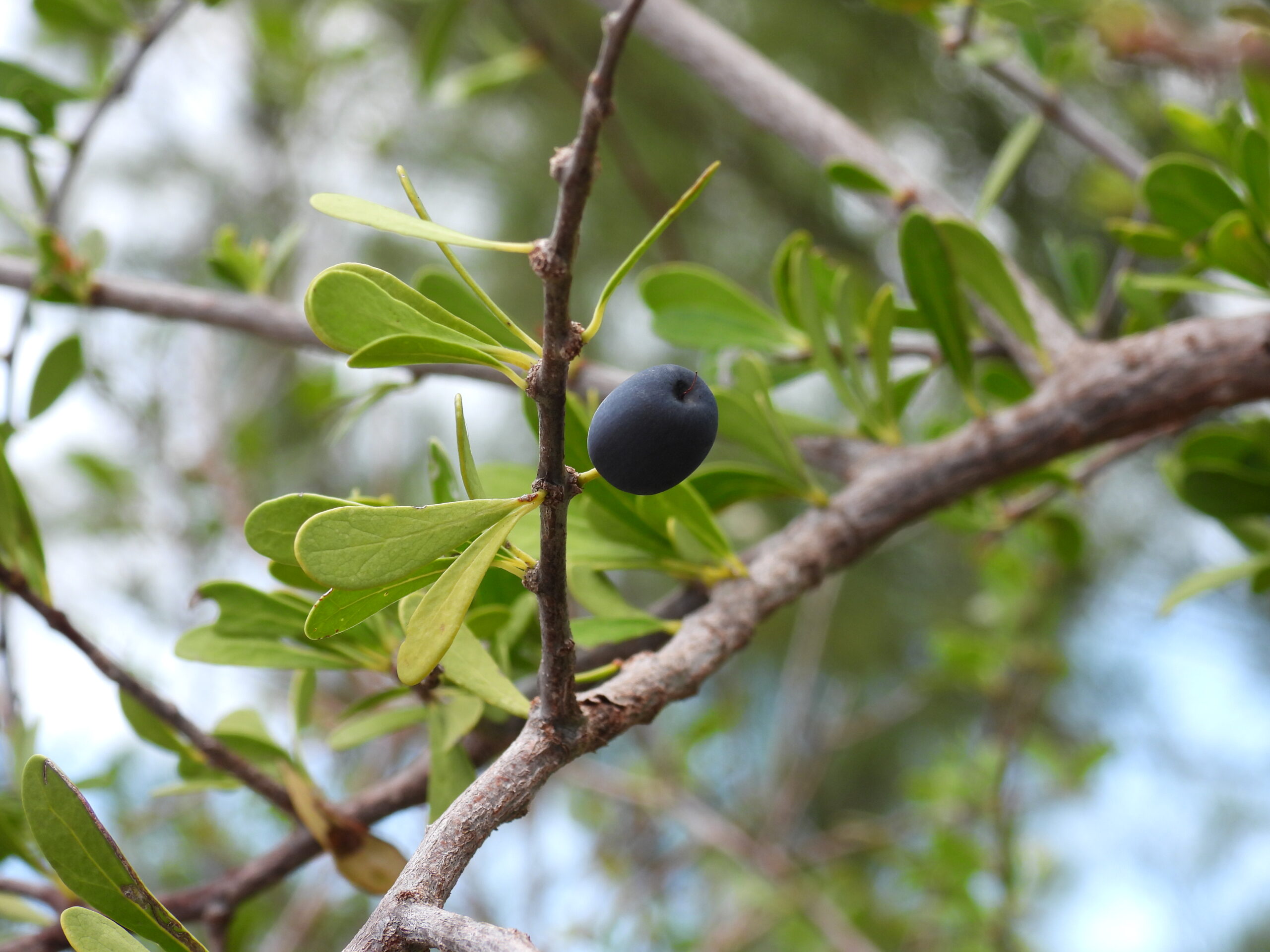
Habit: Sideroxylon celastrinum grows as a large thorny shrub to small tree up to 9 m in height. Branching pattern with stems at right angles. The leaves are arranged alternately in clusters on short branches, up to 4 cm in length (usually smaller), variable in shape from oblanceolate to obovate with a flat or rounded leaf apex to elliptical with a rounded leaf apex. The leaf margin is entire. Short branches occur as spines.
The complete, perfect, actinomorphic, and subsessile flowers are arranged in groups of 5-15 arising in the axils of leaves. The calyx has 5 unfused brown pubescent sepals. The corolla has 5 white fused petals. There are 5 stamens fused to the corolla and alternating with staminodes. The ovary is superior with 1 locule and seed. The fruit is a blue/black drupe at maturity.
Habitat: Sideroxylon celastrinum grows along the edges of saline wetlands, mangroves, and at the edges of Dry Broadleaf Evergreen Formation – Forest/Woodland/Shrublands (coppice and scrublands).
Distribution: Sideroxylon celastrinum occurs in the central and northern islands groupings in the Bahamian Archipelago as well as Cuba, Central America and northern South America and south Florida.
Medicinal/Cultural/Economic usage Sideroxylon celastrinum is not known to be used medicinally in the Bahamas.
Sideroxylon celastrinum has been used in horticultural and landscaping.
The fruits are edible.