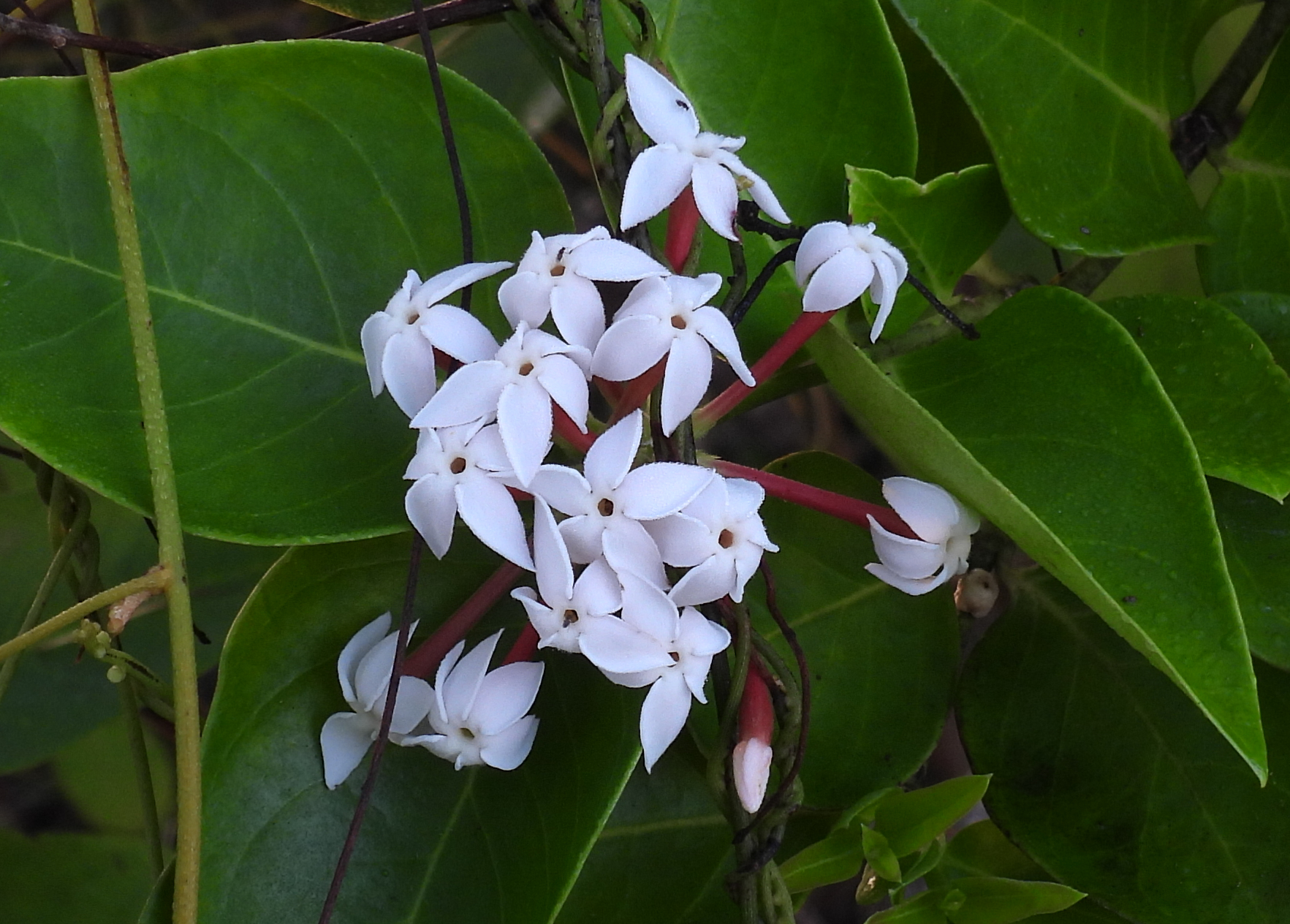
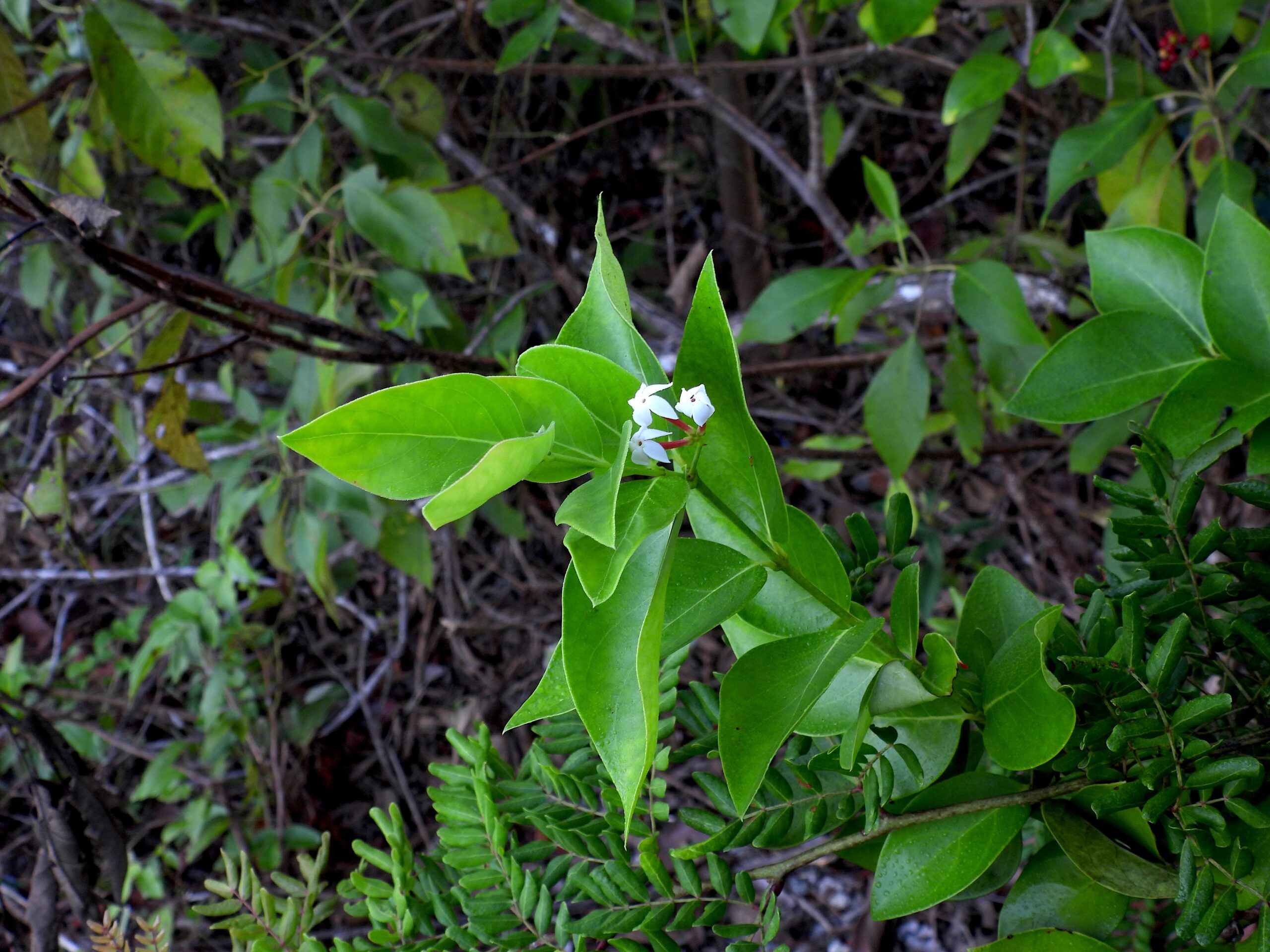
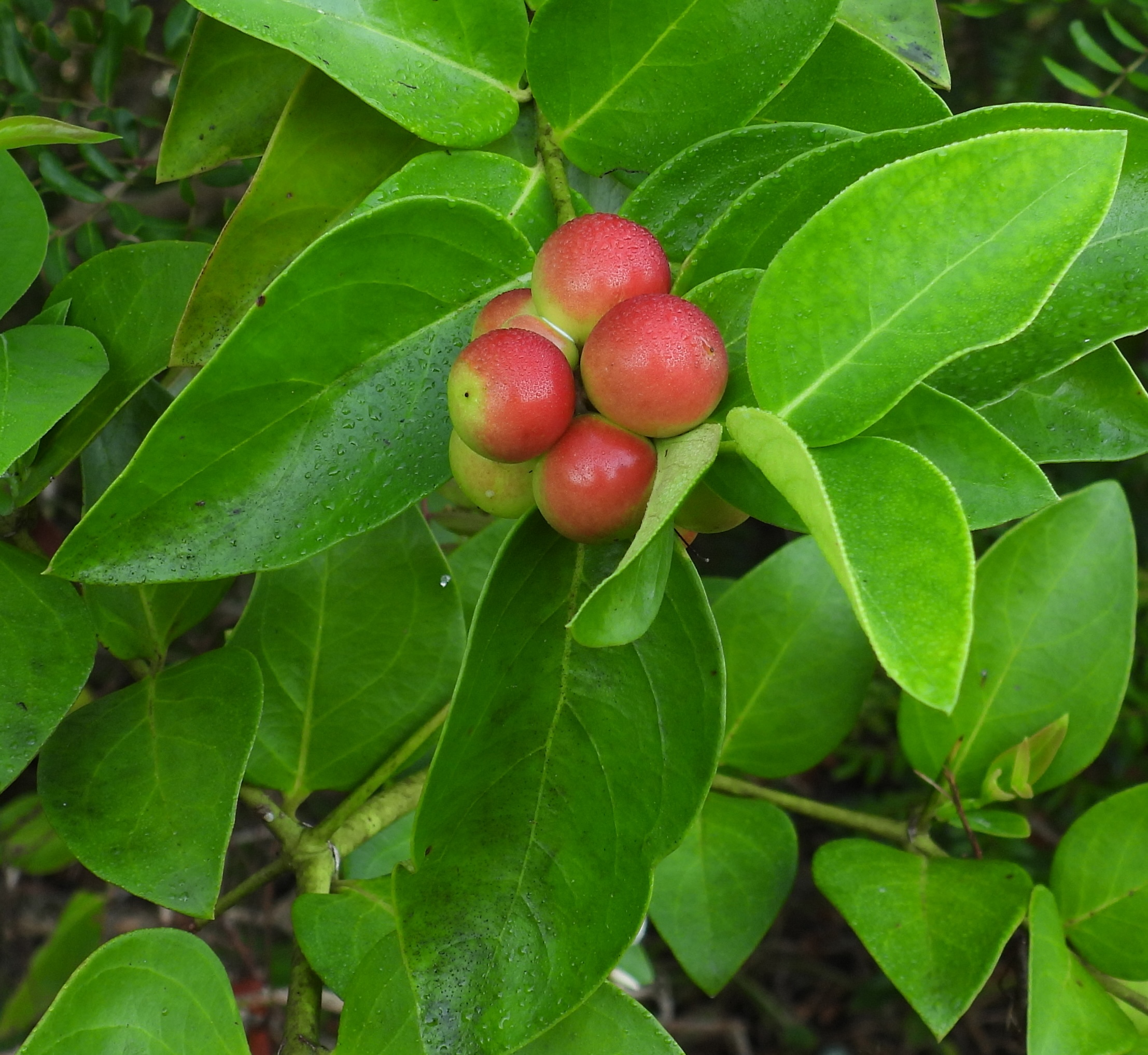
Habit: Carissa carandas grows as thin shrub up to 5 m in height. The stems have simple or forked spines to 3 cm in length. The coriaceous, glabrous leaves are arranged oppositely, to 6 cm long, 3 cm wide, ovate to oblong with and entire margin and an apiculate/emarginate leaf apex.
The complete, perfect, actinomorphic flowers are solitary or in cymes in leaf axils. The calyx has 5 unfused, greenish sepals. The corolla has 5 white to light rose/pink petals that are fused forming a tube with the elongate lobes overlapping to one side forming a pinwheel shape and slightly pubescent to ciliate along the margins. There are 5 stamens fused to the corolla tube. The ovary is superior and has two locules and many ovules. The fruit is an oval dark red to black berry with a milky sap at maturity.
Habitat: Carissa carandas grows in Human Altered environments (yards and gardens) but escapes cultivation in to Pine Woodlands.
Distribution: Carissa carandas is NOT native to the Lucayan Archipelago. It is native to the Indian subcontinent but is grown in tropical regions of the world.
Medicinal/Cultural/Economic usage: Carissa carandas is not known to be used medicinally in the Lucayan Archipelago.
The fruit is edible and has been used in pickling and chutneys.