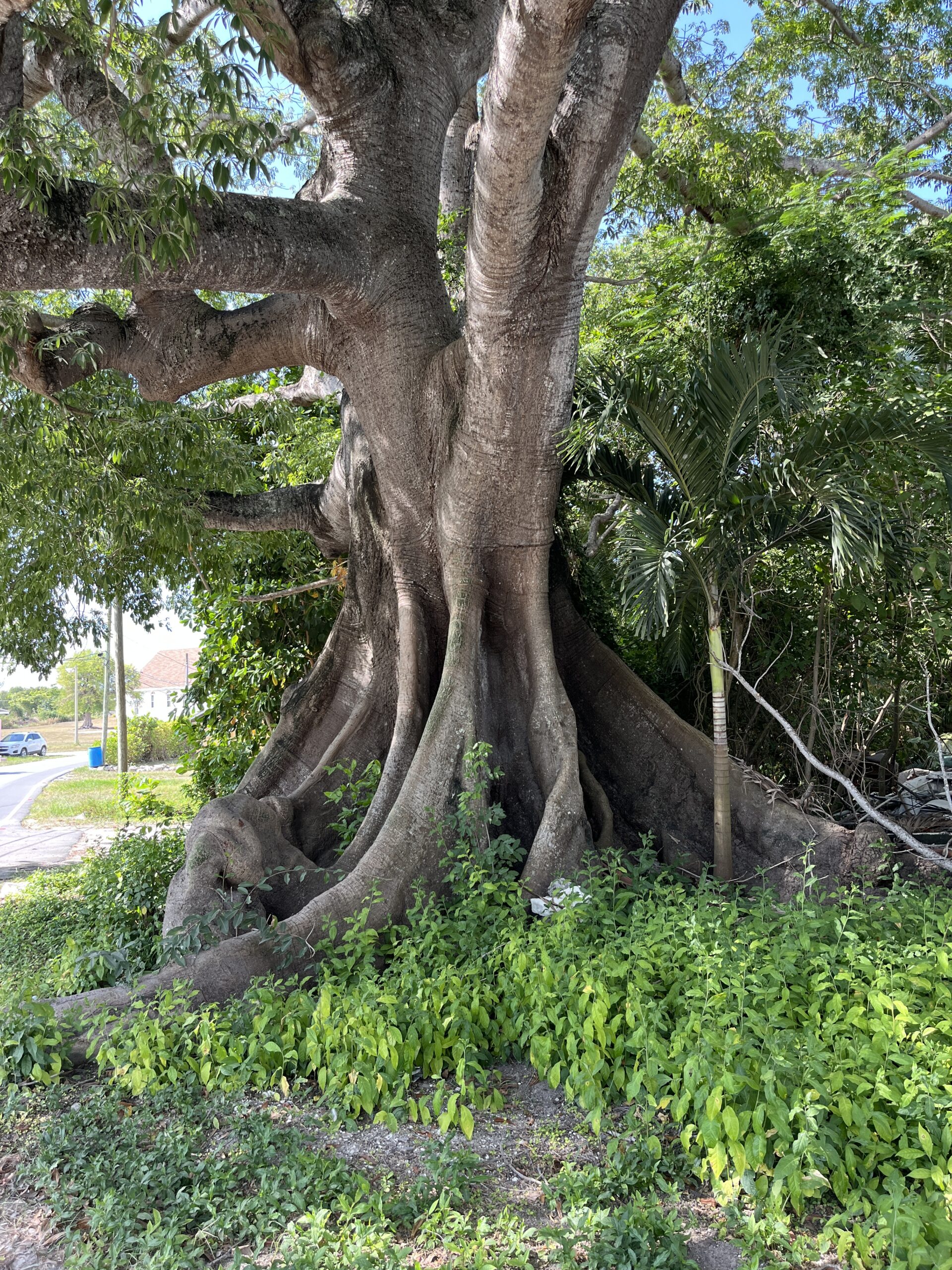
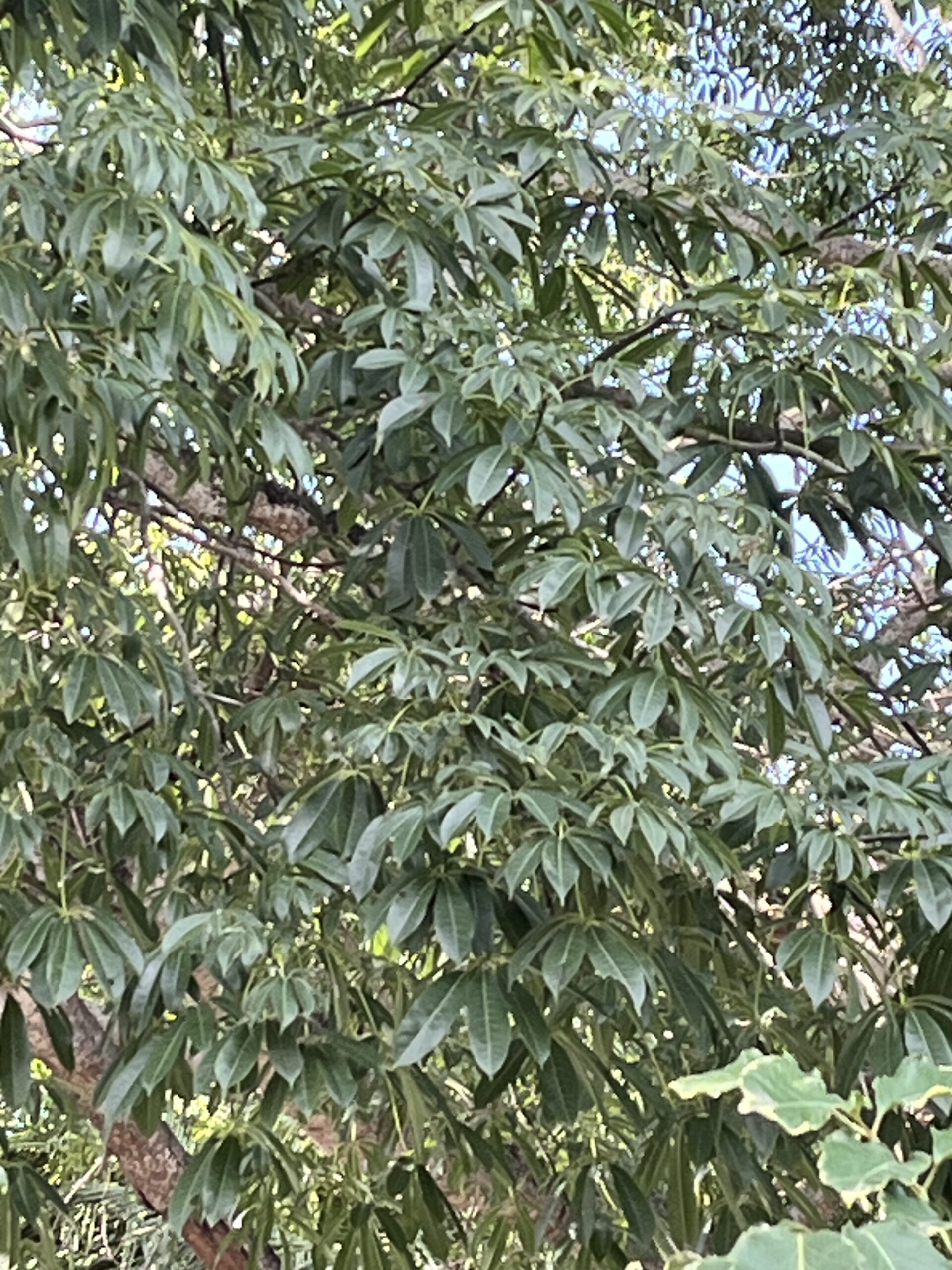
Habit: Ceiba pentandra grows as a deciduous tree to 4o m in height and 4 m in diameter producing buttress roots. Young branches and the trunk may be spiny/thorny. The palmately compound leaves are arranged alternately, with 5-15 leaflets. Each leaflet lanceolate to oblanceolate, to 20 cm long, entire to serrate.
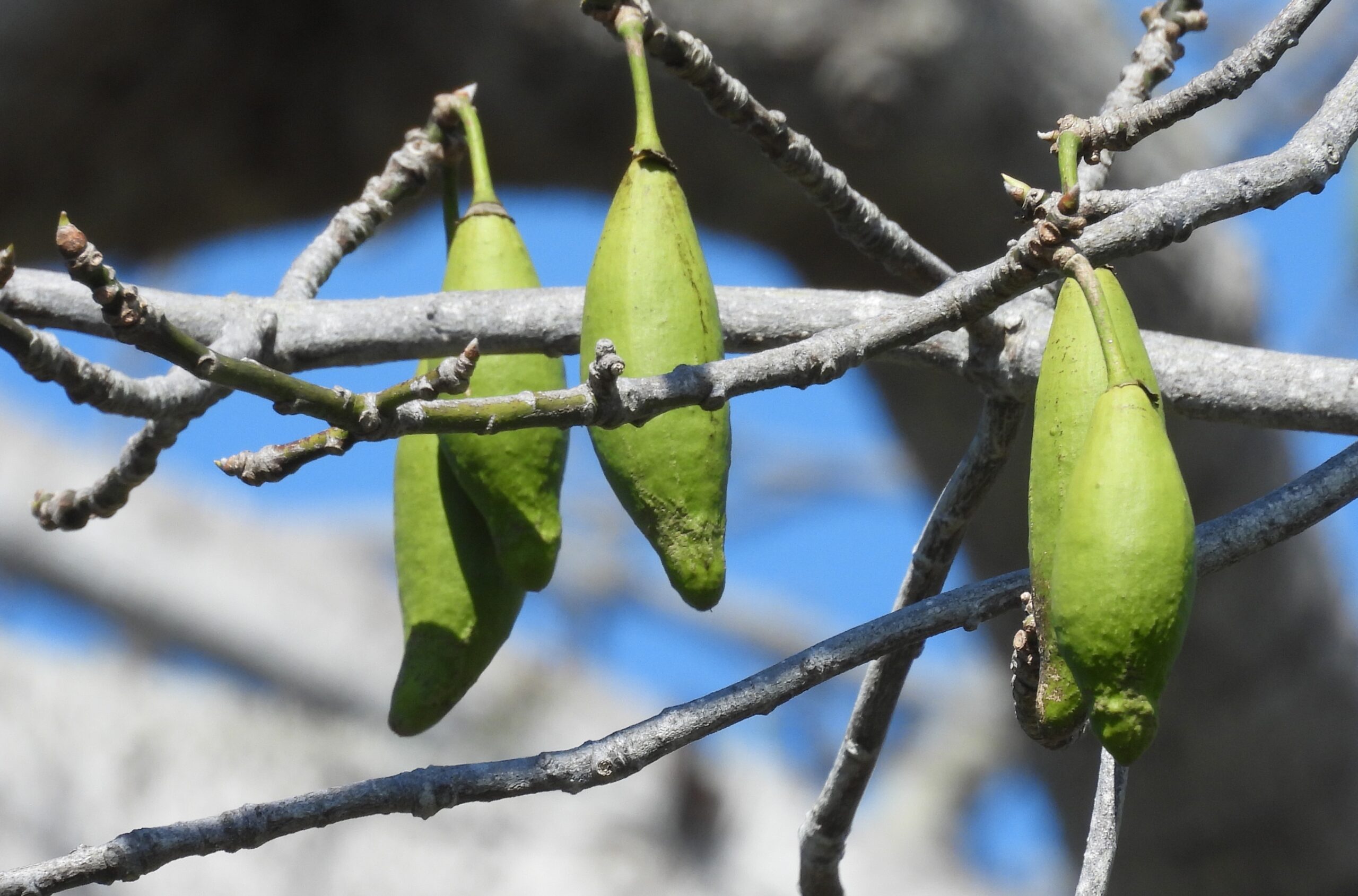
The complete, perfect, actinomorphic flowers are in axillary clusters that emerge while the tree is leafless. Flowers subtended by 7 – 9 green bracts. The calyx has 5 green, fused at base sepals that are interiorly pubescent. The corolla has 5, white to pink, fused at the base, pubescent petals. There are 5 stamens that are fused to the corolla. The ovary is superior with 5 locules and numerous ovules. The fruit is a pendulous woody capsule that is brown at maturity breaking apart rather than splitting along suture lines. The seeds are covered with long pubescence.
Habitat: Ceiba pentandra grows in Human Altered environments (yards and gardens, abandoned fields, waste areas).
Distribution: Ceiba pentandra is NOT native to the Lucayan Archipelago but now occurs on many islands. It is native to Mexico, Central America, South America, and the general Caribbean region. There is debate as to whether it is native to western Africa.
Medicinal/Cultural/Economic usage: Ceiba pentandra is not known to be used medicinally in the Lucayan Archipelago.
The seeds with their long hairs have been used in filling for life jackets, pillows, upholstery, and insulation.