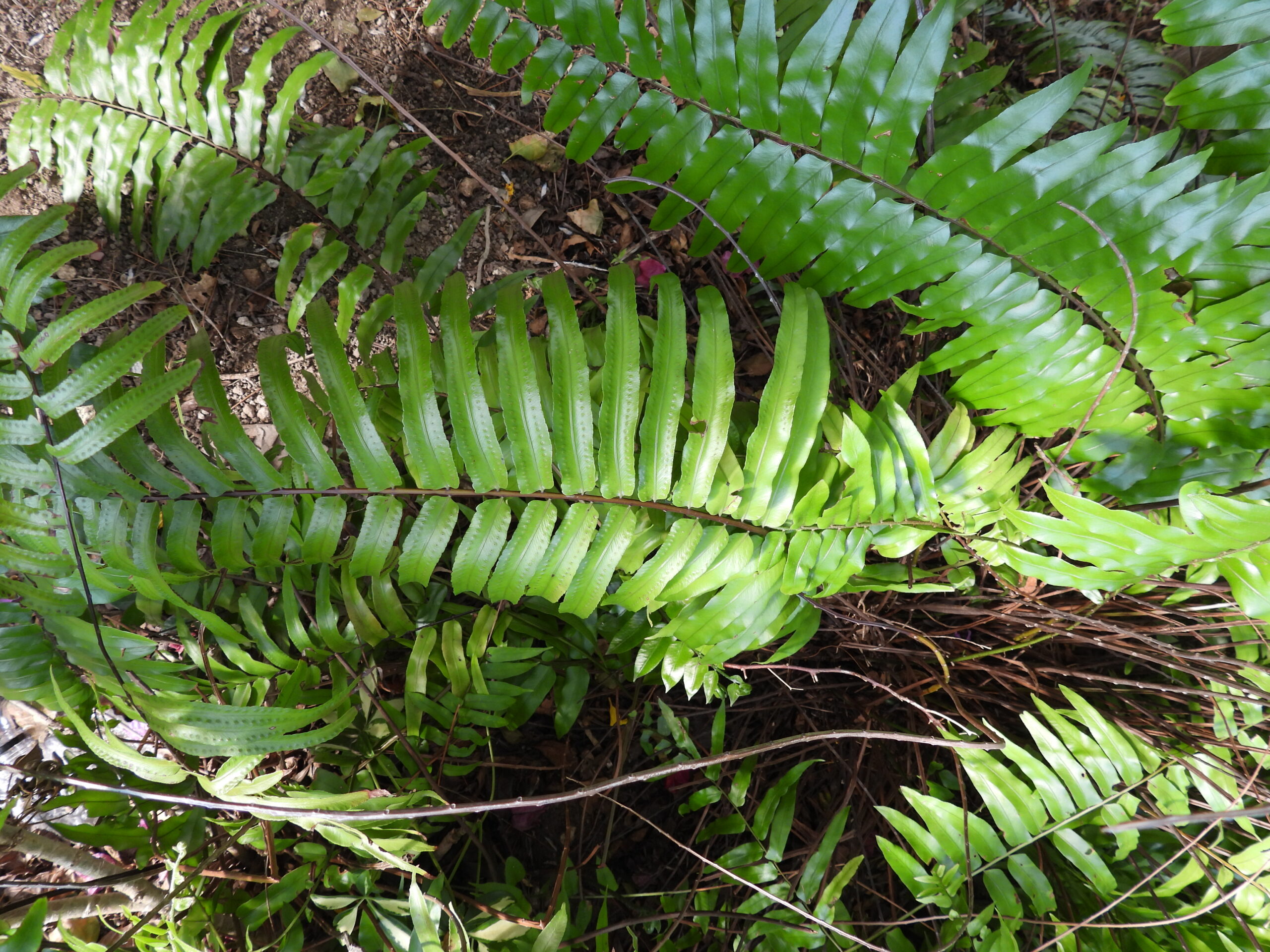
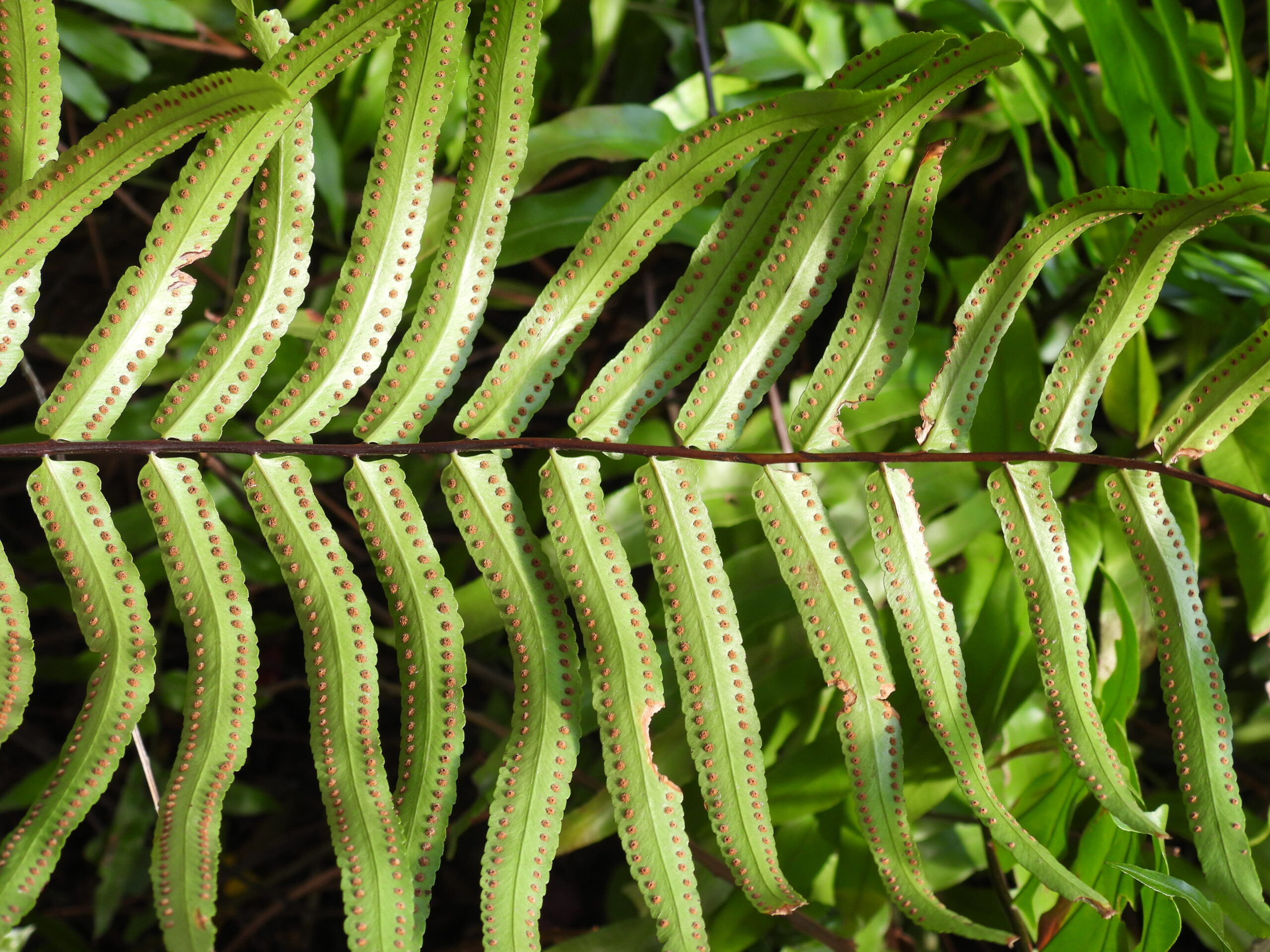
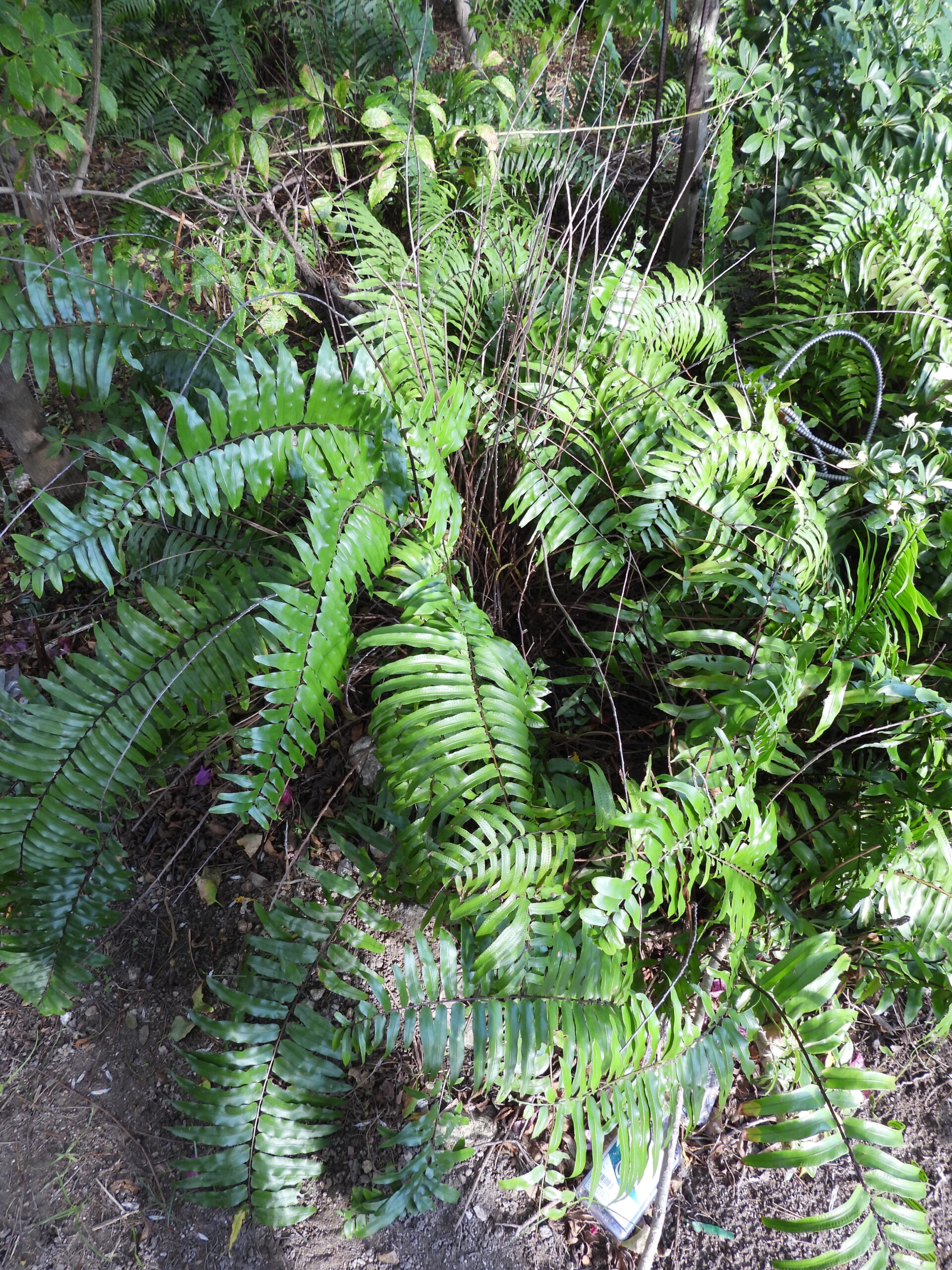
Habit: Nephrolepis biserrata grows from a rhizome that is up to 1 cm thick forming clumps with rhizomes spreading outward. It can be epiphytic/epilithic or terrestrial. The rhizome is covered with brown/black scales. The fronds are up to 2.5 meter in length and are pinnately compound. There are 30-60 pinnae alternately arranged, oblong with an acute apex and a crenate/dentate pinnae margin.
The sporangia occur in round sori toward the edge of pinnae on the mid vein from the pinnae apex to the rachis. There is a round/reniform/peltate indusium that can be lacking/difficult to see on mature fertile fronds.
Habitat: Nephrolepis biserrata grows in in the Bahamas in Human Altered environments (yards, gardens) and escapes into Dry Broadleaf Evergreen Formations that have caves and sink holes.
Distribution: Nephrolepis biserrate is not considered native to the Lucayan Archipelago but occurs throughout the islands. It is a pantropical/subtropical species.
Medicinal/Cultural/Economic usage: Nephrolepis biserrata is not used medicinally in the Bahamas.
It is in the horticultural trade and frequently escapes cultivation.