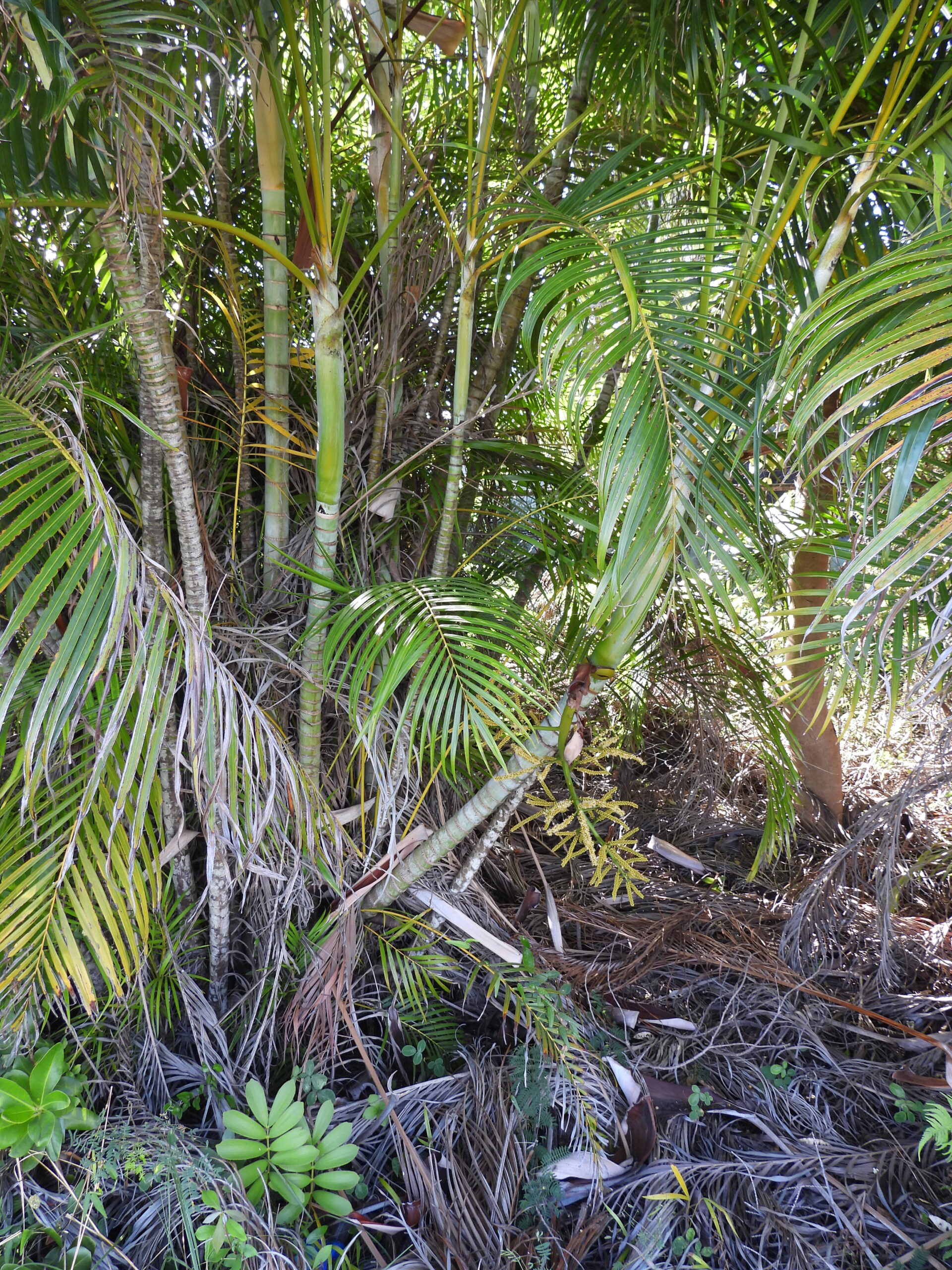
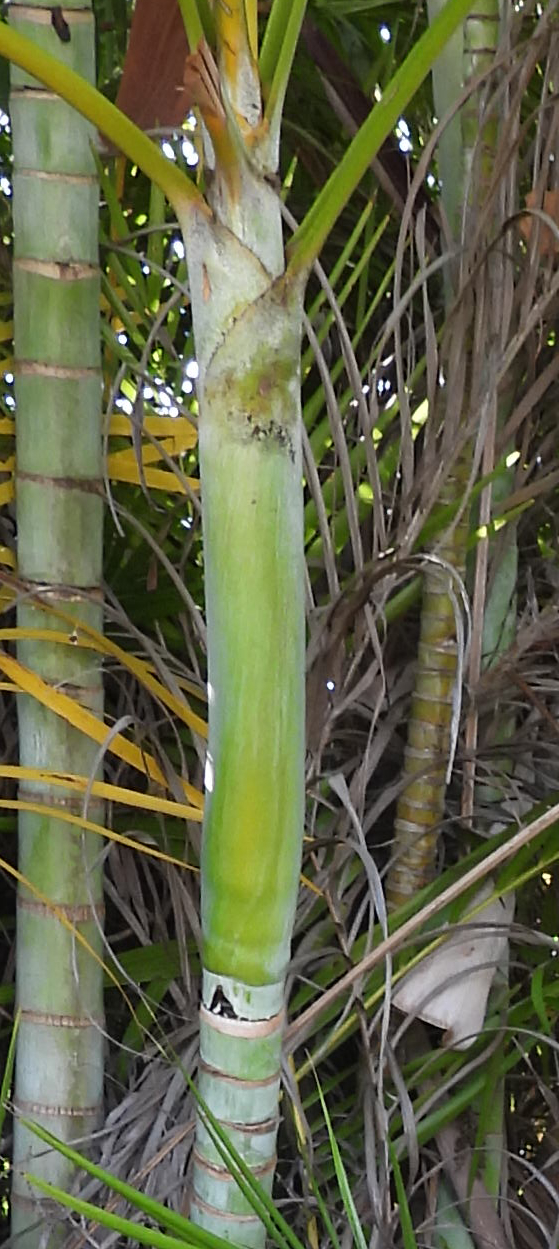
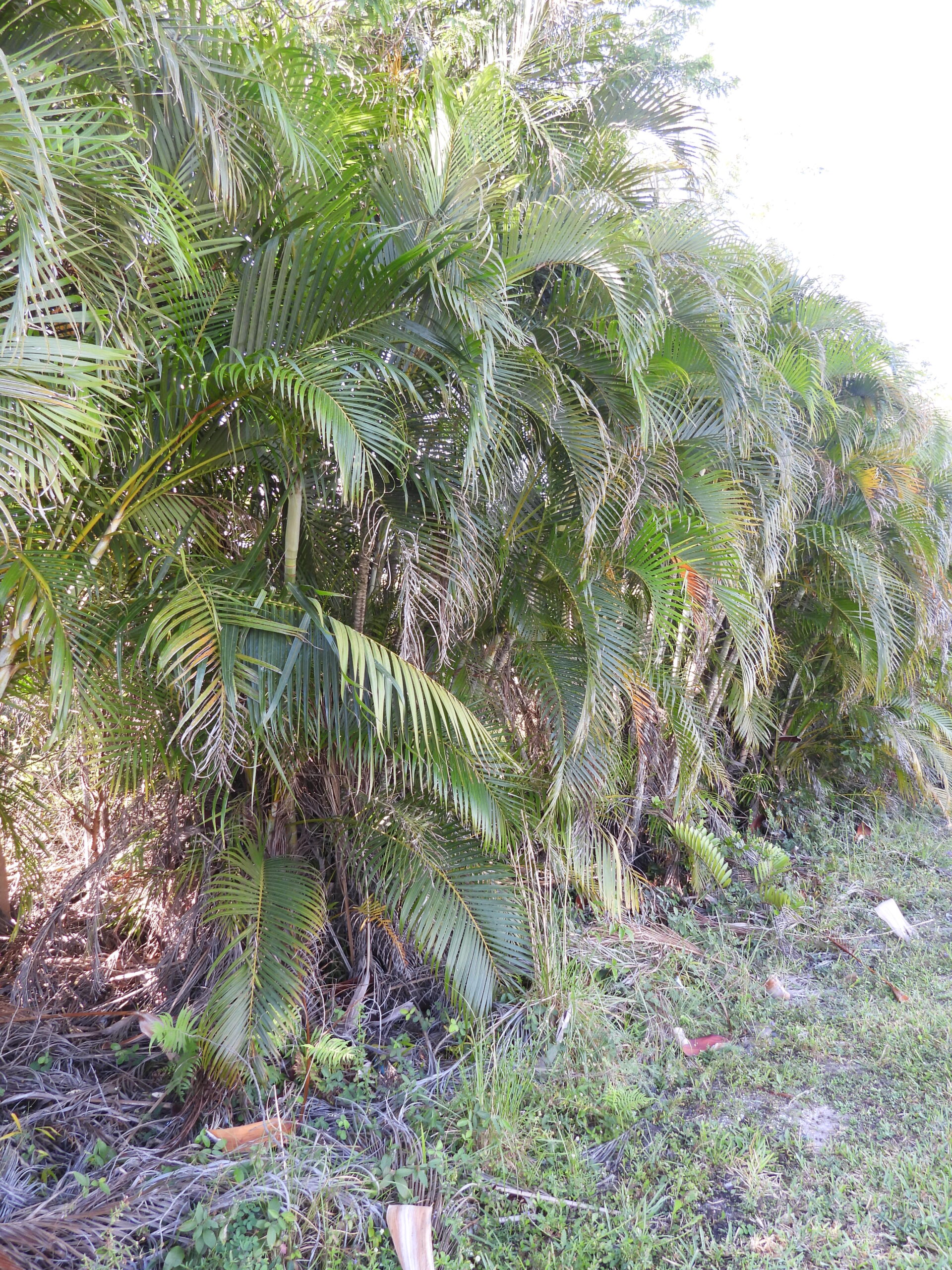
Habit: Chrysalidocarpus lutescens grows as an unbranched tree to 12 meters with a trunk to 10 cm wide. Multiple trunks will emerge from a single base forming a cluster. Each trunk has distinctive circular leaf scars. The pinnately compound leaves are arranged spirally. The leaf blade is up to 2 m in length, with 40-60 pairs of leaflets, each linear/lanceolate. Both the petiole and lamina are yellow green. The petiole base extends as an extended sheath surrounding the trunk.
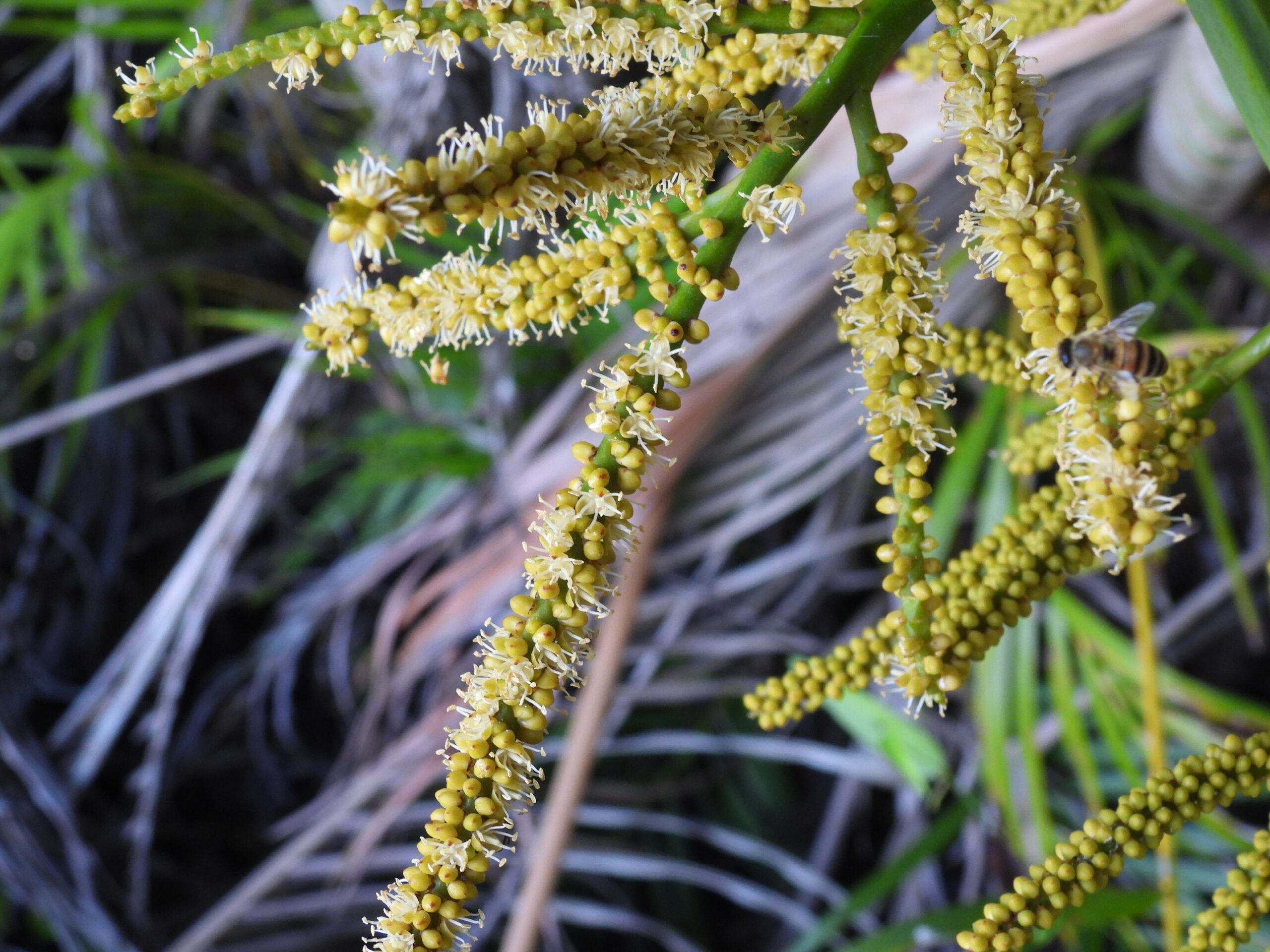
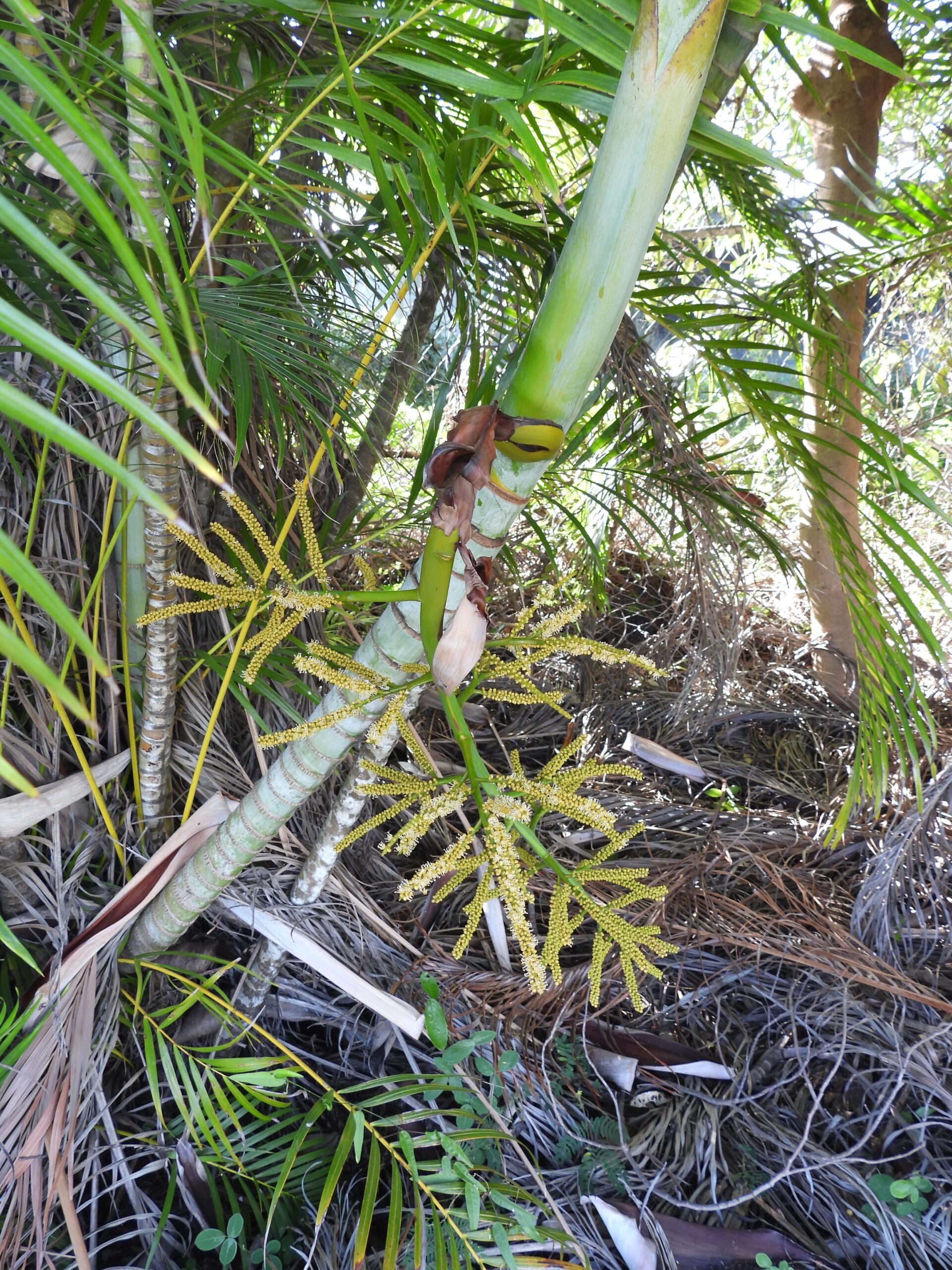
Both the incomplete, imperfect and complete, imperfect, actinomorphic flowers are arranged in a panicle up to 75 cm in length. The flowers are hermaphroditic or monoecious. Staminate flowers are larger than carpellate flowers. The calyx has 3 sepals that are fused at the base forming a shallow cup. The corolla has 3 unfused petals. There are 6 stamens and the carpel has 3 locules, each containing a single seed. The fruit is a yellow drupe becoming black at maturity.
Habitat: Chrysalidocarpus lutescens grows in the Bahamas in Human Altered environments (yards, gardens) but regularly escapes cultivation.
Distribution: Chrysalidocarpus lutescens is not native to the Lucayan Archipelago. Its native range is Madagascar.
Economic/Medicinal/Cultural usage: Chrysalidocarpus lutescens is not known to be used medicinally in the Bahamas.
Chrysalidocarpus lutescens is grown as an ornamental but is also considered an invasive species in many countries.