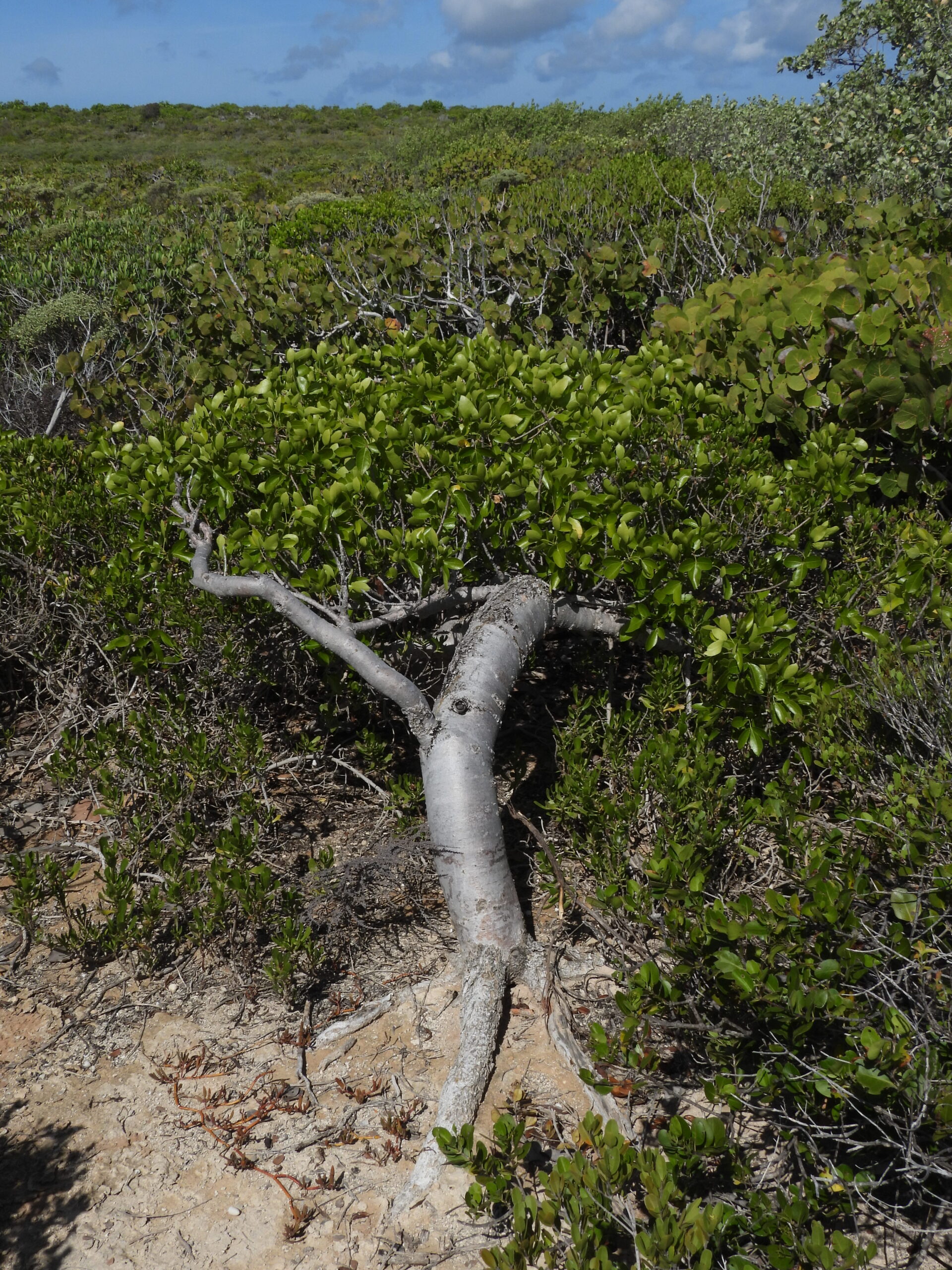
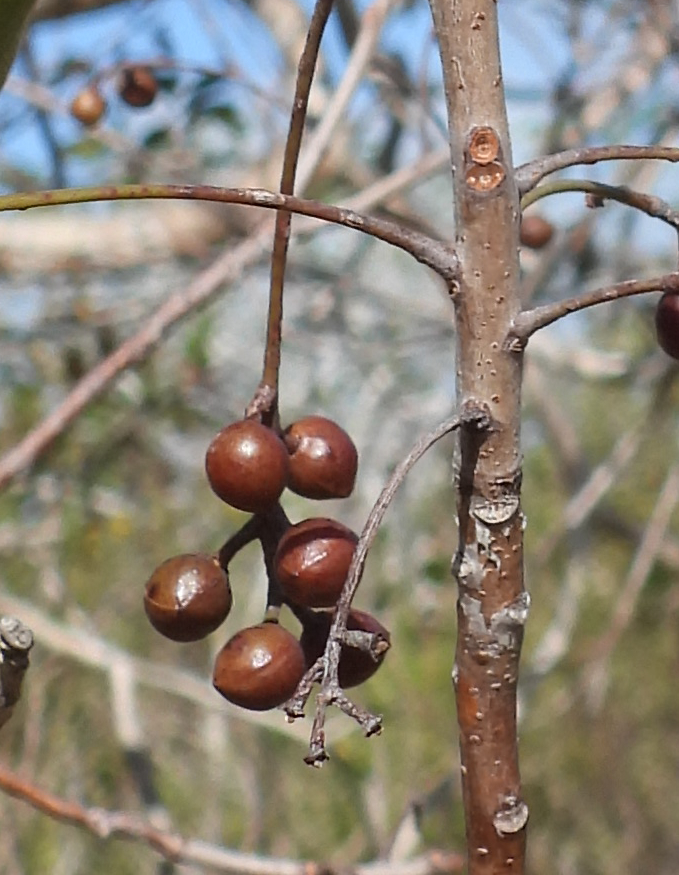
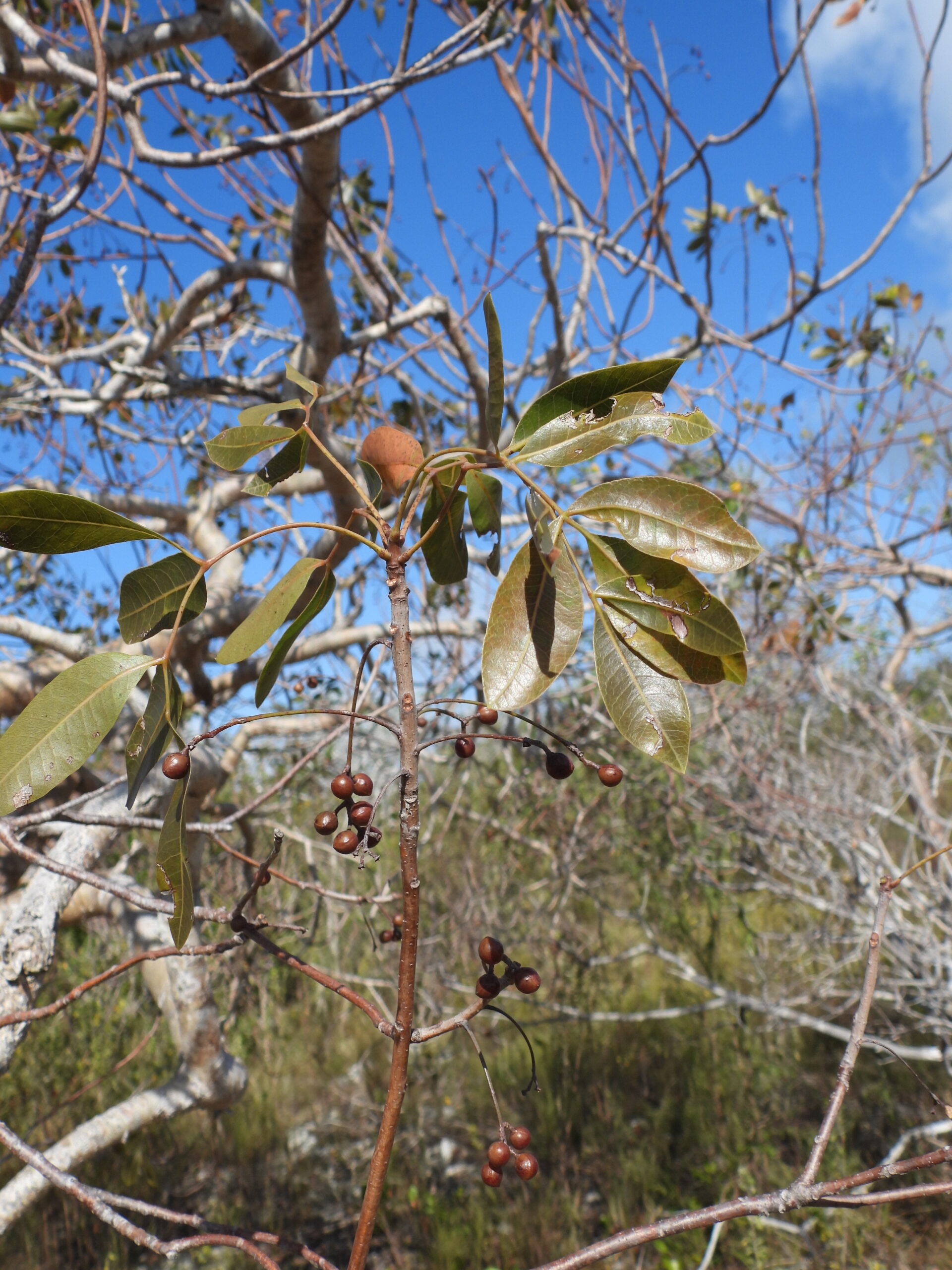
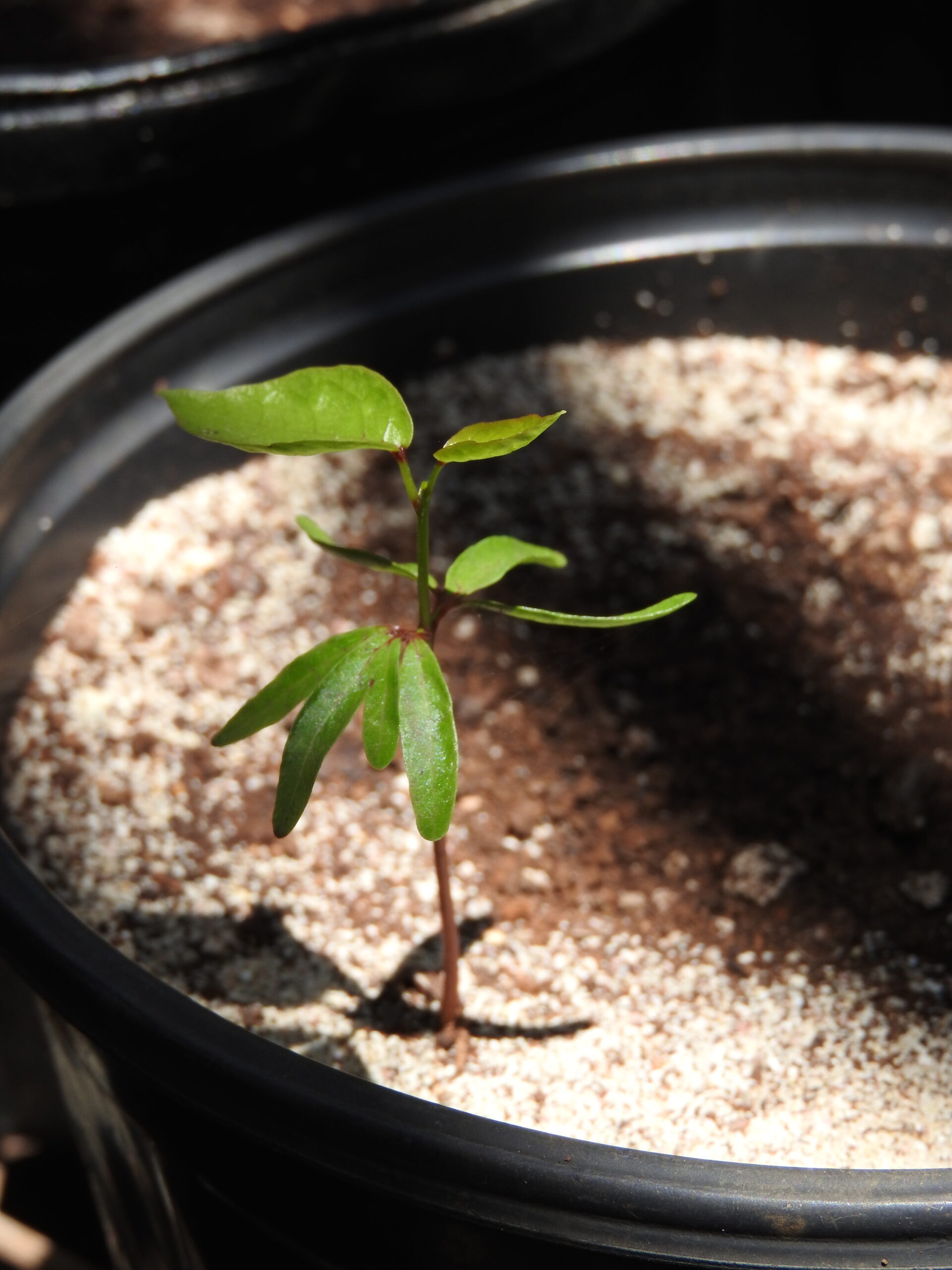
Habit: Bursera inaguensis grows as a small to medium tree up to 5 m in height and a trunk to 50 cm. The bark is grey and smooth and does not peal. The pinnately compound leaves are arranged alternately and are clustered at branch tips with 5-7 leaflets. The leaflets are oblanceolate to oblong with a apiculate leaf apex and entire leaf margin.
Bursera inaguensis is dioecious. The actinomorphic, incomplete, imperfect, flowers are arranged in short branched panicles. Staminate flowers have 5 fused, green sepals, 5 yellow green unfused petals, 10 unfused stamens, and an infertile superior ovary. Carpellate flowers have 3 partially fused sepals, 3 yellow green, unfused petals, 7 staminodes and a superior ovary with 3 locules. The fruit is a leathery drupe or 2-seeded berry at maturity.
Habitat: Bursera inaguensis grows in Dry Broadleaf Evergreen Formation – Shrublands (scrublands) in coastal areas.
Distribution: Bursera inaguensis occurs in the southern Islands of the Lucayan Archipelago and Cuba.
Medicinal/Cultural/Economic usage: Bursera inaguensis is not used medicinally in the Bahamian Archipelago.