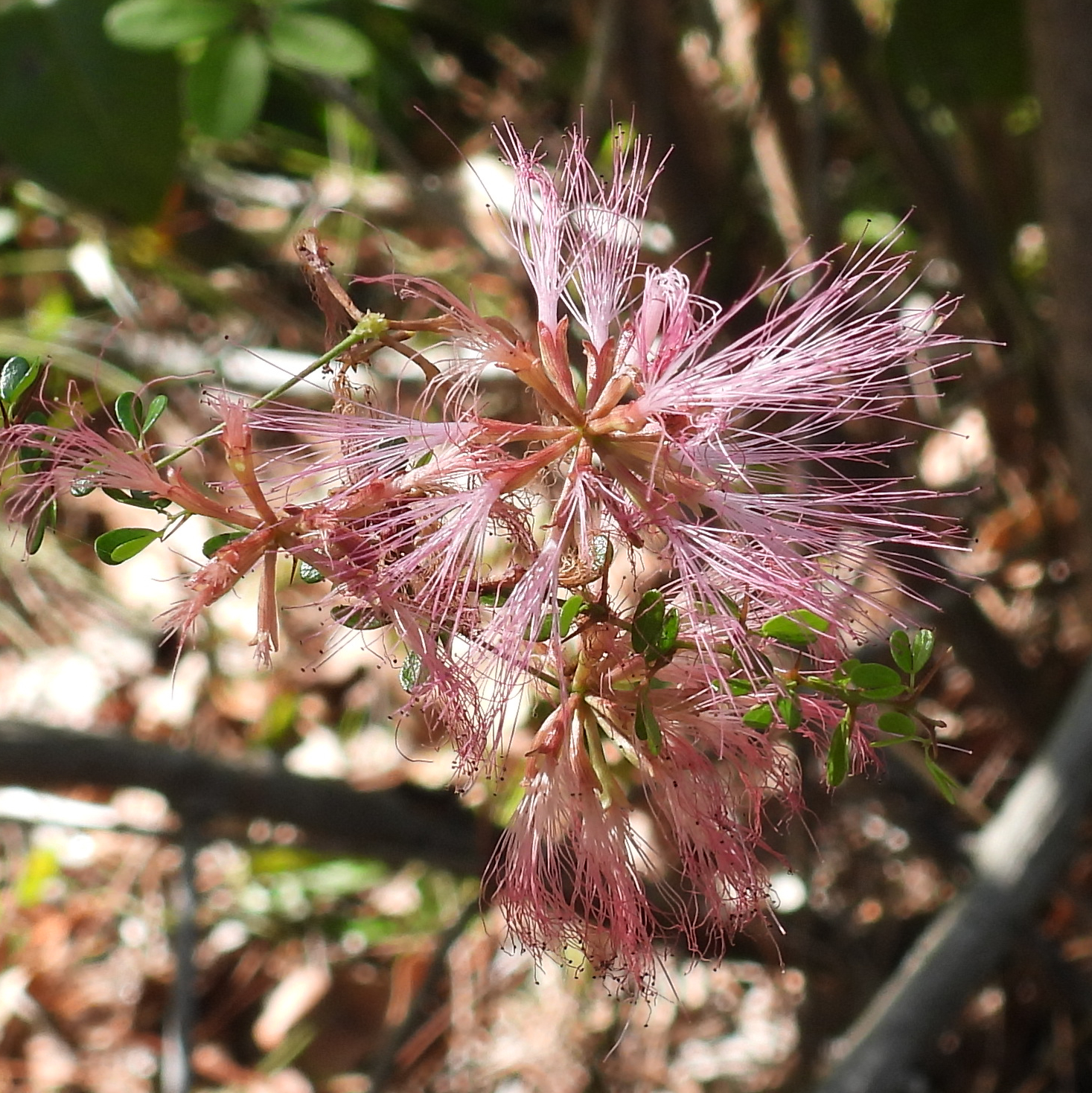
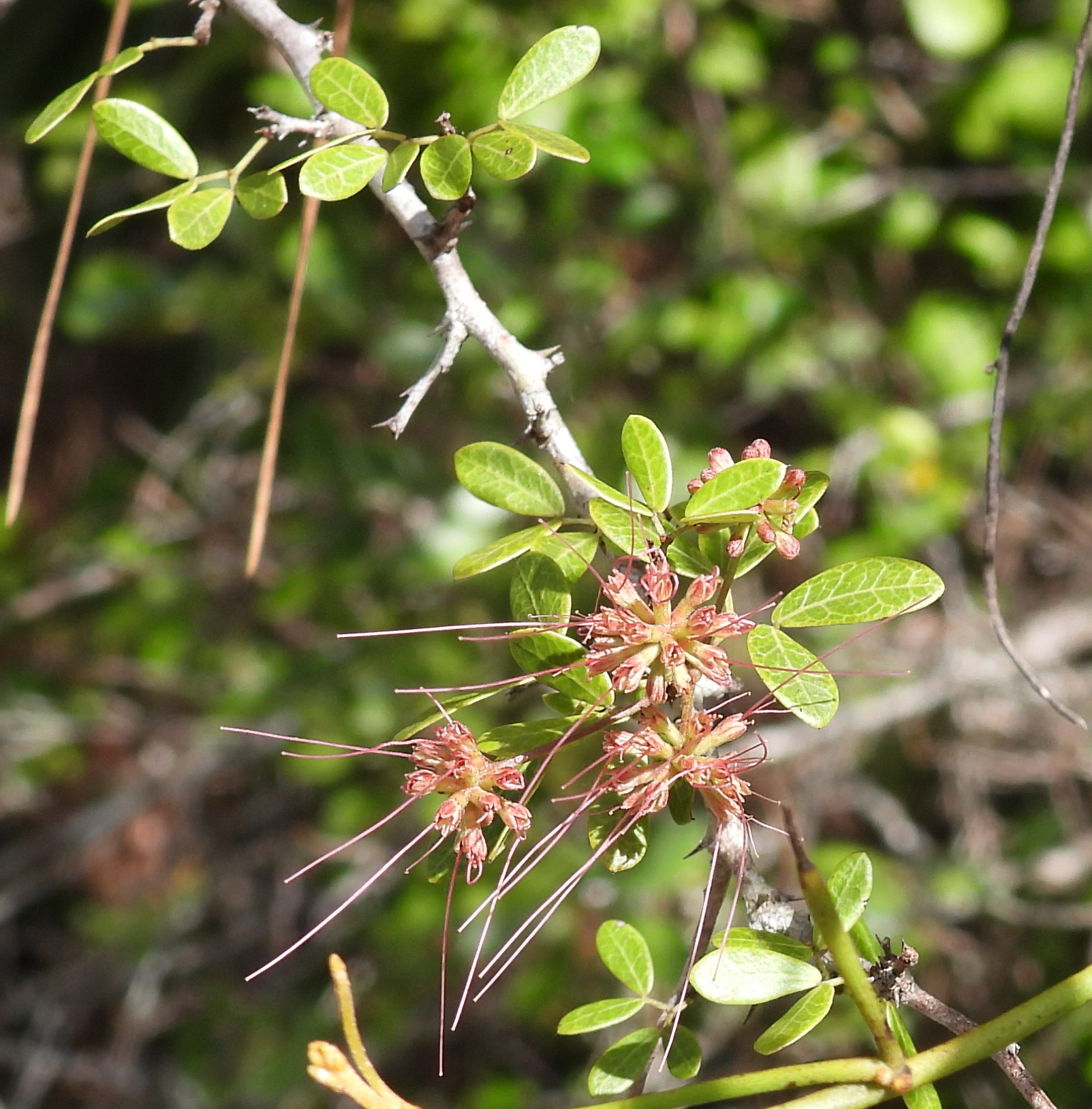
Habit: Pithecellobium hystrix grows as a slightly pubescent shrub to small multi-trunked tree up to 4 m in height (usually 1-2 m.) The leaves are arranged alternately, bipinnately compound, to 4 cm in length, with 2 pinnae each with two subleaflets. The petiole has a round gland between the pinnae. Subleaflets obovate to 2 cm long with an obtuse leaf apex and entire margin. At the base of each leaf are stipular spines up to 2 cm long. Foliage often with a. reddish tinge.
The complete, perfect, actinomorphic flowers are in round heads. The calyx has 5 fused, green sepals. The corolla has 5 fused, red petals. The calyx and corolla are fused into a single structure. There are numerous red to pink showy stamens that are three times as long as the perianth and provide the coloring of the heads. The fruit is a brown legume that becomes coiled as it matures. The seeds are black with a white or red aril.
Habitat: Pithecellobium hystrix grows in Pine Woodlands and Dry Broadleaf Evergreen Formations – Forests/Shrublands (coppice).
Distribution: Pithecellobium hystrix occurs throughout the central and northern island groups in the Lucayan Archipelago as well as Cuba and Hispaniola.
Medicinal/Cultural/Economic usage: Pithecellobium hystrix is not known to be used medicinally in the Lucayan Archipelago.