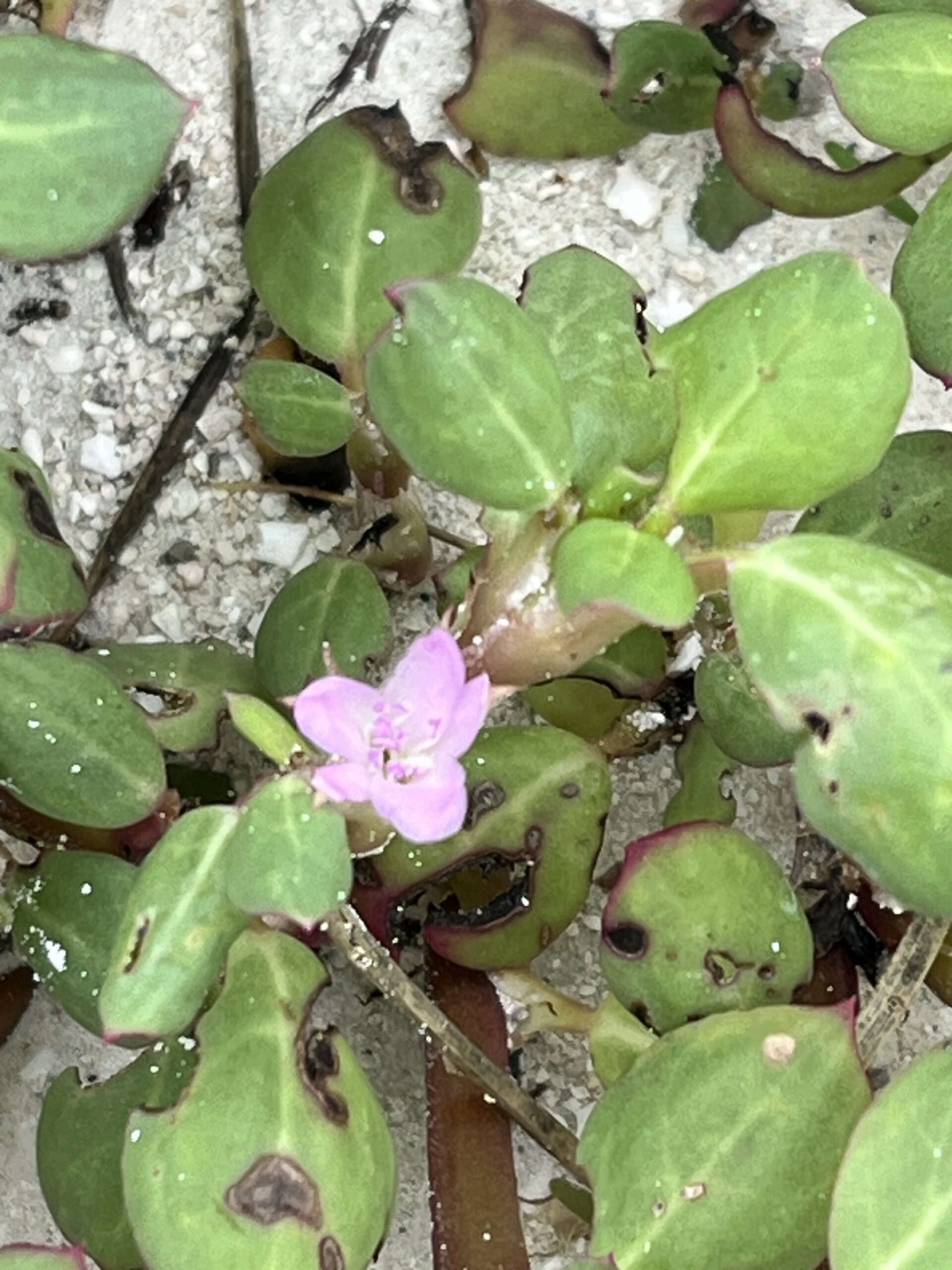
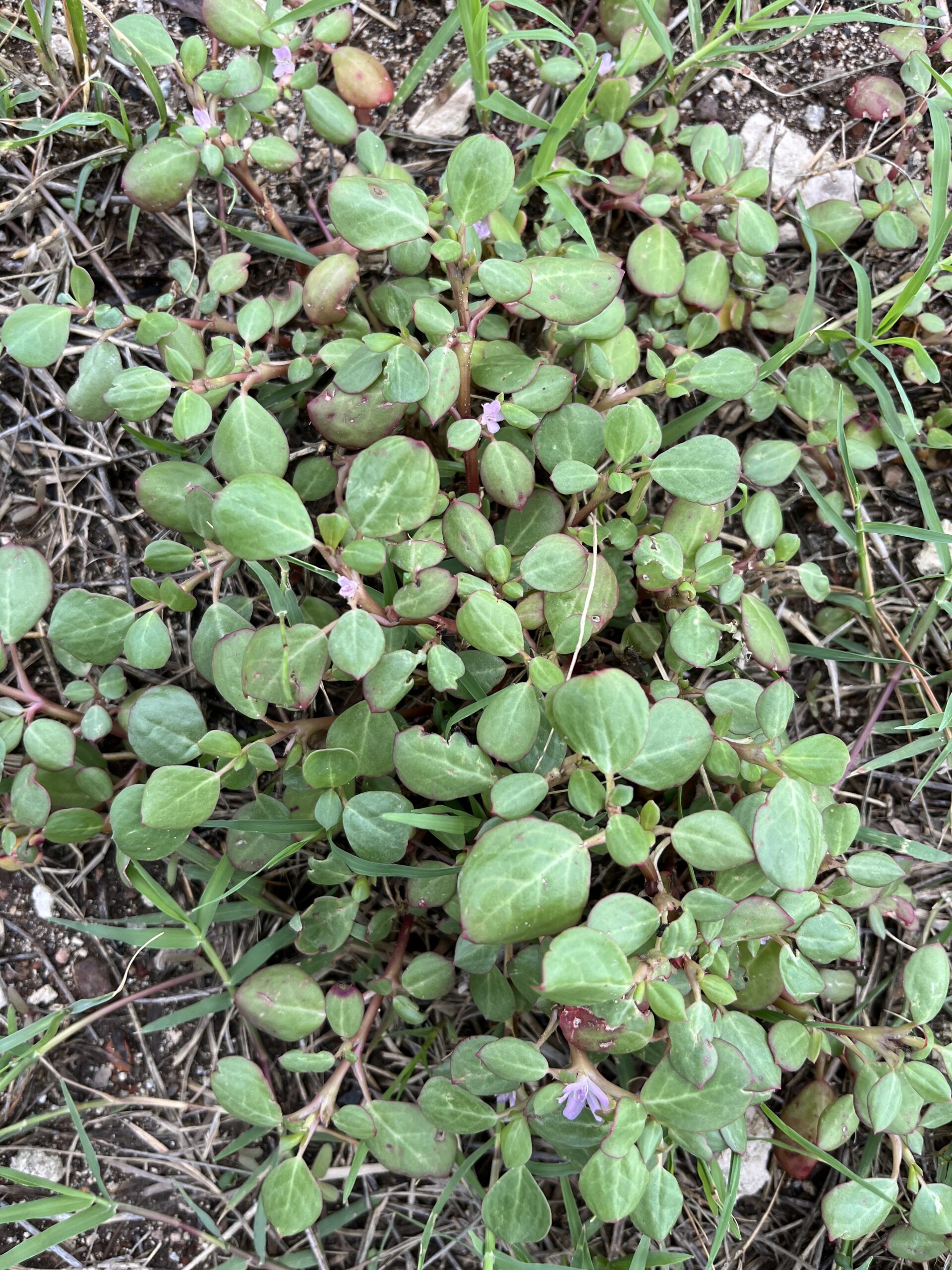
Habit: Trianthema portulacastrum grows as a low annual branching succulent, forming mats from stolons that branch frequently, to 1 m (usually smaller). The stems are photosynthetic becoming reddish with age. The ovate to orbicular, succulent leaves are arranged oppositely, in unequal pairs, reddish green, to 4 cm in length with an entire margin and acuminate leaf apex. There are lanceolate stipules.
The incomplete, perfect, slightly zygomorphic flowers are solitary in leaf axils. The calyx has 5 unfused, pink sepals each with a small appendage at its apex. There is no corolla. There are 5-20 stamens. The superior ovary has 1 locule forming a winged capsule at maturity. The seeds are reniform/kidney bean shaped, black and have a rough/wrinkled surface.
Habitat: Trianthema portulacastrum grows in coastal sandy locations near saline areas and coastal Human Altered environments (abandoned fields, waste areas).
Distribution: Trianthema portulacastrum is native to the Lucayan Archipelago. It is only known to occur in the Turks and Caicos Islands but likely occurs on other southern Bahamian islands. It is native to North and South America but has spread through the Indian subcontinent and parts of Asia.
Medicinal/Cultural/Economic usage: Trianthema portulacastrum is not used medicinally in Bahamas.
It is edible and can be used as a supplement to salads and has been used medicinally in India